Stop Rambling in Sales Calls: Pause for Three Seconds, Get Live Cues
Stop rambling in sales calls with a pause of three seconds, focused questions, and live coaching that turns listening research into practical habits.
Published: October 11, 2026
Author: OffBook Editorial Team

Stop rambling now: pause for three seconds before you respond, then ask one open question or paraphrase what you just heard. That single habit breaks the loop of over-explaining, because it forces you to confirm understanding before adding more words. Pair it with a 90-second opening agenda. Harvard PON research backs the pause, and tools like OffBook can prompt it live.
TL;DR:
- Before each call, spend 60 seconds writing your goal, two discovery questions, the likely objection, and a brief agenda for the first 90 seconds.
- Replace the closed question asking whether your point makes sense with a prompt about what questions it raises, and avoid absolutes such as always.
- Practice a 30/70 listening to speaking ratio in timed roleplays, while peer coaching targets one behavior each week, such as filler words or interruptions.
- Review recordings for filler words, monologues longer than 60 seconds, and closed questions that should have invited fuller answers; track progress weekly.
- Live coaching software can surface pause cues, open question suggestions, and agenda reminders, but it reinforces roleplay and coaching rather than replacing them.
Table of Contents
- A quick checklist to stop rambling mid-call
- Active listening, silence, and question frameworks that prevent rambling
- Specific phrasing and pacing habits that tighten your delivery
- A pre-call routine that reduces the urge to over-explain
- Roleplays, timers, and recordings that change speaking habits
- How real-time coaching helps stop rambling in the moment
- Why disciplined talk time changes outcomes
- Put these tactics into practice with real-time coaching software.
- FAQ
- Sources
A quick checklist to stop rambling mid-call
Memorize these five moves and you can apply them on your next call without rehearsing a script.
- Count to three before you answer any question, even an easy one.
- Open with a question, not a statement: “What’s driving the timing on this?” hands control back to the prospect.
- State your agenda in the first 90 seconds: two items, no more, so you don’t feel pressure to cover everything later.
- Track your talk ratio as you go. If you’ve spoken for more than a minute straight, stop and ask something.
- Close each answer with a question mark, not a period. End your point, then redirect.
Pro Tip: Use silence right after a prospect finishes a hard question. The gap feels uncomfortable to you, not to them, and it often gets them to add detail you’d have missed by jumping in.
These aren’t abstract principles. They’re mechanical checks you can run mid-sentence, which matters because rambling usually happens on autopilot. The fix has to be just as automatic.
Active listening, silence, and question frameworks that prevent rambling
Most reps ramble because they’re listening to respond, not to understand. PON research describes this as the “internal rebuttal voice”: you’re half-listening while drafting your next line, so when you finally speak, you overcompensate with extra context to cover what you missed. HBSP’s work on listening skills frames the fix simply: listen until the end, and listen to summarize rather than to solve.

A statistic worth building your routine around: counting to three before replying reduces impulsive responses and can prompt the other person to keep talking, which means you gather more information with fewer words from you.
A practical question taxonomy helps you convert that silence into direction instead of dead air:
- Open questions invite elaboration: “Walk me through how this is handled today.”
- Probing follow-ups dig into a specific point the prospect already raised.
- Clearinghouse probes check for anything left unsaid: “Is there anything else affecting this decision?”
- Neutral phrasing avoids leading the prospect toward the answer you want to hear.
The micro-routine that ties this together: listen fully, paraphrase what you heard (“So the real blocker is approval timing, not budget”), then probe once. That three-step sequence replaces the urge to fill space with explanation, and it’s the same structure PON recommends for shifting from advocacy to diagnosis.
Specific phrasing and pacing habits that tighten your delivery
Filler words signal that your mouth is moving faster than your thinking. Fixing them is mostly about substitution, not suppression.
- Swap “so, basically” for a silent half-second pause. The pause reads as confidence; the filler reads as stalling.
- Replace “does that make sense?” with “what questions does that raise for you?” It invites a real answer instead of a reflexive yes.
- Drop absolutes like “always” or “never” in favor of “typically” or “in most cases,” which sound more credible and invite less pushback.
- When you lose the thread, restate the question out loud before answering. It buys you a second and keeps you anchored.
Pro Tip: If you catch yourself mid-ramble, use one line to reset: “Let me pause there. What’s most useful for you to hear next?” It hands the wheel back without an awkward stop.
Single-sentence answers followed by a question keep the exchange moving instead of turning into a monologue.
A pre-call routine that reduces the urge to over-explain
Most rambling starts before the call, in the gap where you didn’t define what you actually needed to learn or say.
- Spend 60 seconds writing down your call goal, two discovery questions, and the objection you’re most likely to hit.
- Draft a one-line agenda statement you’ll say in the first 90 seconds: what you’ll cover and roughly how long it takes.
- Write your closing commitment question in advance, so you’re not improvising the ask at the end.
- Review the prospect’s role and likely priorities so your questions stay targeted instead of generic.
Preparation shifts your talk time toward questions instead of explanations, since you already know what you’re trying to learn rather than discovering it live, following the principles of question-based selling that guide effective discovery calls.
Roleplays, timers, and recordings that change speaking habits
Rambling is a habit, and habits change through repetition, not insight alone.
- Run timed roleplays targeting a 30/70 listening-to-speaking ratio, with a partner calling out when you cross it.
- Use a peer coaching script: observe one specific behavior per week, like filler words or interrupting, and fix only that one.
- Review call recordings with a tagging checklist: mark filler words, monologues over 60 seconds, and any closed questions that should have been open.
- Track a short weekly scorecard: total talk time, number of open questions asked, and longest uninterrupted stretch of speech.
Small, specific targets beat vague feedback like “talk less,” because they give you something to measure between calls.
How real-time coaching helps stop rambling in the moment
Practice builds the habit, but live calls still move fast, and old patterns resurface under pressure. This is where in-call coaching software closes the gap between what you know and what you do.
- The software listens to the live call and surfaces on-screen prompts, including pause cues, open-question suggestions, and reminders when you’re drifting from the agenda.
- Pre-call briefs on the company and people you’re meeting provide context so you’re not improvising background explanation live.
- Prompts are structured around well-known sales frameworks, which keeps questions aimed at real qualification gaps instead of generic small talk.
- None of this replaces roleplay or coaching. It reinforces the habit in the one place where habits usually break: the live call itself.
Why disciplined talk time changes outcomes
Reps who ramble aren’t short on knowledge, they’re short on restraint. The best calls I’ve reviewed share one trait: the rep asks a question, stops, and actually waits for the answer before adding anything. Founders selling their own product tend to over-explain the most, because they know every detail and want to prove it. Cut your talk time deliberately and your close rate follows, not the other way around.
— Neil
Put these tactics into practice with real-time coaching software.
The checklist and routines above work, but they’re hard to run perfectly on every live call without a prompt in the moment. This software surfaces exactly those cues as the conversation happens: pause reminders, open-question suggestions, and agenda check-ins, all without a bot joining your meeting.
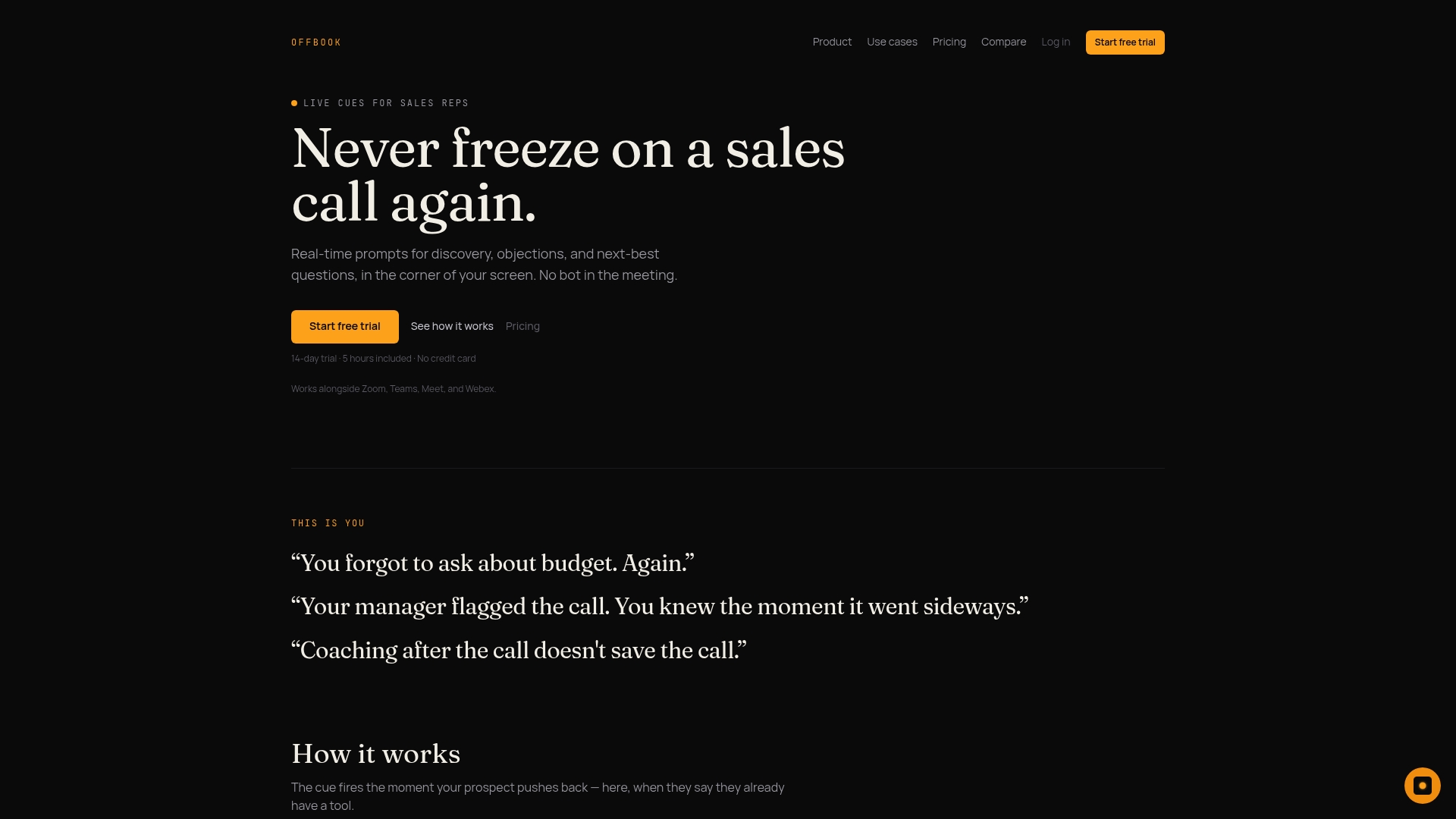
Pre-call briefs give you the context so you stop over-explaining to fill gaps, and in-call prompts keep your questions sharp when nerves push you toward a monologue. If you’re ready to see it on a real call, check pricing and plans or try the free discovery call question generator to tighten your next discovery call today.
FAQ
What are some important sales speaking skills?
The core skills are asking open questions, paraphrasing what you hear before responding, using silence deliberately, and keeping answers to one or two sentences before redirecting with a question. Research on negotiation listening ties these directly to clearer, less defensive conversations.
What is the 3-3-3 rule in sales?
There’s no single agreed definition of a “3-3-3 rule” in sales research, so treat any specific version you see with caution. A practical habit worth adopting instead is the three-second pause before responding, which PON research ties to fewer impulsive responses.
What are the 7 golden rules of sales?
This phrase is used loosely across sales content without one fixed source, so there’s no definitive numbered list to cite accurately. The habits that consistently hold up in listening and negotiation research are: ask open questions, paraphrase before adding detail, use silence intentionally, prepare before the call, and keep answers short enough to leave room for a follow-up question.
What is the 30-60-90 rule in sales?
This term most commonly refers to a 30-60-90 day onboarding plan for new sales hires, not a call-structure technique. If you’re looking for call pacing instead, a steadier target is the 30/70 listening-to-speaking ratio used in roleplay practice.
How do I know if I’m rambling on a call?
A clear sign is going more than 60 seconds without pausing or asking a question, or noticing the prospect’s responses getting shorter while yours get longer. Recording and reviewing a few calls against a simple talk-time tracker, as outlined above, makes the pattern easy to spot.