$15,000+ ACV Deals: When to Run SPIN vs Challenger in B2B SaaS
A B2B SaaS playbook that shows ACV-based rules for SPIN and Challenger, a hybrid sequence (insight → SPIN discovery → tailor), and live coaching tips to...
Published: August 31, 2026
Author: OffBook Editorial Team

SPIN wins for single-stakeholder discovery calls where you need the buyer to articulate their own pain; Challenger wins when you’re up against an entrenched status quo or an indifferent committee that needs reframing before it will act. Most SaaS teams selling above $15,000 ACV end up running both: SPIN’s questions to surface value, a Challenger-style insight to create urgency. Train discovery discipline first. Layer teaching second, once reps can run a call without winging it.
TL;DR:
- Hybrid approaches that combine SPIN and Challenger are most effective for deals above $15,000 ACV and longer sales cycles, emphasizing both value discovery and reframing.
- Call scoring should focus on implication question frequency, buyer engagement with insights, and monitoring no-decision loss rates to measure discovery discipline.
- Reps struggle when repeating obvious Situation questions or delivering generic insights, so training must emphasize research and tailored commercial insights.
- Early-stage reps should focus on pure SPIN until they consistently demonstrate good implication question use before layering in Challenger insights for larger, committee-based deals.
- Real-time coaching prompts during calls improve methodology adoption more than post-call feedback, ensuring reps execute frameworks effectively in high-pressure moments.
Table of Contents
- SPIN vs Challenger: The Core Mechanics Behind Each Method
- Approach, Engagement, and Skill Sets: Where SPIN and Challenger Actually Diverge
- How to Combine SPIN and Challenger in One Sales Motion
- Training Pitfalls: When SPIN Feels Like an Interrogation and Challenger Feels Adversarial
- Quick Decision Checklist: What to Run on Your Next Deal
- Offbook’s Perspective on Operationalizing Both Methods
- Run SPIN and Challenger Live, Not From a Post-Call Deck
- Sources
SPIN vs Challenger: The Core Mechanics Behind Each Method
Both frameworks came out of the same basic problem: reps who talk too much and listen too little close fewer deals. They solve it in almost opposite ways.
SPIN Selling breaks a discovery call into four question types: Situation, Problem, Implication, and Need-payoff. Situation questions establish facts. Problem questions surface a pain. Implication questions do the real work. They stretch that pain until the buyer feels its cost, connecting a slow onboarding process to churn, or a manual reporting task to a missed board deadline. Need-payoff questions then let the buyer state the value out loud, which matters more than it sounds. People believe what they say more than what they’re told. The framework’s evidence base comes from Huthwaite’s analysis of tens of thousands of recorded sales calls, which is part of why implication questions carry so much weight in the model: the data showed they correlated directly with deal size.
Challenger flips the sequence. Instead of drawing the pain out of the buyer, you bring a point of view into the room. The methodology’s own framing centers on three moves: Teach the buyer something they didn’t know about their own business, Tailor that message to the specific stakeholder in front of you, and Take control of the conversation, including the pricing and next-steps discussion most reps avoid.
A few comparisons make the mechanical difference concrete:
- SPIN opener: “Walk me through how your team currently qualifies inbound leads.”
- Challenger opener: “We’ve noticed most seed-stage SaaS teams overinvest in top-of-funnel and underinvest in call discipline, and it shows up in a specific number: no-decision losses.”
- SPIN implication question: “If that qualification gap continues for another two quarters, what happens to your CAC payback?”
- Challenger tailoring move: Same insight, different framing for a VP of Sales (“this hits your quota attainment”) versus a CFO (“this hits your burn multiple”).
Neither approach is inherently better. They answer different questions. SPIN answers “what does this buyer actually need?” Challenger answers “why should this buyer care right now?” Harvard Business Review’s argument about the shift away from pure solution selling is really an argument that buyers who’ve already Googled your category don’t need you to extract their pain. They need you to reframe it.
Approach, Engagement, and Skill Sets: Where SPIN and Challenger Actually Diverge
The differences that matter for a sales leader aren’t philosophical. They show up in how a call gets run, who’s in the room, and what you have to train reps to do.
Approach. SPIN is draw-out. The rep asks, the buyer answers, and the insight emerges from the buyer’s own words. Challenger is insight-led. The rep arrives with a point of view and uses it to disrupt how the buyer is currently thinking. In practice, a SPIN-heavy call feels collaborative; a Challenger-heavy call feels like the rep is teaching a short, sharp lesson before asking for anything.
Customer engagement. SPIN was built for a single buyer conversation, one person walking through their situation in real time. Challenger assumes a more skeptical, better-informed buyer, often one member of a multi-person committee who needs a message tailored specifically to their function. That’s a structural difference, not a style preference: you can’t “tailor” a message to a committee you haven’t mapped.
Skill sets. SPIN demands listening discipline and question sequencing. Reps who overuse Situation questions or skip straight to pitching kill the method. Challenger demands something harder to train: a library of real commercial insights and the confidence to push back on a buyer’s own framing without sounding arrogant. Practitioner analysis consistently flags this as the point where junior reps stumble: they copy the “take control” behavior without having earned the insight that makes it land.
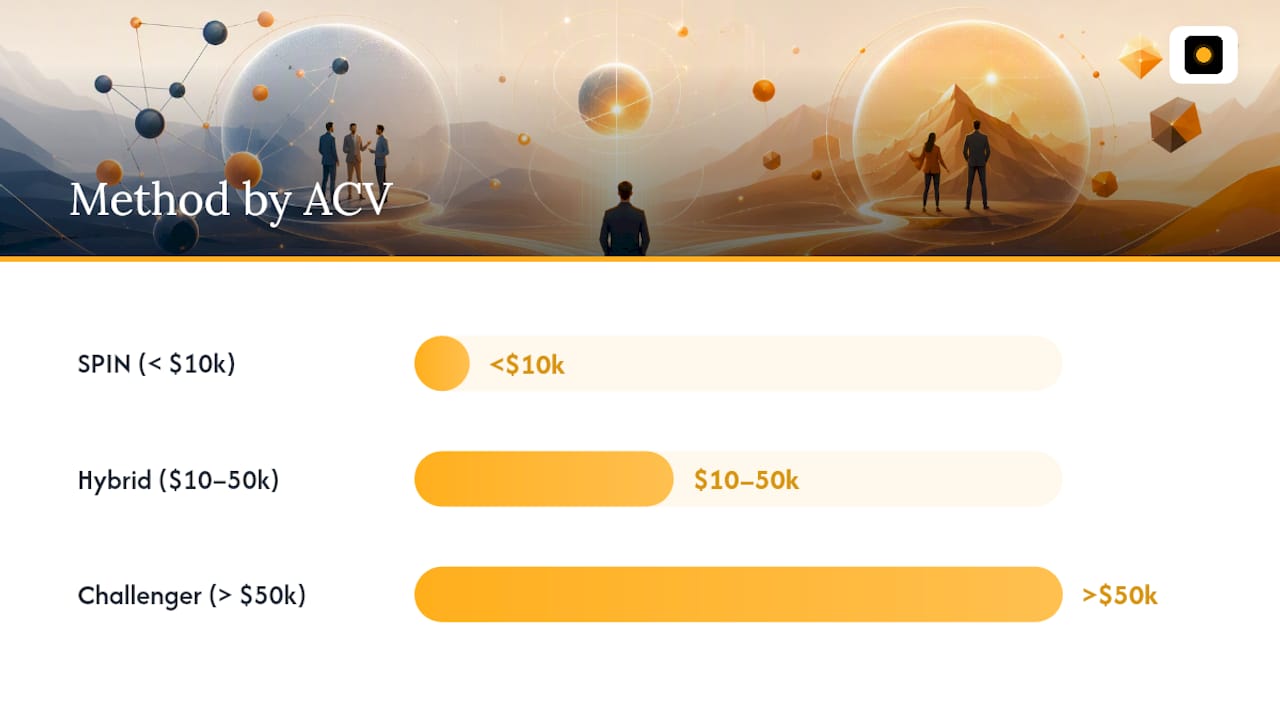
Best-fit mapping. This is where most teams should actually start:
- Deal size under $10,000 ACV, short cycle, single buyer: SPIN carries almost the whole call. There’s no committee to reframe.
- Deal size $10,000 to $50,000 ACV, 2 to 4 stakeholders: Hybrid. Open with a light insight, run SPIN-style discovery per stakeholder.
- Deal size above $50,000 ACV, buying committee, long cycle: Challenger’s teaching and tailoring earns its place, but SPIN’s implication questions still do the heavy lifting inside each stakeholder conversation.
- Highly educated buyer who’s already built a business case: Lean Challenger. A generic discovery script insults someone who’s read your category cold.
- Buyer who hasn’t diagnosed the problem yet: Lean SPIN. You can’t reframe a problem the buyer doesn’t know they have.
None of this is exact science. It’s a starting allocation, not a rulebook, and SalesArmor’s comparison across SPIN, Challenger, MEDDIC, and other frameworks treats ACV and cycle length as the two variables that move the needle most.
How to Combine SPIN and Challenger in One Sales Motion
You don’t have to pick a lane. The practical read from most head-to-head comparisons is that SPIN and Challenger operate at different layers: Challenger is a posture and account strategy, SPIN is an in-call question technique. Layered correctly, they reinforce each other instead of competing.
Here’s the sequence that works across most SaaS deal sizes:
- Pre-call. Build one commercial insight relevant to the buyer’s role and industry, and pair it with two or three implication questions keyed to the most common pain pattern you see at that account type. A single well-built insight paired with targeted implication questions does double duty: it creates urgency and gives the buyer language to articulate the value themselves. This is also where a pre-call research checklist earns its keep. Walking in without knowing the account’s context is the fastest way to make a Challenger insight fall flat.
- Open with the insight. Fifteen to thirty seconds. Teach something specific, not a generic industry trend.
- Move into SPIN discovery. Use implication questions to let the buyer connect that insight to their own situation, in their own words. This is where most of the actual selling happens.
- Tailor the commercial hook. Restate the insight through the lens of what the buyer just told you, aimed at their specific role and incentive.
- Take control of next steps. Propose a specific date, a specific next call, a specific stakeholder to loop in. Don’t end on “let me know what works.”
Role split matters here. SDRs should focus almost entirely on SPIN fundamentals: clean situation and problem questions, a light implication touch, and a clean handoff. AEs run the full hybrid motion, including the teaching moment and the tailored close. CSMs use a lighter version post-sale, surfacing implications during renewal conversations rather than teaching new insights from scratch. Early-stage teams building this discipline for the first time often benefit from a structured playbook for new reps before adding Challenger behaviors on top.
Pro Tip: Score implication questions separately from every other part of the call. If reps are skipping straight from Problem to Need-payoff, they’re not building enough value tension, and no amount of Challenger polish will fix that gap.
Measure adoption with three numbers: call scoring on implication-question frequency, an “insight acceptance rate” (did the buyer engage with or push back on the teaching moment), and no-decision loss rate over a rolling quarter. That last metric is the tell. A high no-decision rate usually means reps are getting through discovery fine but never creating enough urgency to move the deal, which is a Challenger gap, not a SPIN gap.
Training Pitfalls: When SPIN Feels Like an Interrogation and Challenger Feels Adversarial
The two failure modes here are mirror images of each other and both come from teaching the technique without the underlying discipline.
SPIN breaks down when reps stack Situation questions the buyer could have answered from your own website. Modern buyers arrive pre-researched, and a call full of “tell me about your current process” questions reads as either lazy or condescending. Fix: skip straight to implication questions built on public information you gathered before the call.
Challenger breaks down for a more structural reason. Reps without a real library of validated commercial insights end up performing “take control” as attitude, not substance, and it comes across as pushy rather than credible. Don’t greenlight Challenger training until a rep can run a disciplined SPIN call without a script.
Red flags worth watching on call reviews:
- Reps asking Situation questions the buyer’s LinkedIn or website already answers.
- Implication questions that get asked once and abandoned when the buyer hesitates.
- “Insights” that are really just product pitches wearing a teaching costume.
- Reps taking control of next steps before the buyer has said anything that justifies urgency.
Pro Tip: If a rep’s Challenger opener gets a defensive reaction more than half the time, the insight isn’t specific enough. Vague industry stats invite pushback; a number tied to the buyer’s actual segment invites curiosity.
Quick Decision Checklist: What to Run on Your Next Deal
Use this as a fast filter, not a formula:
- Under $10,000 ACV, single buyer, short cycle: SPIN-first. Skip the teaching moment.
- $10,000 to $50,000 ACV, small committee: Hybrid. One insight, then full SPIN discovery per stakeholder.
- Above $50,000 ACV, multi-person committee, long cycle: Challenger-first framing, SPIN-driven discovery inside it.
- Junior reps still learning discovery: SPIN-only until call scores show consistent implication-question use.
- Buyer already has a business case built: Challenger-first. Reframe, don’t re-discover.
Copy this into your coaching doc: “Default to SPIN discovery; add a Challenger insight only when the deal has a committee, an entrenched incumbent, or an ACV above [your threshold].”
Offbook’s Perspective on Operationalizing Both Methods
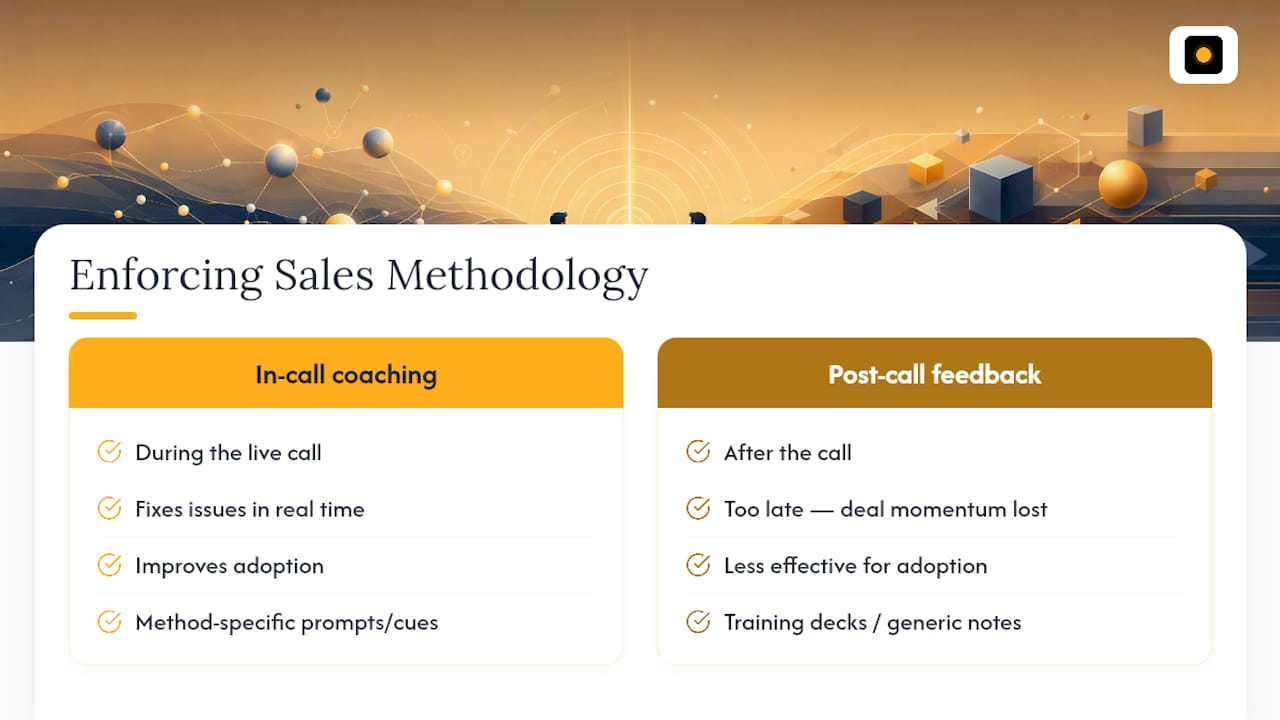
Most SaaS teams don’t fail because they picked the wrong framework. They fail because nobody enforces either one in real time. A rep can nail implication questions in role-play and still forget every one of them three minutes into a live call with a skeptical VP watching the clock.
That’s the actual gap. Live, in-call cues that flag when a rep skips implication questions or misses a chance to tailor an insight do more for adoption than another training deck. Post-call feedback tells you what went wrong after the deal’s momentum is already gone. In-call coaching fixes it while the conversation is still live, which is the entire reason OffBook builds prompts around methodology-specific cues rather than generic call notes.
— Neil
Run SPIN and Challenger Live, Not From a Post-Call Deck
Reading about implication questions and commercial insights is one thing. Executing them under pressure, mid-call, with a skeptical VP staring back at you, is another. Offbook closes that gap by listening to your video calls and surfacing on-screen prompts in real time: the implication question you forgot, the tailored insight that fits the stakeholder in front of you, the qualification gap you’re about to skip past.
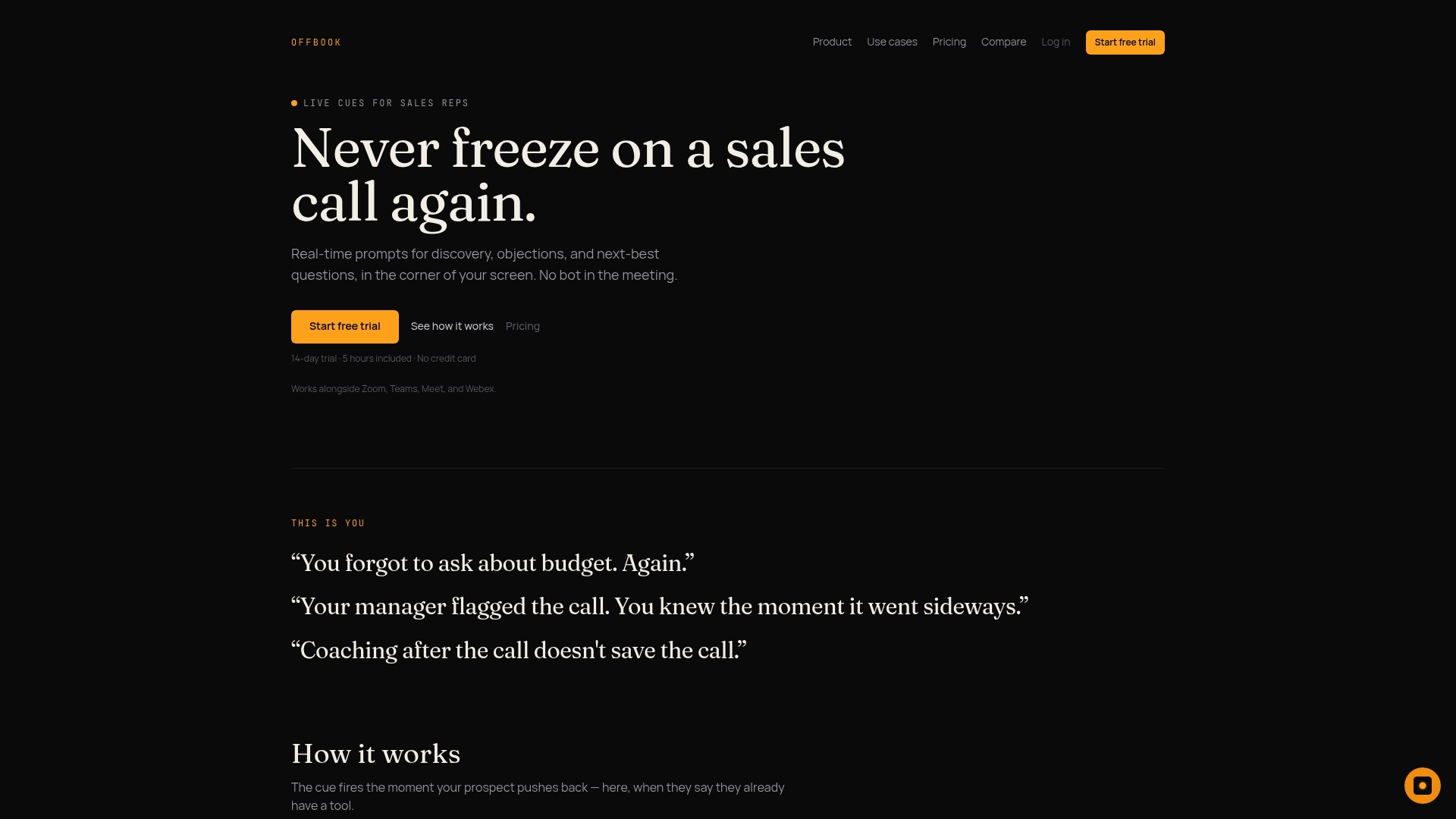
Before the call, Offbook builds a brief on the company and the person you’re meeting, so you’re not opening with a Situation question your prospect already answered on LinkedIn. During the call, it prompts you against frameworks like MEDDIC and MEDDPICC without a bot ever joining the meeting. After the call, it drafts your debrief and follow-up automatically. If your team is trying to run the hybrid playbook above without relying on memory and hope, see how Offbook supports sales teams and start a trial.
Sources
For primary sources beyond this comparison, read the official Challenger Sales Methodology overview directly from its publisher, and HBR’s original argument in The End of Solution Sales. For practitioner-level breakdowns, ORM’s head-to-head on complex deals and SalesArmor’s broader methodology comparison are worth bookmarking. Offbook’s own SPIN Selling playbook covers in-call scripts in more depth than this comparison allows. For tactical extras, Jarrod Harman’s sales tactics guide rounds out the playbook side well.
- What is the Challenger Sales Methodology?
- The End of Solution Sales (HBR)
- SPIN Selling vs Challenger Sale: Which Wins Complex Deals? | ORM