Role of VP of Sales in Early Stage: When to Hire and What They Must Do
Discover the role of VP of Sales in early stage companies. Learn when to hire and key checkpoints to ensure successful sales growth.
Published: August 8, 2026
Author: OffBook Editorial Team

If you’re at $500K–$1M ARR with two reps closing repeatably and a documented sales motion, hire a VP of Sales now. If you’re still figuring out who buys and why, hire a founding AE first. The single biggest mistake early-stage founders make is promoting the title before the role has anything to run.
Three quick checkpoints before you pull the trigger:
- ARR band: You’re approaching or past $1M ARR, or you have clear line-of-sight to it within two quarters.
- Repeatable motion: At least one non-founder rep has closed three or more deals using a process you can describe in writing. If the motion lives only in your head, a VP cannot systematize what doesn’t exist yet.
- Pipeline coverage: You’re carrying 3x pipeline coverage against your next quarter target. Below that, a VP walks into a drought, not a scaling opportunity.
If you pass all three, hire a VP. If you pass one or two, hire a founding AE or bring in a fractional VP as a player-coach while you build the motion. If you pass none, keep selling yourself and document everything you learn.
Table of Contents
- What are the concrete readiness signals for hiring a VP of Sales?
- What does an early-stage VP of Sales actually do every day?
- What should the VP’s first 30/60/90 days look like?
- Which KPIs should the VP own, and what does fair compensation look like?
- How should the VP build the first sales org?
- What hiring mistakes do founders make most often?
- How should the VP align with the founder, marketing, product, and customer success?
- Which tools actually shorten the VP’s ramp time?
- Key Takeaways
- What founders consistently get wrong about their first VP of Sales
- Offbook shortens rep ramp when the VP’s clock is already running
- Useful sources for founders going deeper
What are the concrete readiness signals for hiring a VP of Sales?
SaaStr’s field guidance is direct: seed-stage VP hires succeed primarily when founders already have 1–2 reps closing and a documented repeatable motion. Use this checklist as a pass/fail gate:
Hire a VP of Sales if:
- ARR is at or approaching $1M, with a clear path to $3M–$5M.
- Two or more non-founder reps are closing deals using a documented process.
- You have a written ICP, a defined sales cycle, and a working demo script.
- Your own time is the primary bottleneck to revenue growth.
- Pipeline coverage sits at 3x or better for the next quarter.
Hire a founding AE instead if:
- The sales motion still lives in your head.
- You have zero or one rep, and that rep was hired in the last 90 days.
- You haven’t closed 10+ deals yourself as founder.
According to Dave Rubinstein’s founding AE vs VP framework, a founding AE builds the motion while a VP runs the team that already runs it. Skipping the AE stage and going straight to a VP is one of the most expensive sequencing mistakes in early-stage B2B SaaS.
Use a fractional VP if:
- You’re between $500K and $1.5M ARR and need sales leadership but can’t justify a $250K+ full-time hire.
- You need someone to build comp plans, run pipeline reviews, and coach reps two days a week while you close.
Wait and keep selling if:
- You haven’t found a repeatable ICP.
- Win rates are below 15–20% and you don’t know why.
- Your average deal size is still highly variable with no clear pattern.
Heavybit’s founder-led sales research makes the case that founders who stay in the selling seat longer build better sales DNA into the company. Handing off too early often means handing off a problem, not an opportunity.
What does an early-stage VP of Sales actually do every day?
The job description on paper reads like a CRO role. The reality at Series A is closer to a senior AE who also builds systems. Here are the priorities in order, not alphabetically:
- Sell and learn. For the first 90 days, the VP should be on calls, closing deals, and listening to every closed-won and closed-lost recording in the CRM. Jason Lemkin’s first-two-weeks guidance is explicit: product fluency, listening to closed-won notes, and personal selling come before managing.
- Systematize the playbook. Turn the founder’s tribal knowledge into a one-page playbook: ICP, discovery questions, objection responses, demo structure, and close sequence. This document becomes the foundation for every rep hired after.
- Hire the first rep cohort. Identify the two or three AE profiles that match the motion, write the job description, and run the first hiring process. The VP should own this entirely, not hand it back to the founder.
- Set forecasting discipline. Build a weekly pipeline review cadence, define what “commit” means in your CRM, and produce the first real forecast within 60 days.
Concrete deliverables by month three: a one-page playbook, a ramp plan for new AEs, a compensation plan, a working forecast model, and a short-list of first hires. These aren’t optional. If a VP can’t produce them, the hire isn’t working.
On time allocation: in months 1–3, the VP should spend roughly 60–70% of their time personally selling and learning, and 30–40% building systems. By month 6, that ratio should flip. A VP who is still at 70% personal selling at month 6 is either understaffed or avoiding the harder work of building.
Pro Tip: Ask your VP candidate to walk you through what they’d do in their first two weeks. A strong candidate describes specific actions: listening to call recordings, mapping the CRM, and booking customer calls. A weak candidate describes org charts and strategy decks.
What should the VP’s first 30/60/90 days look like?
A prescriptive onboarding plan matters more than most founders realize. Without one, the first 90 days drift into relationship-building and strategy conversations that produce no measurable output. PulseRevOps prescribes a three-phase transition with hard checkpoints at Day 30, 60, and 90.
Month 1: Learn everything, diagnose fast
- Shadow every active deal in the pipeline and listen to at least 20 recorded calls.
- Interview five to eight current customers and three to five churned accounts.
- Map the CRM: data quality, pipeline stages, deal hygiene, and what’s actually in forecast.
- Produce a one-page written diagnosis: what’s working, what’s broken, and the top three priorities.
- Close at least one deal personally to validate product-market fit from the selling seat.
Meeting cadences to establish in month 1: daily standup with the founder (15 minutes), weekly pipeline review (60 minutes), and a bi-weekly call with marketing.
Month 2: Build the machine
- Finalize the compensation plan and quota structure for existing and incoming reps.
- Post the first AE or SDR job descriptions and begin interviewing.
- Run the first formal forecast review with the founder using a defined commit/best-case/pipeline framework.
- Ramp the first new rep using the playbook drafted in month 1.
- Establish a win/loss review process: one written analysis per week minimum.
Month 3: Own the number
- The VP owns the forecast, not the founder. This is a deliberate, dated handoff.
- Make the first hard people decision: a rep who isn’t ramping on schedule gets a performance conversation, not more time.
- Iterate the playbook based on what reps are actually doing in calls versus what the playbook prescribes.
- Deliver a 90-day written review to the founder: pipeline health, ramp metrics, hiring status, and the next 90-day plan.
Expected ramp metrics by day 90: at least one new rep in seat and ramping, a forecast accuracy within 20% of actual, and a documented playbook that reps are using without being asked.
Which KPIs should the VP own, and what does fair compensation look like?
KPIs and reporting cadence
The VP of Sales role carries full revenue accountability, which means the KPIs aren’t suggestions. These are the metrics the VP must own from day one:
| KPI | Reporting cadence |
|---|---|
| Pipeline coverage (target: 3x) | Weekly |
| Quota attainment (rep and team level) | Monthly |
| Win rate by stage and segment | Monthly |
| Sales cycle length | Monthly |
| Average contract value (ACV) | Monthly |
| CAC payback period | Quarterly |
| Forecast accuracy (commit vs actual) | Weekly and quarterly |
| Rep ramp time | Quarterly |
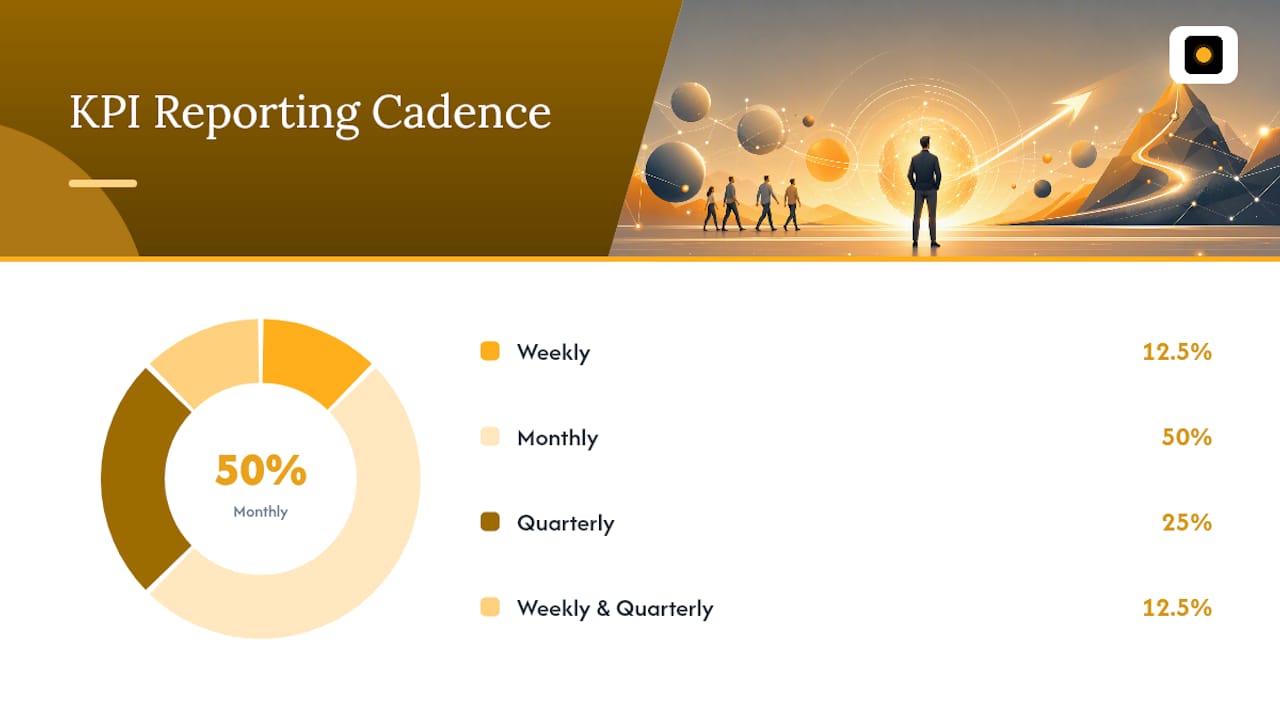
What to ask for in weekly reporting: pipeline adds, stage movements, deals at risk, and any forecast changes. Keep it to a one-page summary or a 30-minute live review. A VP who can’t produce a clean weekly pipeline update by week four has a process problem.
How should the VP build the first sales org?
Sequence matters more than speed. Hiring in the wrong order creates management overhead before you have revenue to support it.
Recommended hiring sequence:
- First hire: One or two founding AEs who can close and document. These reps validate the playbook and generate the data the VP needs to hire the next cohort correctly.
- Second hire: An SDR or an AI-assisted SDR setup with a human manager. Don’t hire SDRs before AEs are closing; you’ll generate pipeline that no one can work.
- Third hire: A sales ops or revenue ops person once the team reaches four to six reps. Before that point, the VP handles ops manually.
- First manager: Promote an AE to team lead or hire a sales manager when the team exceeds six reps and the VP is spending more than 30% of their time on management overhead.
Org snapshot at Series A ($2M–$5M ARR):
Founder → VP of Sales → 2–3 AEs + 1 SDR
That’s it. Any larger and you’re scaling before the motion is proven. Any smaller and the VP doesn’t have enough signal to build from.
Signals to pause hiring:
- Win rate drops below 20% as you add reps (motion isn’t transferable yet).
- Ramp time for new AEs exceeds six months with no improvement.
- Pipeline coverage falls below 2x despite SDR activity.
The Cornerstone Search hiring guide for SaaS executives draws a sharp distinction between “Builders” and “Scalers.” Hiring a Scaler into a Builder role is one of the most expensive profile mismatches in early-stage recruiting. Define which one you need before you write the job description.
What hiring mistakes do founders make most often?
The failure modes are predictable, which makes them avoidable.
Common mistakes:
- Hiring before the motion is proven. If the founder hasn’t closed 10+ deals and can’t describe the sales process in writing, a VP has nothing to systematize. They become an expensive individual contributor.
- Title inflation without authority. Giving someone the VP title without hiring and comp authority is a setup for failure. The VP needs to be able to fire a rep who isn’t performing without asking the founder’s permission.
- Keeping silent veto power. Founders who stay in every deal review and override the VP’s calls in front of reps destroy the VP’s authority within weeks. PulseRevOps identifies this as one of the primary reasons founder-to-VP transitions fail.
- Hiring a Scaler when you need a Builder. A VP who built a 50-person sales org at a late-stage company is not automatically the right hire for a four-person seed-stage team. The skills are different.
Interview red flags:
- Refuses to carry a personal quota in the first six months. At seed stage, that’s a non-starter.
- Pushes their last company’s playbook wholesale without first diagnosing your motion.
- Can’t produce a written one-page diagnosis of your sales org within the first week.
- Talks about “building the team” before demonstrating they can close a deal themselves.
- References are all from peers, not from direct reports or founders they’ve worked for.
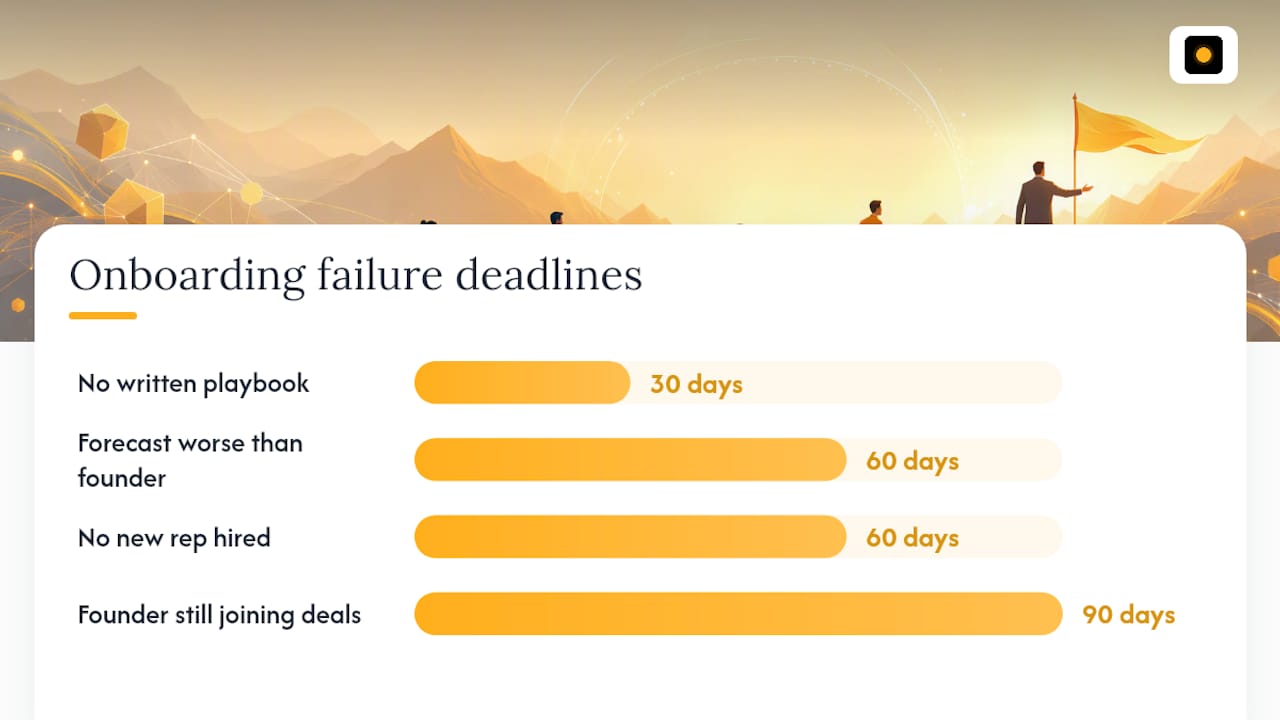
Onboarding failure signals in the first 90 days:
- No written playbook or diagnosis by day 30.
- Forecast accuracy is worse than the founder’s gut feel by day 60.
- No new rep hired or in process by day 60.
- The VP is still asking the founder to join every major deal by day 90.
Pro Tip: Run a structured reference check with at least one founder the VP worked for directly. Ask: “Did they carry quota themselves in the first six months?” and “Would you hire them again at a 10-person company?” The second question is the one that tells you everything.
For a broader view of why early-stage sales hiring goes wrong, the startup sales hiring pitfalls guide covers the market conditions and candidate-side dynamics founders routinely underestimate.
How should the VP align with the founder, marketing, product, and customer success?
Silos form fast at early-stage companies, and the VP is usually the person who either prevents them or accelerates them.
Required meeting cadences:
- Founder and VP: Weekly 1:1 (30–45 minutes). Agenda: pipeline, blockers, hiring, and one strategic decision. This is not a deal review; it’s a leadership conversation.
- Sales and marketing: Bi-weekly SLA review. Who owns what in the funnel, what’s the lead handoff criteria, and what’s the MQL-to-SQL conversion rate this week.
- Sales and product: Monthly win/loss debrief. The VP brings three closed-won and three closed-lost write-ups. Product brings the roadmap. The output is a prioritized list of deal-blocking gaps.
- Sales and customer success: Monthly handoff review. Define the criteria for a “good” customer handoff and track early churn signals by rep.
Deliverables the VP should produce for cross-functional alignment:
- A written ICP document shared with marketing and product within 30 days.
- An SLA for lead handoff: what qualifies as a sales-ready lead, response time expectations, and what happens to leads that don’t meet the bar.
- Win/loss write-ups: one per week, shared with product and marketing.
- Playbook updates: quarterly, incorporating feedback from reps and product changes.
Quick alignment checklist when collaboration stalls:
- Are marketing and sales using the same ICP definition? If not, fix that first.
- Does CS know what was promised in the sales process? If not, the handoff document is missing.
- Is product getting structured deal feedback, or just anecdotes? If anecdotes, the win/loss process isn’t running.
Heavybit’s founder-led sales framework argues that the founder’s early selling experience is the single best input for aligning GTM functions later. The VP’s job is to formalize what the founder learned, not to replace it with a blank-slate strategy.
Which tools actually shorten the VP’s ramp time?
The right toolstack in the first 90 days isn’t about sophistication. It’s about removing friction from the things the VP needs to do most: diagnose the pipeline, coach reps, and run disciplined calls.
Core tool checklist:
- Live call coaching (Offbook): — Unlike post-call tools, Offbook surfaces real-time cues during video calls, prompting reps on MEDDIC and MEDDPICC qualification gaps, objection handling, and discovery questions as the conversation happens. For a VP onboarding new AEs, this compresses the feedback loop from days to seconds.
How to plug live coaching into the VP’s onboarding plan:
For a structured approach to building the coaching program the VP will own, the sales coaching program guide walks through the cadence and content in detail.
Pro Tip: Don’t wait until month 2 to introduce call coaching tools. The VP’s own calls in month 1 are the best source of playbook data. Record everything, review weekly, and let the patterns tell you what the playbook is missing.
Key Takeaways
Hire a VP of Sales when you have a repeatable motion, 3x pipeline coverage, and at least one non-founder rep closing deals — not before.
| Point | Details |
|---|---|
| Hire/wait decision | Pass all three gates (ARR, repeatable motion, 3x pipeline) before hiring a VP; use a founding AE or fractional VP otherwise. |
| Title clarity | Match the title to the actual scope: a player-coach at seed is a Head of Sales, not a VP, regardless of what the offer letter says. |
| 30/60/90 milestones | Day 30: written diagnosis. Day 60: first rep hired, forecast running. Day 90: VP owns the number independently. |
| Top 3 KPIs | Pipeline coverage (3x target), quota attainment, and forecast accuracy are the metrics that matter most in the first quarter. |
| Offbook as a ramp accelerator | Deploy Offbook’s live call coaching and pre-call briefs in month 1 to compress rep ramp time and enforce MEDDIC discipline from day one. |
What founders consistently get wrong about their first VP of Sales
The conventional wisdom says hire a VP of Sales as soon as you can afford one. That framing is backwards. The question isn’t whether you can afford the hire. It’s whether the hire has anything to work with.
The best early-stage VPs I’ve seen described in practitioner accounts aren’t the ones with the most impressive logos on their resume. They’re the ones who show up on day one, ask to listen to call recordings, and produce a written diagnosis before they’ve been in the seat two weeks. That behavior, more than any credential, is the signal that you’ve hired a Builder and not a Scaler.
Founders also underestimate how much their own behavior shapes the VP’s success. Staying in deals past the handoff date, overriding the VP’s calls in front of reps, or refusing to give real hiring authority aren’t just management mistakes. They actively destroy the VP’s credibility with the team. A deliberate, dated transfer of authority, where the founder steps back on a calendar, is the single most underrated structural decision in the transition.
The VP’s first 90 days are a diagnostic, not a honeymoon. If you’re not seeing a written playbook, a running forecast, and at least one new rep in process by day 60, you have a problem worth addressing directly. The longer you wait to have that conversation, the more expensive the eventual outcome.
Offbook shortens rep ramp when the VP’s clock is already running
The VP’s first 90 days move fast, and every week a new rep spends learning through trial and error is a week of pipeline you’re not building. Offbook gives early-stage sales teams a concrete edge here: live AI coaching that surfaces MEDDIC and MEDDPICC cues directly on-screen during video calls, without a bot joining the meeting or disrupting the conversation.
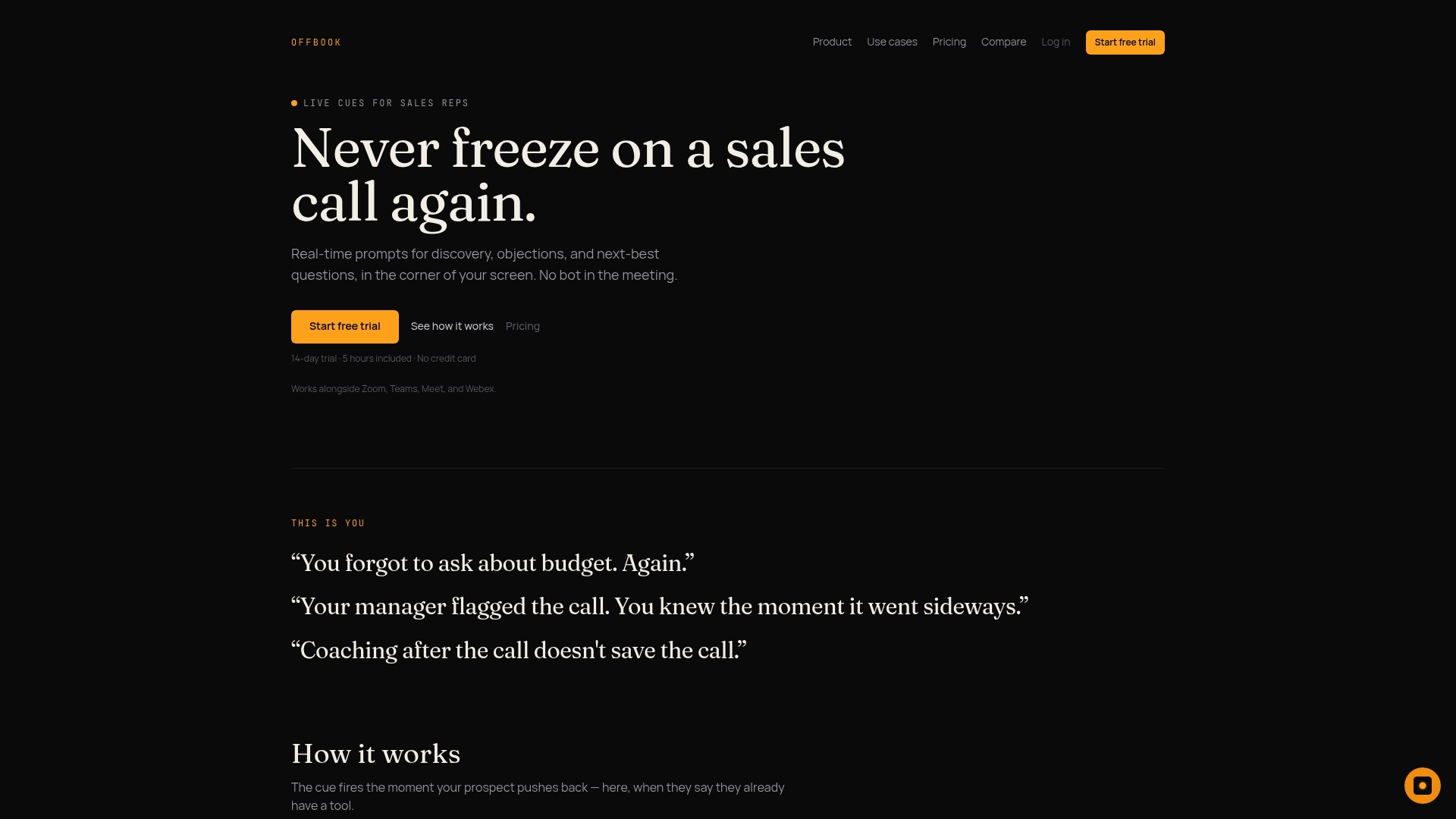
For a VP onboarding their first AE cohort, Offbook removes the dependency on the VP shadowing every call. Reps get real-time prompts on qualification gaps, objection handling, and discovery questions the moment they’re relevant. Pre-call briefs mean reps walk into every meeting knowing the company, the contact, and the context. Post-call debriefs give the VP a structured coaching record without spending hours reviewing recordings.
Plug Offbook into month 1 for the VP’s own calls, month 2 for the first AE cohort, and month 3 to scale playbook feedback across the team. That’s a 90-day ramp plan with live coaching built in from the start. See how it works for your team at Offbook for sales teams.
Useful sources for founders going deeper
- Dear SaaStr: I’m a Seed Stage, First Time VP of Sales. What Should I Do To Be Successful? | SaaStrAI
- What A New VP of Sales Needs To Be Doing Their First 2 Weeks — Jason M. Lemkin
- VP of Sales — Job description templates | Rework Resources
- Founding AE vs VP Sales: Which First? — Dave Rubinstein
- How do you transition from founder-led to first VP of Sales? — PulseRevOps
- How to Build a Successful Founder-Led Sales Strategy | Heavybit
- VP of Sales: Role, Salary & Career Guide (2026) — Prospeo