Procurement Questions SaaS Reps Can Copy, Mapped to MEDDPICC
Stage sequenced, copy ready procurement question sets mapped to MEDDPICC. Use the article's scripts, email templates, and the five to eight question per...
Published: September 16, 2026
Author: OffBook Editorial Team

Ask procurement about preferred paper, security and compliance requirements, payment terms, approval thresholds, and go-live timelines, in that order, and ask early. Bring procurement into the deal at validation, not at contract stage, and structure the conversation around the MEDDPICC Paper Process pillar. Doing this converts procurement from a late surprise into a forecastable step, since procurement now acts as a decision-maker in roughly 53% of B2B buying cycles.
TL;DR:
- Engaging procurement early in validation can reduce deal delays by addressing approval and security review timelines upfront, especially for spend thresholds over $10,000.
- Prioritize questions about legal, security, and payment terms before final negotiations to prevent multi-week redline cycles and unexpected contractual delays.
- Sending standardized legal and security documents within the first two weeks of validation shortens overall cycle times and avoids prolonged back-and-forths.
- Recognize signals like security review boards or high approval thresholds to identify when procurement becomes a second decision-maker, requiring immediate involvement.
- Use targeted questions aligned with MEDDPICC stages and leverage live coaching tools to ask the right procurement questions at the optimal moments during sales calls.
Table of Contents
- Who Should You Involve, and When?
- Copy-Ready Question Sets by Sales Stage
- What Procurement Will Push on for Paper and Legal
- Security and Compliance Questions to Prepare For
- Commercial Questions: Payment Terms, POs, and Pricing Levers
- Timelines, Fiscal Cutoffs, and the Five Disqualifiers
- How to Sequence These Questions on Calls and in Emails
- A Seller’s Take on Where Procurement Actually Slows Deals
- Prep for Procurement Before the Call Starts
- Sources
- FAQ
Who Should You Involve, and When?
The economic buyer decides whether your product solves their problem. Procurement decides whether buying it is administratively possible. Legal decides whether the contract is acceptable, and InfoSec decides whether your product is safe to plug into their stack. Conflating these roles is the single most common reason B2B SaaS deals stall in the final two weeks of a quarter.
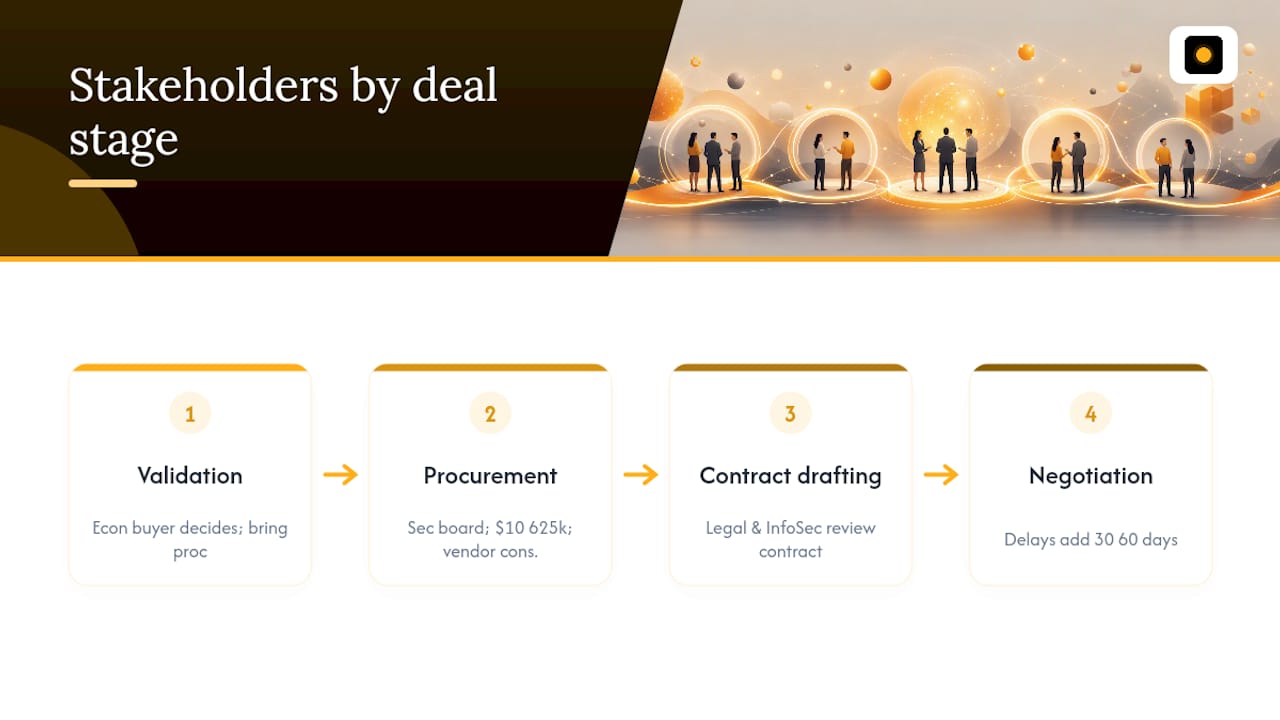
Bring procurement in at the validation stage, right after the champion confirms budget and pain are real, but before you start drafting contract language. This is earlier than most reps default to, and it works because procurement flags approval delays that otherwise cost 30 to 60 days once you hit the negotiation stage.
Certain signals mean you need procurement on the call immediately, not next week: any mention of a security review board, a stated enterprise spend threshold (commonly $10,000 to $25,000 annually), or a vendor consolidation mandate from finance. Any one of those means the deal now has a second buyer.
Copy-Ready Question Sets by Sales Stage
MEDDPICC gives you a structure, so use it. Mapping your questions to its pillars, especially Paper Process, reduces late-stage surprises and can cut cycle length by 20 to 35% when you apply it consistently across every call, not just the ones that feel important.
Discovery stage (Metrics, Pain, Champion):
- “What’s the cost of not solving this in the next two quarters?”
- “Who else has felt this pain, and did they raise it internally?”
- “If we move forward, who besides you would need to sign off?”
- “Has your team evaluated a tool like this before? What killed it?”
Validation stage (Economic Buyer, Decision Criteria, Decision Process):
- “Walk me through how a purchase like this actually gets approved.”
- “Besides you, who has to say yes before this closes?”
- “What criteria will procurement or legal use to evaluate us?”
- “Is there budget allocated for this, or does budget need to be created?”
Procurement and negotiation stage (Paper Process, Competition, Implicate the Pain):
- “What’s your preferred paper, ours or yours?”
- “What’s your typical SOC 2 or security review timeline?”
- “What are your standard payment terms, and do you require a PO?”
- “Who holds signature authority above [dollar threshold]?”
Ask five to eight questions per call, spread across two or three pillars, rather than trying to cover every MEDDPICC pillar in the first conversation. Front-load Metrics and Champion early. Save Paper Process and Competition for validation and negotiation, once you know procurement is actually in the room.
What Procurement Will Push on for Paper and Legal
Procurement almost always leads with process questions before it touches your pricing. Ask these directly, and don’t wait for them to ask you first:
- “What’s your standard MSA, and do you have a precedent contract with a vendor like us?”
- “What’s your vendor onboarding process, and how long does it typically take?”
- “What’s your average redline turnaround, and who reviews on your side?”
- “Are there non-negotiable clauses we should know about now, like liability caps or SLA minimums?”
The fastest way to shorten this cycle is to skip waiting for procurement to request documents. By week two of validation, send your MSA, DPA, SLA, and security packet as one bundle, because sending standard legal and security materials early turns a multi-round redline fight into a short tweak cycle. If procurement counters with unusual terms (uncapped liability, 99.99% uptime with financial penalties), loop in your own counsel before responding, and keep the conversation counsel-to-counsel rather than rep-to-procurement from that point forward.
Security and Compliance Questions to Prepare For
InfoSec and procurement will ask a predictable set of questions, and having answers ready before the call is worth more than a polished pitch deck. Expect:
- “Do you have SOC 2 Type II, and can we see the report under NDA?”
- “Have you completed a SIG Lite or full SIG questionnaire recently?”
- “When was your last penetration test, and what were the findings?”
- “Where is customer data stored, and do you use subcontractors or subprocessors?”
- “What’s your breach notification timeline?”
Offer your SOC 2 report under NDA, a completed SIG if you have one, and a clearly labeled liability cap summary. These are the artifacts procurement expects to see as standard risk documentation, not exceptional proof. If you lack a certification, say so directly and give a dated remediation roadmap instead of a vague promise. “SOC 2 Type II by Q3” closes more deals than silence ever will.
Commercial Questions: Payment Terms, POs, and Pricing Levers
Money questions decide whether the deal signs this quarter or slips into the next one. Ask early:
- “What are your standard payment terms, net 30, 60, or 90?”
- “Do you require a purchase order before we can invoice?”
- “What’s your invoicing cadence, monthly, quarterly, or annual upfront?”
- “For renewals, do you rebill automatically or require a new PO each cycle?”
Also ask whether budget is already allocated or needs to be created through a business case. That single answer reshapes your entire close plan. Procurement commonly counters with multi-year discounts, ramped payment schedules, or milestone-based implementation billing. Discuss these levers with your champion before procurement raises them, so you’re negotiating from a plan instead of reacting live. A SaaS marketing perspective on GTM strategy makes a similar point: vendors who understand a buyer’s internal budget mechanics close faster than vendors who only understand their own pricing sheet.
Timelines, Fiscal Cutoffs, and the Five Disqualifiers
Ask about approval sequence, signature authority thresholds, target go-live date, and where you fall relative to the buyer’s fiscal year cutoff. A deal that looks healthy in every other dimension can still die against a fiscal calendar you never asked about.
Five procurement answers should worry you enough to reforecast the deal immediately, since validating them by stage three keeps the deal forecastable:
- No formal vendor approval process exists yet
- Security review takes longer than your remaining sales cycle
- Legal redlines routinely take three or more weeks
- Signature authority sits above anyone you’ve spoken to
- The fiscal cutoff falls before procurement’s own review completes
If you hear any of these, don’t keep pushing the same close date. Reforecast the deal to next quarter, accelerate by escalating to your own leadership for a counsel-to-counsel conversation, or deprioritize it if the mismatch is structural.
How to Sequence These Questions on Calls and in Emails
- Ask no more than five to eight questions per call, and never try to cover Metrics, Paper Process, and Competition in the same conversation.
- Sequence discovery first, validation second, procurement and negotiation last, letting each stage confirm you’re ready for the next.
- Ask your champion to forward a short procurement intro email rather than cold-emailing procurement yourself; attach your MSA and security packet immediately after that first reply.
- Answer every procurement question in writing within one business day, since procurement prefers documented answers over another meeting.
Pro Tip: Draft your procurement intro email before the champion asks for it. A rep who already has the email, MSA, and security packet ready looks prepared; a rep scrambling to write one after the champion asks looks behind.
Timing and phrasing matter more here than most reps assume. Live call coaching that flags the right MEDDPICC gap in real time, paired with a pre-call brief on who’s joining and what they care about, means you ask the Paper Process question in call three instead of remembering it existed in call six.
A Seller’s Take on Where Procurement Actually Slows Deals
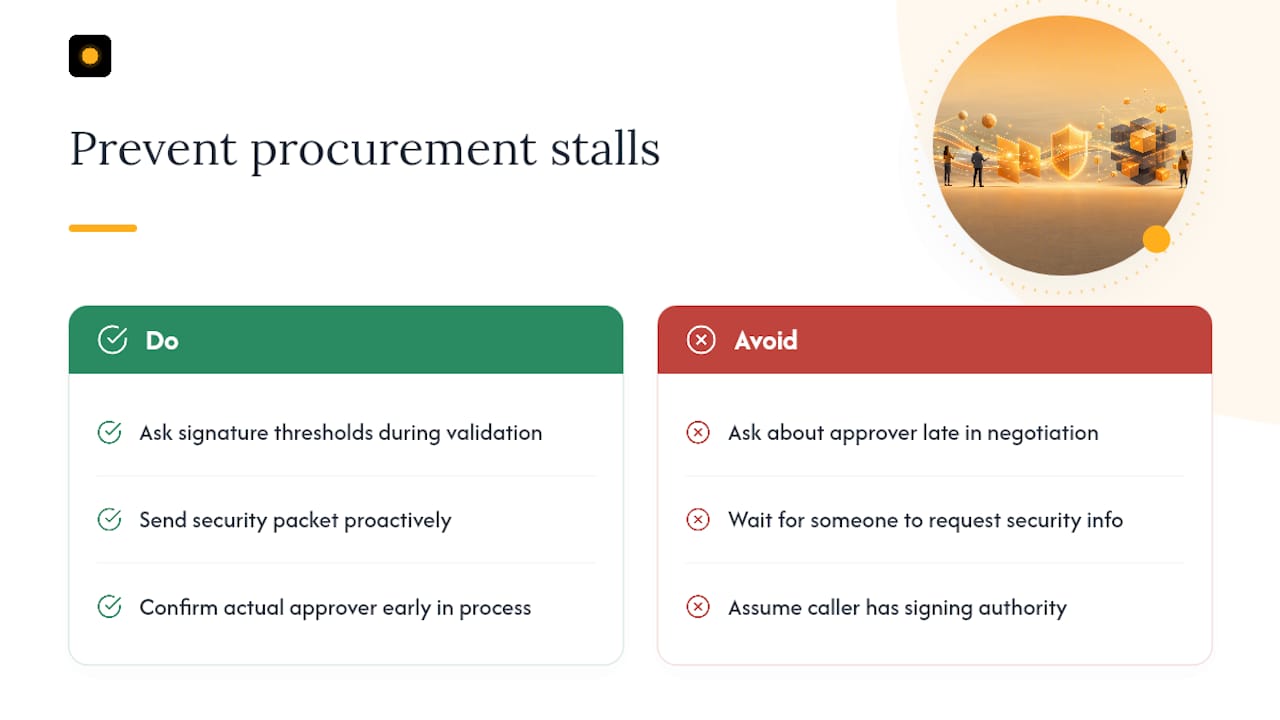
The deals that stall in procurement almost never stall because of price. They stall because a rep didn’t ask about signature authority until week six, then discovered the actual approver sat two levels above everyone on the call. Reforecasting that deal cost a full quarter.
Two fixes: ask about signature thresholds during validation, not negotiation, and send your security packet before anyone requests it. Both take five minutes and save weeks.
— Neil
Prep for Procurement Before the Call Starts
Real-time call coaching software can help you enter procurement conversations prepared instead of reactive. Such software runs live during your video calls, without a bot joining the meeting, and surfaces MEDDPICC-aligned questions (Paper Process, signature authority, security timeline) the moment the conversation opens a gap for them.
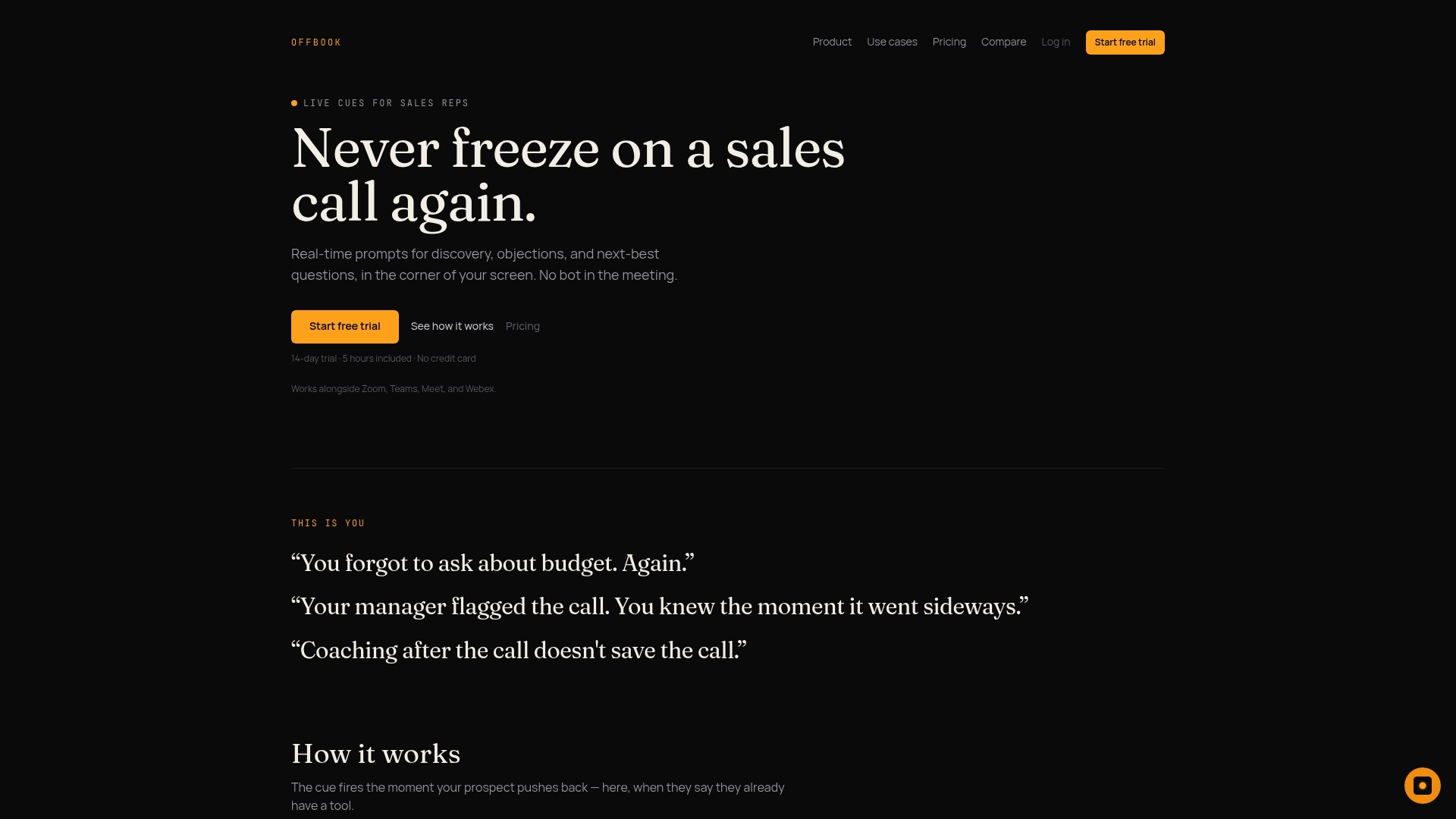
Before the call even starts, software tools can build a brief on the company and the people you’re about to meet, so you already know who holds budget authority before procurement tells you. After the call, they can draft your follow-up and the procurement intro email your champion needs to forward. If you’re tired of realizing the right question five minutes after the call ends, see how live coaching for sales calls works and start a trial.
Sources
- B2B Sales Discovery Questions: 50+ by Stage & Persona
- Navigating Procurement and Legal in Enterprise Sales
- What’s the right way to engage Procurement vs the buyer?
FAQ
When should you bring procurement into a sales cycle?
Bring procurement in at validation, once pain and budget are confirmed but before contract drafting starts, since procurement participates as a decision-maker in roughly 53% of B2B buying cycles.
What are the most important procurement questions to ask first?
Ask about preferred paper and MSA precedent, security and compliance timelines, payment terms and PO requirements, and signature authority thresholds, in that order.
How many procurement questions should you ask per call?
Ask five to eight questions per call across two or three MEDDPICC pillars, rather than covering every pillar in one conversation.
What documents should you send procurement before they ask?
Send your MSA, DPA, SLA, and security packet (including a SOC 2 report under NDA if available) by week two of validation to shorten redline cycles.
What are the five procurement disqualifiers to watch for?
No formal vendor approval process, a security review longer than your remaining cycle, slow legal redlines, unreachable signature authority, and a fiscal cutoff before review completes.
Can live call coaching help with procurement questions?
Yes. Tools like Offbook surface the right MEDDPICC question, such as Paper Process or signature authority, in real time during the call based on what the conversation actually covers.