60 MEDDPICC Qualification Questions: Stage Sequencing & Champion Check
A bank of 60 MEDDPICC qualification questions by pillar, with stage based sequencing, a three step champion test, sample scripts, and live call prompts.
Published: September 6, 2026
Author: OffBook Editorial Team

60 MEDDPICC Qualification Questions: Stage Sequencing & Champion Check
This article hands you a ready-to-use MEDDPICC question bank organized by all eight pillars, with sequencing guidance for when to ask what and a repeatable champion test you can run on your next call. Use the questions verbatim, adapt the scripts in the sample sequences below, and lean on the red flag checklist to know when to downgrade a deal before it wastes another quarter.
TL;DR:
- Asking measurable quantity questions early helps identify specific metrics owners and prevents deals from stalling due to vague or missing data.
- Focusing on decision process and paper process questions during mid-stage discussions reduces surprises and delays caused by overlooked legal or approval timelines.
- Pushing to identify the economic buyer by the end of the second call increases qualification and minimizes late-stage surprises or stalled deals.
- Confirming a genuine champion involves testing their ability to introduce you to the economic buyer, present the business case, and explain potential personal impact of success or failure.
- Using structured coaching and live prompts improves MEDDPICC consistency, shortens qualification cycles, and reduces the likelihood of missed pillars or false champions.
Table of Contents
- MEDDPICC Qualification Questions by Pillar
- Sequence and Timing: Use MEDDPICC by Sales Stage
- Champion Test, Red Flags, and Validation Checklist
- Sample Scripts for Discovery, Demo Follow-Up, and Procurement
- How Pre-Call Briefs and Live Coaching Make MEDDPICC Repeatable
- What One Habit Does for Qualification Rates
- Run MEDDPICC Consistently With Offbook
- Sources
MEDDPICC Qualification Questions by Pillar
Every pillar earns its place in MEDDPICC because it closes a specific blind spot. The questions below are grouped so you can pull exactly what you need for the call you have today, not the call you wish you were having.
Metrics
Metrics questions fail when they stay abstract. A rep who accepts “we want to improve efficiency” as an answer has not qualified anything. Buyers consistently weigh measurable business outcomes over vague promises, according to Harvard Business Review’s B2B Elements of Value research. This means your questions need to force a number, not just invite one.
- What does this problem cost you today, in dollars or hours per week?
- How are you measuring success for this initiative internally?
- Who owns that metric, and how often do they report on it?
- What was that number six months ago, and where do you expect it to be in six months if nothing changes?
- Is there a target the business has already committed to hitting?
- What happens to your bonus or your team’s targets if this number doesn’t move?
- How did you calculate the ROI you’re expecting from a solution like this?
- Which metric would your CFO ask about first if this project came up in a budget review?
- Has anyone tried to fix this before, and what did that attempt cost?
- What’s the gap between where you are and where “solved” looks like?
A strong answer names a specific figure and a specific owner. “We’re losing about 12 hours a week across the team, and my director tracks that in our weekly ops review” beats “it’s a productivity thing” every time.
Economic Buyer
- Who has the authority to sign off on a purchase this size?
- Have you personally gotten budget approved for something like this before?
- What does the approval chain look like above your role?
- Would you be comfortable introducing me to that person directly?
- What does your economic buyer care most about this quarter?
- Has budget already been allocated for this problem, or does it need to be created?
- Who could kill this deal even if everyone else in the room says yes?
- When was the last time this budget holder approved a similar purchase?
Decision Criteria
- What criteria will this be scored against internally?
- How is each criterion weighted, and who set those weights?
- Are there must-haves that would disqualify a vendor immediately?
- Who else is contributing to that scorecard besides you?
- Has the criteria been finalized, or is there still room to shape it?
- What did you wish a previous vendor had done better?
- If two vendors tied on price, what would break the tie?
- How does technical fit get weighed against ease of adoption?
Decision Process
- Walk me through every step between now and a signed contract.
- Who needs to approve at each of those steps?
- What’s the realistic timeline, not the ideal one?
- Has a decision like this ever stalled internally, and why?
- Who besides you needs to be convinced before this moves forward?
- Is there a specific date this needs to be resolved by, and what’s tied to that date?
- What internal meetings does this need to survive before signature?
Paper Process
- What does your legal review typically take, in business days?
- Does security or compliance need to review this, and what does that involve?
- Have you used a vendor of our size and type before?
- What contract terms have caused delays with other vendors in the past?
- Is there a procurement team that needs to run a formal RFP?
- Who owns redlines on your side once we get to contract?
Practitioner analysis backs up why this pillar deserves early attention rather than last minute panic: teams that document internal decision and paper-process requirements early avoid deals dying quietly in legal, according to Coffee.
Identify Pain
- What triggered you to start looking for a solution now?
- What happens if this problem goes unsolved for another year?
- Who inside the company feels this pain most acutely?
- What has this cost you in lost deals, churned customers, or missed targets?
- Is there a specific incident that made this urgent?
- How is this pain showing up outside your department?
- What’s the timeframe you need relief by, and why that date?
- If you solved this tomorrow, what would change for your team by Friday?
Champion
- Who inside this account is going to fight for this deal when we’re not in the room?
- Would you be willing to introduce me to your economic buyer this week?
- Can you walk your leadership through the business case yourself?
- What’s in it for you personally if this project succeeds?
- Have you championed a purchase like this before, and how did it go?
- What would you need from me to make your internal pitch stronger?
- If this initiative failed, what would that mean for you specifically?
Competition
- Who else are you evaluating for this?
- Is building this internally on the table?
- What did you like or dislike about a competitor’s demo?
- Has anyone on your team already got a preferred vendor in mind?
- What would make you choose a competitor over us?
- Is staying with the status quo a real option here?
Offbook’s MEDDPICC template guide breaks these questions into CRM fields you can tag with evidence, so answers don’t just live in your notebook.
Sequence and Timing: Use MEDDPICC by Sales Stage
Firing all sixty-plus questions in one call is how you lose the room. Sequence by stage instead of acronym order, which practitioner guidance consistently recommends for improving conversion and avoiding early call fatigue.
- Early discovery: lead with pain, metrics, and champion. Save deep economic buyer probing until pain is validated, then ask who controls the budget.
- Mid-stage (demo and evaluation): shift to decision criteria and surface competition directly. This is when scorecards get built and rivals get named.
- Procurement and close: confirm paper process, legal timing, and recheck that your champion still has economic buyer access. Deals often stall here because nobody asked about security review until week six.
Higher performing reps spend disproportionately more discovery time on decision process and paper process questions than lower performers, according to Retorio’s analysis of discovery call patterns. That extra time upfront is what prevents late-stage surprises.
Red flag by stage: if you’re two calls deep and still can’t name a metric owner, stop advancing the deal and go back to pain. If procurement surfaces a legal review timeline you didn’t know existed, escalate to your manager before you build a forecast around this quarter.
Pro Tip: Run economic buyer and paper process questions in parallel once you hit mid-stage. Reps who wait for a “good moment” to ask about legal review usually ask too late.
Champion Test, Red Flags, and Validation Checklist
A friendly contact is not a champion. The test that separates the two takes three steps, and it’s the same test Exec’s MEDDPICC guide recommends for enterprise sellers.
- Ask them to introduce you to the economic buyer. Stalling here is the single strongest signal of a false champion.
- Ask them to present your business case internally, without you in the room.
- Ask what happens to them personally if this initiative fails.
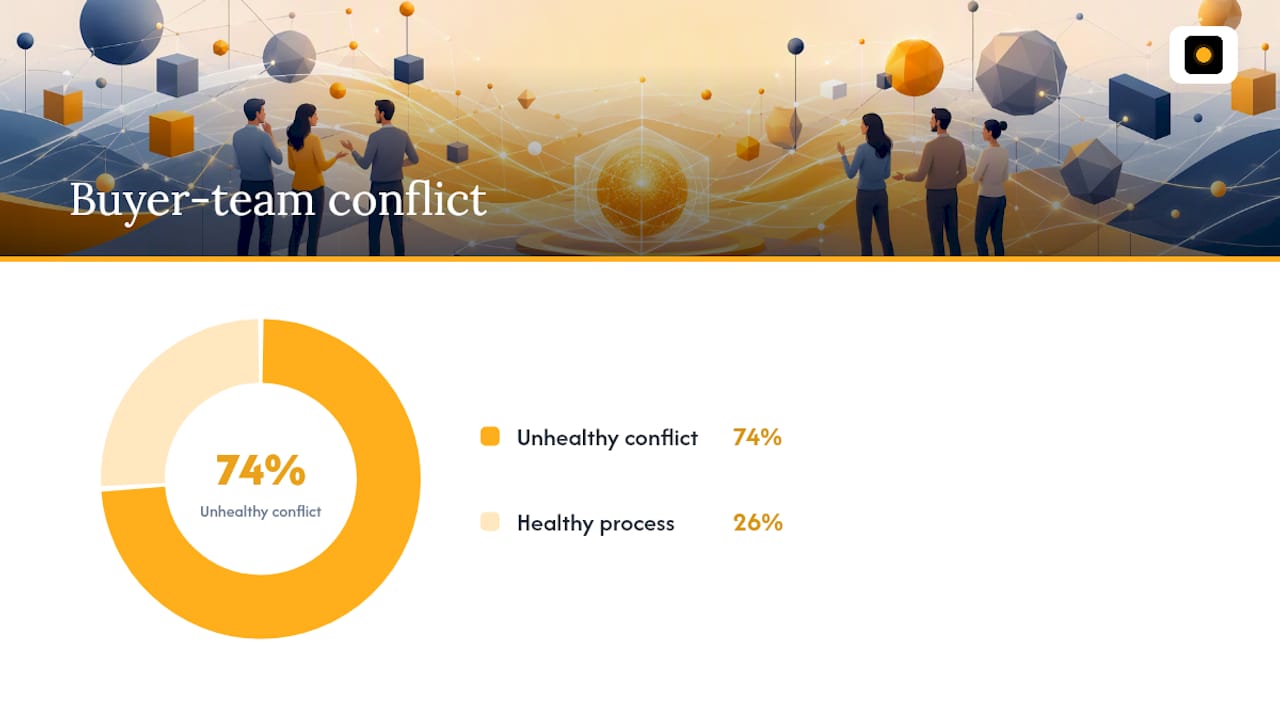
A 2025 Gartner survey found that 74% of B2B buyer teams demonstrate unhealthy conflict during the decision process. A real champion helps you navigate that conflict. A false one disappears the moment it shows up.
Red flags worth an immediate downgrade: no path to the economic buyer after three calls, metrics that stay vague after direct questioning, and a paper process nobody on the buying side can describe.
Sample Scripts for Discovery, Demo Follow-Up, and Procurement
Questions only work if they sound like conversation, not an audit. A few starting points:
- First discovery call: “Before we get into the product, help me understand what’s actually costing you time or money right now, and how you’re measuring that today.”
- Demo follow-up: “Now that you’ve seen it, who else needs to weigh in before this becomes a real decision, and is there a scorecard forming yet?”
- Procurement prep: “So we don’t lose momentum once this gets to legal, walk me through what a typical review looks like on your end.”
Offbook’s guide on pain-focused discovery questions has longer versions of these scripts if you want more phrasing options before a big call.
How Pre-Call Briefs and Live Coaching Make MEDDPICC Repeatable
Knowing the questions is the easy part. Remembering to ask the right one, at the right moment, under the pressure of a live call, is where most reps drop pillars entirely.
- A pre-call brief on the people and company you’re meeting narrows down which questions actually matter, so you stop wasting minutes on generic discovery.
- Live, on-screen cues during the call can remind you to run the champion test before the call ends, or flag that you never got a number for the metrics pillar.
- Post-call debriefs catch what got skipped so the next call closes the gap instead of repeating the same hole.
Offbook’s 30 to 60 day pilot playbook shows how founder-led teams have structured this rollout without adding process overhead.
Pro Tip: Pair your pre-call brief with a printed or pinned version of your economic buyer questions. Reps forget to ask about budget authority more often than any other pillar.
What One Habit Does for Qualification Rates
The biggest lever in MEDDPICC isn’t a better question. It’s timing discipline. Reps who wait until call four or five to ask for economic buyer access almost always find out too late that their champion never had it.
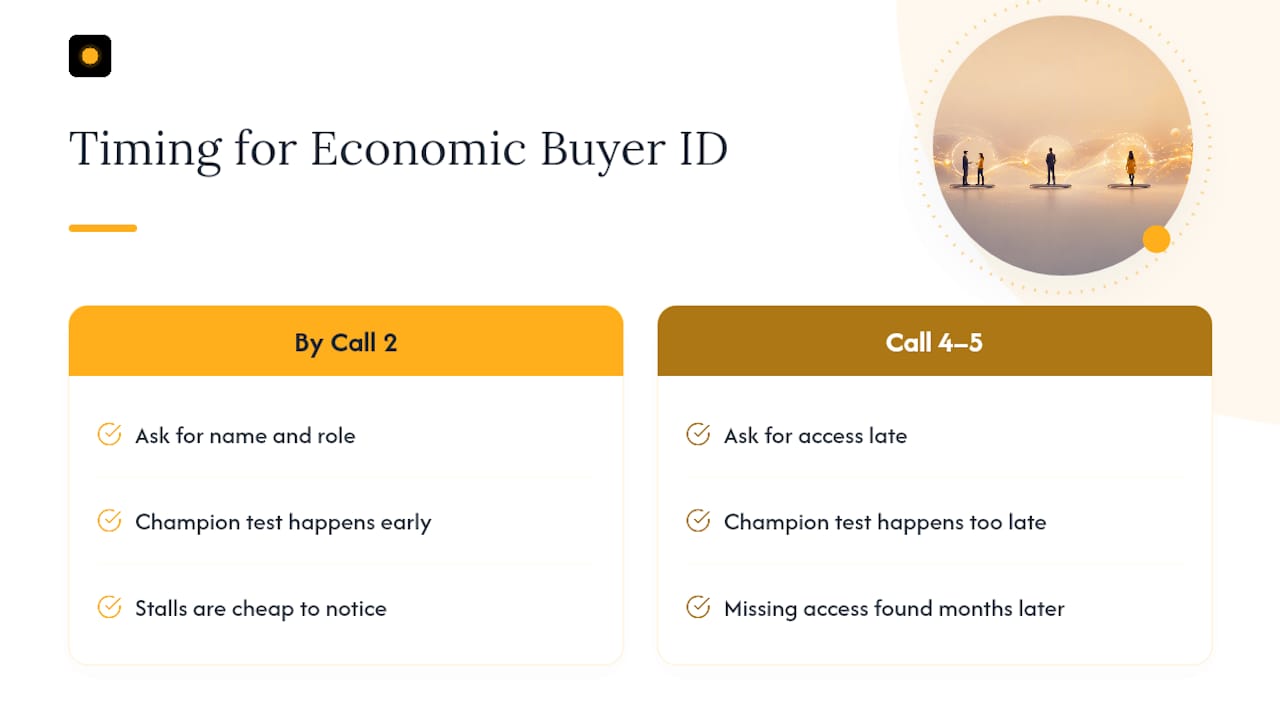
The single habit worth adopting: push for economic buyer identification by the end of call two, even if it’s just a name and a role, not a meeting yet. It forces the champion test earlier, when a stall is cheap to notice instead of expensive to unwind three months into a forecasted deal.
MEDDPICC works when the sequence is disciplined, not when the acronym is memorized.
— Neil
Run MEDDPICC Consistently With Offbook
Knowing the right questions is one thing. Asking them, in order, while also running a real conversation, is where most reps lose the thread. This software listens on your live video calls and surfaces on-screen prompts tied to MEDDPICC pillars, so you get a nudge to ask for the economic buyer or run the champion test right when the moment calls for it, not after the call ends when it’s too late to matter.
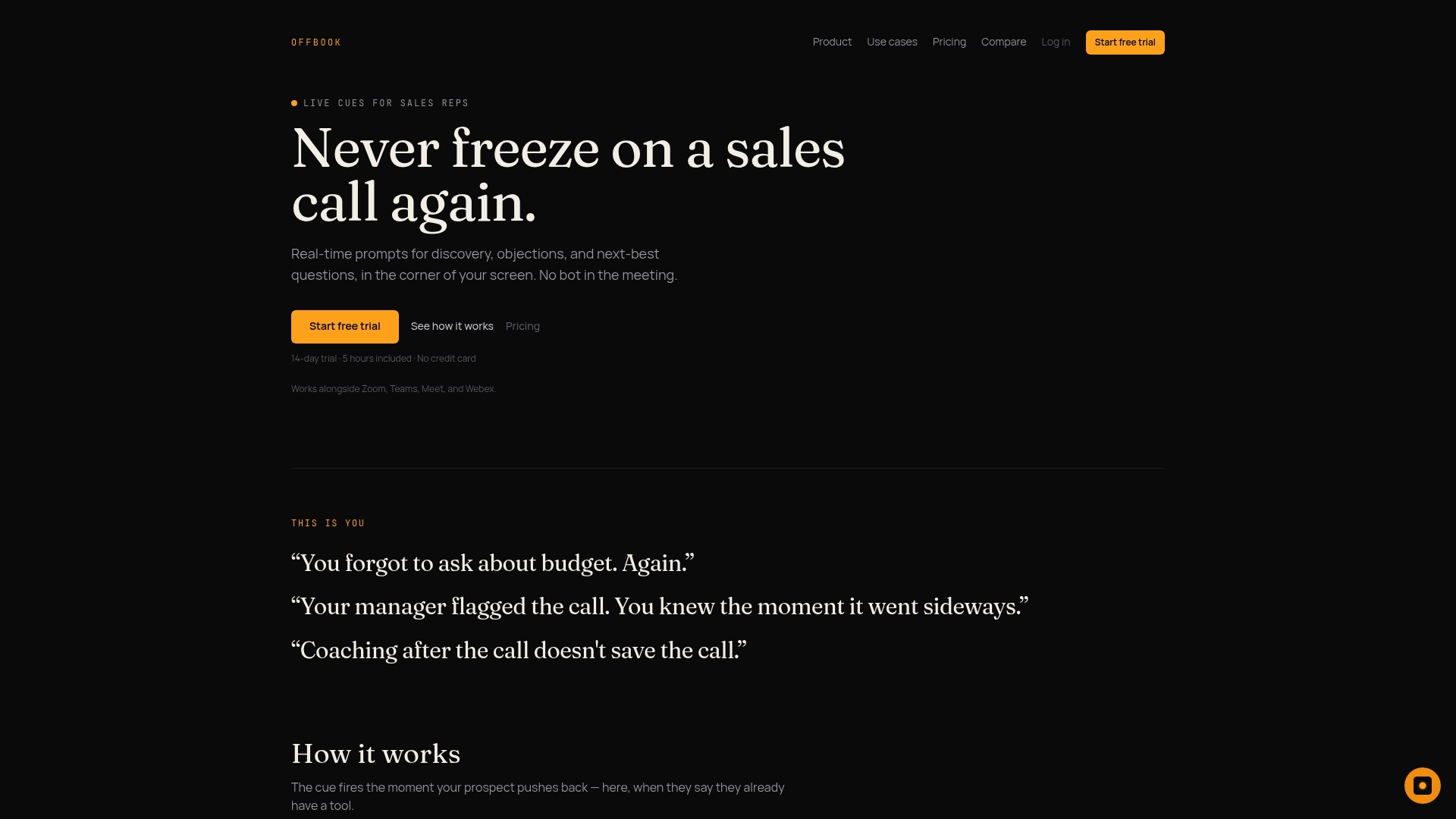
Pre-call briefs prep you on who you’re meeting before you dial in, and post-call debriefs flag which pillar got skipped so the next call fixes it. Teams using structured live coaching tend to see:
- Fewer false champions slipping through to forecast
- Faster qualification cycles because pillar gaps get caught mid-call, not in a Monday pipeline review
- More consistent MEDDPICC execution across reps at different experience levels
Check out Offbook’s sales coaching page to see how live coaching works on a real call, or start with the Offbook overview if you want the full product picture before your next demo.