Pilot 4 Live Call Coaching Techniques in 60–90 Days, Founder Led SaaS
Founder led B2B SaaS teams: pilot four live call coaching techniques in 60–90 days to improve quota attainment, ramp time, and CRM completeness.
Published: September 13, 2026
Author: OffBook Editorial Team

Live call coaching techniques give sales reps 1 to 3 prioritized cues on-screen during a real sales conversation, drawn from AI that listens without joining the call. Adopt these four first: a pre-call prospect brief, concise in-call prompts triggered by specific moments, short objection response patterns for rehearsal, and immediate post-call synthesis. Pilot the combination for 60 to 90 days and track quota attainment, ramp time, and CRM field completeness before rolling it out team-wide with guidance on practical AI workflows for entrepreneurs from AI for Entrepreneurs: Move Fast on Ideas | AmmarAI.
TL;DR:
- Live call coaching with AI provides real-time prompts that focus on immediate, glanceable cues, avoiding distractive or reflection-based messages during calls.
- Building effective pre-call briefs involves quick research gathering, crafting testable hypotheses, and selecting two priority questions to validate early in the conversation.
- Prompt timing must prioritize instant relevance, with triggers identified for specific moments and actions limited to one to three concrete suggestions tied to CRM fields.
- A 60 to 90-day pilot with mid-performers enables tracking of quota attainment, CRM accuracy, and ramp time, helping refine prompt triggers before wider implementation.
- Post-call synthesis should automate structured summaries for better future coaching and enable searchable call libraries, increasing manager insight and decision accuracy.
Table of Contents
- What Are the Best Live Call Coaching Techniques?
- How Do You Build a Pre-Call Prospect Brief?
- How Should In-Call Prompts Be Scoped and Timed?
- What Should Post-Call Synthesis Include?
- How Do You Pilot Live Call Coaching Before a Full Rollout?
- Why Real-Time Coaching Changes More Than the Call Itself
- Put Live Coaching to Work on Your Next Call
- Sources
- FAQ
What Are the Best Live Call Coaching Techniques?
Not every technique deserves equal attention when you’re building a coaching program from scratch. Some change the outcome of a single call. Others change how your whole team sells over months. Knowing which is which decides whether your first 90 days feel like progress or noise.
Pre-call briefs compress the research a rep would normally do in 45 minutes into a five to fifteen minute read, pulling from CRM notes, recent funding news, and leadership changes so the rep walks in with a working hypothesis about the prospect’s situation. Skip this step and even a well-coached rep is guessing at what the prospect actually cares about.
In-call prompts fire on specific triggers, a competitor mention, a pricing objection, a missing budget answer, and surface a suggestion the rep can absorb in a glance. The guardrail matters as much as the prompt: if it takes longer to read than the pause in conversation allows, it’s a distraction, not a coach.
Objection handling patterns work best as short, reusable shapes rather than scripts. Acknowledge the concern, reframe it, then probe for the real constraint underneath it. Practice these patterns in 1:1s, not live on a call, so the version a rep uses under pressure is already familiar.
Post-call synthesis turns a conversation into structured data, decision process, stated pain, next steps, and that structure is what makes next quarter’s forecast trustworthy instead of guesswork.
A simple rule keeps these four from colliding: in-call coaching should be immediate and glanceable. Everything that requires reflection or behavior change belongs in the 1:1, not on the call screen.
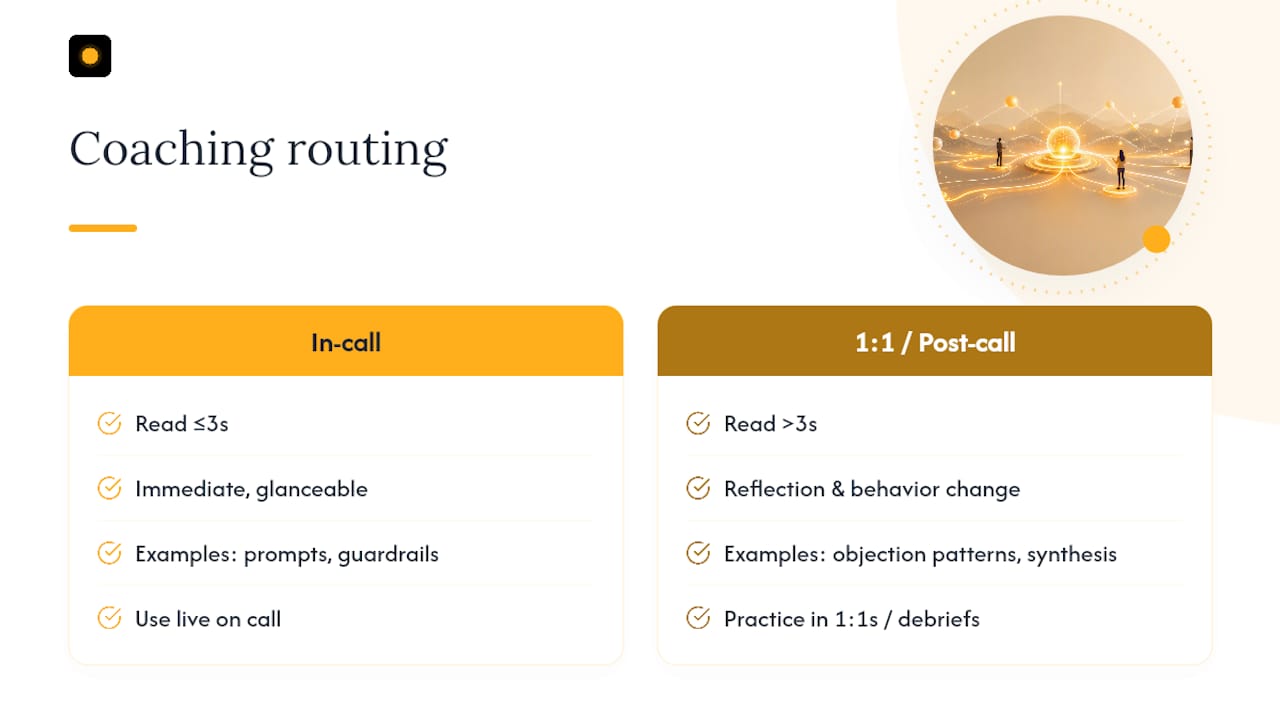
Pro Tip: If a prompt would take more than three seconds to read and act on, it doesn’t belong in-call. Move it to the post-call debrief or the next coaching conversation instead.
How Do You Build a Pre-Call Prospect Brief?
A one-page brief built before every meaningful call is the cheapest way to raise call quality, and it takes less time than most reps assume.
- Pull the raw inputs. Gather CRM notes, the prospect’s LinkedIn activity, recent press, and any funding or leadership changes in the last 90 days.
- Generate 5 to 7 discovery questions, each labeled by intent (pain, budget, timeline, competition, authority) so the rep knows why each question is on the list.
- Pick two priority questions that test your working hypothesis about why this account might buy, or might not.
- Store the brief where in-call prompts can reference it, typically linked from the calendar event or the CRM record tied to the call.
- Time the build to deal complexity. A quick discovery call might need five minutes of prep; a multi-stakeholder enterprise call justifies closer to thirty.
The goal isn’t a research report. It’s a testable guess the rep can confirm or kill in the first ten minutes of the call.
How Should In-Call Prompts Be Scoped and Timed?
The scoping question is simple: does this information change what the rep says in the next thirty seconds? If not, it waits.
Every effective in-call prompt follows a similar shape: a trigger label, one to three suggested actions, and a CRM field to update or a next step to note. A pricing objection trigger might surface a reframe suggestion and a probe question. A missing-budget trigger might suggest asking who else is involved in the purchase decision. A competitor mention might surface a differentiation point tied to what this specific prospect already said they need.
Frequency limits matter more than most teams expect. A panel that fires on every pause trains reps to ignore it within a week. The Otter.ai implementation framework draws a clean line here: in-call coaching should stick to facts and immediate execution, while anything requiring reflection or a pattern shift belongs in the 1:1.
- Trigger on specific, well-defined moments, not on every silence or filler word.
- Keep suggested actions to one to three bullets, no paragraphs.
- Tie every prompt to a concrete CRM field or next step, not a vague reminder.
- Build in consent and privacy practices from day one, since reps and prospects both need to know what’s being listened to and why.
Reps should treat the panel as a note-taking safety net, something to glance at between questions rather than watch continuously. The moment a rep starts staring at the screen instead of the prospect, the tool has failed its own purpose.
What Should Post-Call Synthesis Include?
Post-call synthesis is where a conversation becomes an asset instead of a memory. The strongest teams capture the same structured fields every time: a short summary, the stated pain, the decision process, objections raised and how they were handled, agreed next steps, open risks, and a fit score.
- Automate the CRM update the moment the call ends, rather than relying on a rep to fill it in later that day.
- Send the follow-up email within an hour, when accuracy and the prospect’s attention are both highest.
- Include only next steps the prospect explicitly confirmed. Inventing urgency in a follow-up erodes trust faster than it builds momentum.
- Feed synthesized notes into a searchable library so managers can find the exact moment a call turned, rather than replaying entire recordings.
That library becomes the raw material for every future coaching conversation, and it’s the difference between a manager guessing what went wrong and pointing to the exact sentence that lost the deal.
How Do You Pilot Live Call Coaching Before a Full Rollout?
Start with mid-performers, not your top rep or your newest hire. Mid-performers give you enough room to see improvement without the noise of a rep who’s still learning the basics or the ceiling effect of someone already maxed out.
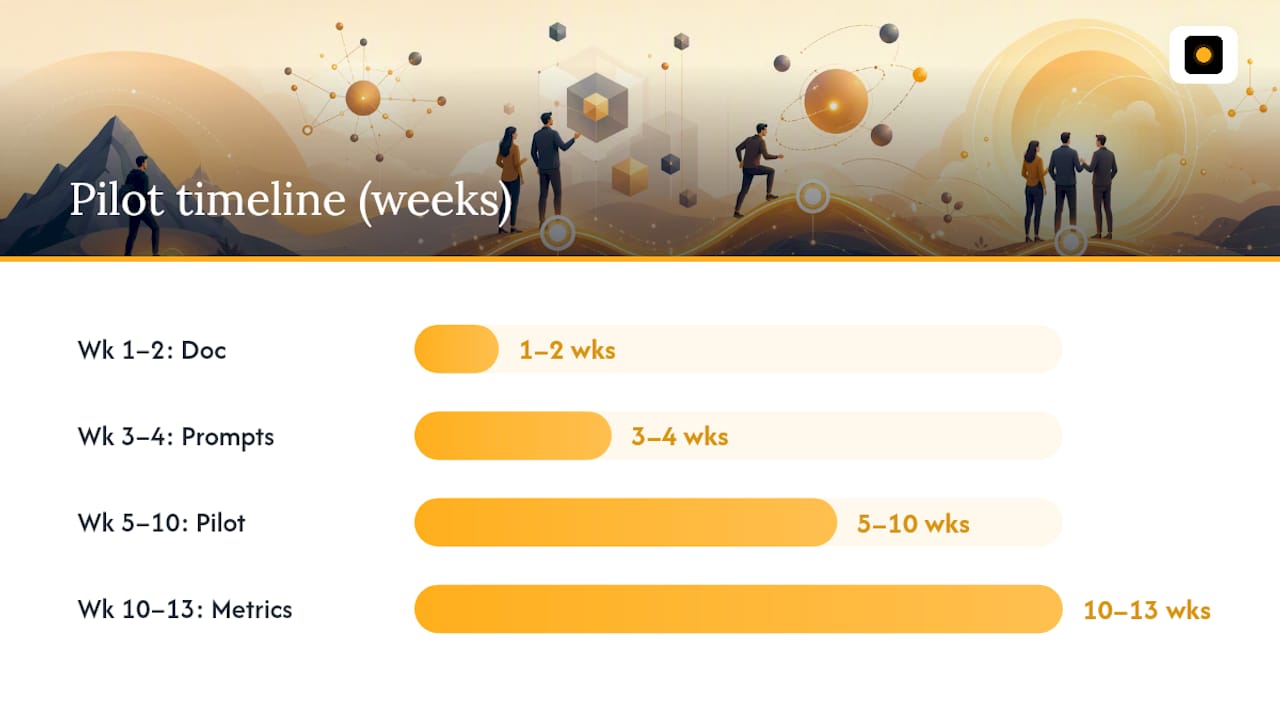
- Weeks 1 to 2: Document your sales methodology (MEDDIC or MEDDPICC) and build an initial objection library.
- Weeks 3 to 4: Separate in-call prompts from 1:1 coaching topics, then integrate the tool with your CRM.
- Weeks 5 to 10: Run the pilot with two or three mid-performers against a control group of similar reps.
- Weeks 10 to 13: Collect outcome metrics and iterate on prompt triggers before wider rollout.
Track coached versus control quota attainment, methodology field completeness in the CRM, time to first close for new hires, and the ratio of objections handled live versus escalated to a manager. A 60 to 90 day pilot window is enough to see whether the signal is real.
Pro Tip: Cap weekly coaching feedback at three to five prioritized points. Reps who get every minor correction at once tend to improve on none of them.
Why Real-Time Coaching Changes More Than the Call Itself
The teams that get the most out of live coaching aren’t the ones with the flashiest prompts. They’re the ones that treat the pilot as a discipline exercise first: document the methodology, agree on what counts as a qualification gap, and only then turn on the in-call panel.
What surprises most early-stage teams is how much post-call synthesis affects manager behavior, not just rep behavior. Once a manager can search for “pricing objection” across a month of calls, coaching conversations get sharper because they’re grounded in an actual moment instead of a vague impression.
— Neil
Put Live Coaching to Work on Your Next Call
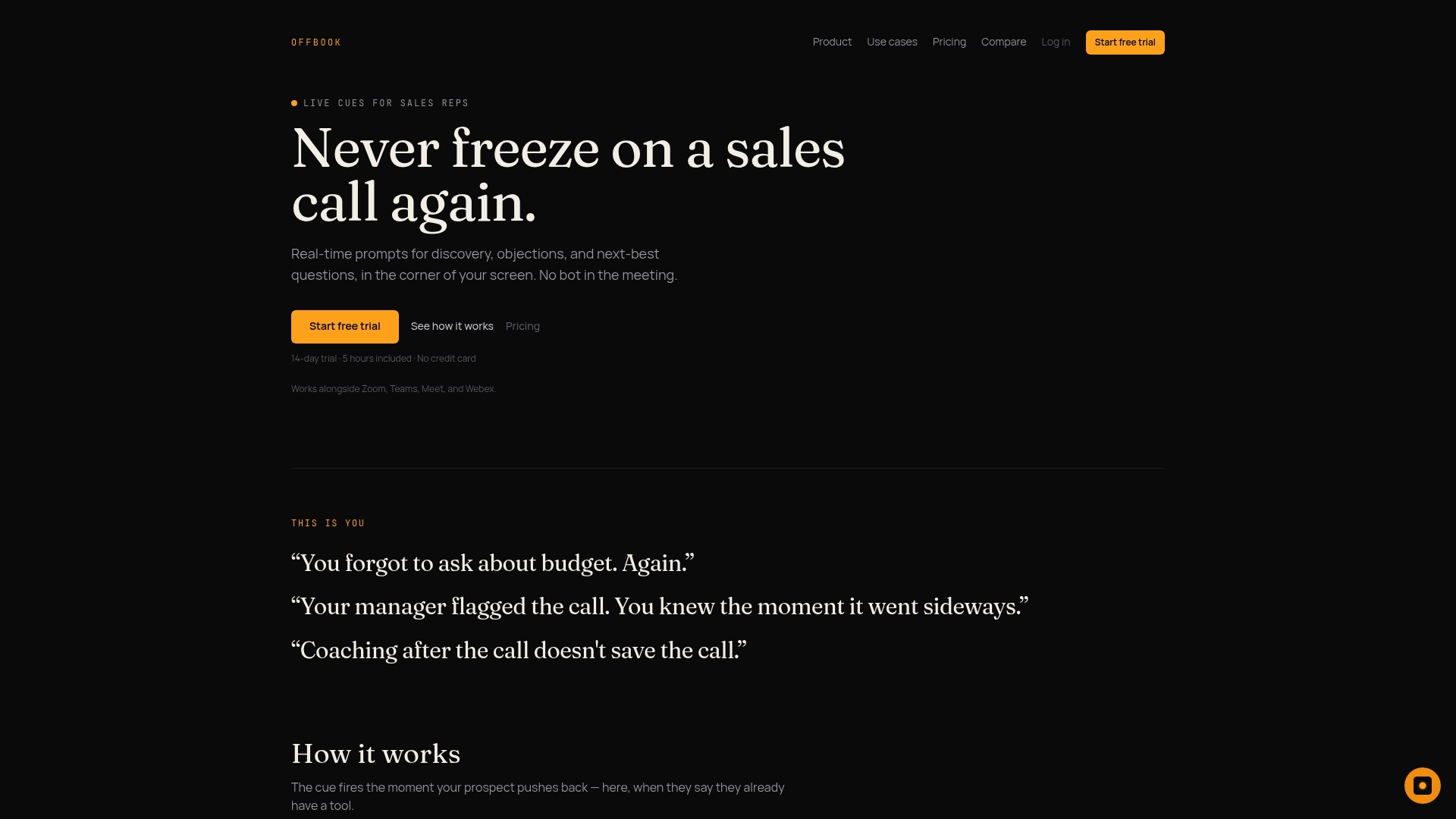
Live coaching software can provide your team with real-time prompts during calls without adding a bot to the meeting or requiring reps to open new tools. Some live coaching tools listen in the background, surface on-screen cues tied to sales qualification methodologies when key moments arise during a call, and can prepare pre-call briefs before the rep joins.
Teams using structured pre-call briefs and immediate post-call debriefs typically see faster ramp for new hires and CRM records that actually reflect what happened on the call, instead of a rep’s rushed summary written from memory two days later. If you’re planning a pilot with mid-performers over the next quarter, see how OffBook fits your sales workflow and start a trial before your next round of calls.
Sources
- Otter
- AI-Powered Discovery Calls: Prep, Listen, and Follow Up Smarter
- AI Use Cases for Discovery Calls: What Sales Think | Sembly
FAQ
Does Live Call Coaching Require Recording the Call?
Live coaching tools listen to the conversation in real time, and reputable platforms build consent and privacy notices into the workflow so both reps and prospects know what’s happening.
How Long Should a Pilot Run Before Deciding on Rollout?
Run the pilot for 60 to 90 days with a small group of mid-performers and a control group, which gives enough call volume to see real movement in quota attainment and ramp time.
What Kinds of Things Can In-Call Prompts Actually Surface?
Effective prompts surface glanceable, immediate cues, a suggested question, an objection reframe, or a CRM field to fill, triggered by specific moments like a competitor mention or a pricing pushback.
Who Should Be Coached First When Rolling Out Live Coaching?
Mid-performers make the best pilot group because they show measurable improvement without the inconsistency of underperformers or the ceiling effect of your top closers.
Can Live Coaching Replace 1:1 Manager Coaching?
No. In-call prompts handle immediate, factual moments, while 1:1 sessions remain the right place for behavioral change and pattern coaching based on synthesized call data.