How to Run B2B Demo Calls Effectively in 2026
Learn how to run B2B demo calls effectively in 2026. Transform your SaaS sales by focusing on buyer needs and storytelling for impactful demos.
Published: July 13, 2026
Author: OffBook Editorial Team

An effective B2B demo call is defined as a buyer-centered, time-limited conversation that connects specific product capabilities to explicitly stated buyer problems. Running B2B demo calls effectively is the single highest-leverage skill in SaaS sales because the demo is where abstract value becomes concrete. Soft skills drive 73% of demo effectiveness, with storytelling, discovery, and pacing outweighing technical feature coverage. That finding reframes the entire job. Your goal is not to show everything your product does. Your goal is to make one buyer believe your product solves their specific problem better than any alternative.
How to run B2B demo calls effectively: the core framework
The standard industry term for this discipline is “demo engineering,” and it treats the demo as a structured sales event with a fixed architecture, not a spontaneous walkthrough. Experienced reps treat demos as a second call with explicit agendas, timeboxes, and defined outcomes. That discipline separates reps who close from reps who present.
The most important structural decision you make is when to run the demo at all. Refusing the demo on the discovery call and earning it on a dedicated second call increases deal advancement by 1.3 to 1.6 times. Buyers who have already articulated their pain points arrive at a dedicated demo call ready to evaluate, not just browse. That context changes everything about how the conversation flows.
The role of the demo in the B2B sales cycle is to convert qualified interest into a decision to move forward. Every structural choice you make, from prep to close, should serve that single outcome.
How to prepare thoroughly for a B2B demo call
Preparation is where most demos are won or lost, and most reps underinvest here. The goal is to walk into the call knowing three things: who is in the room, what they care about, and which two or three product moments will land hardest for them.
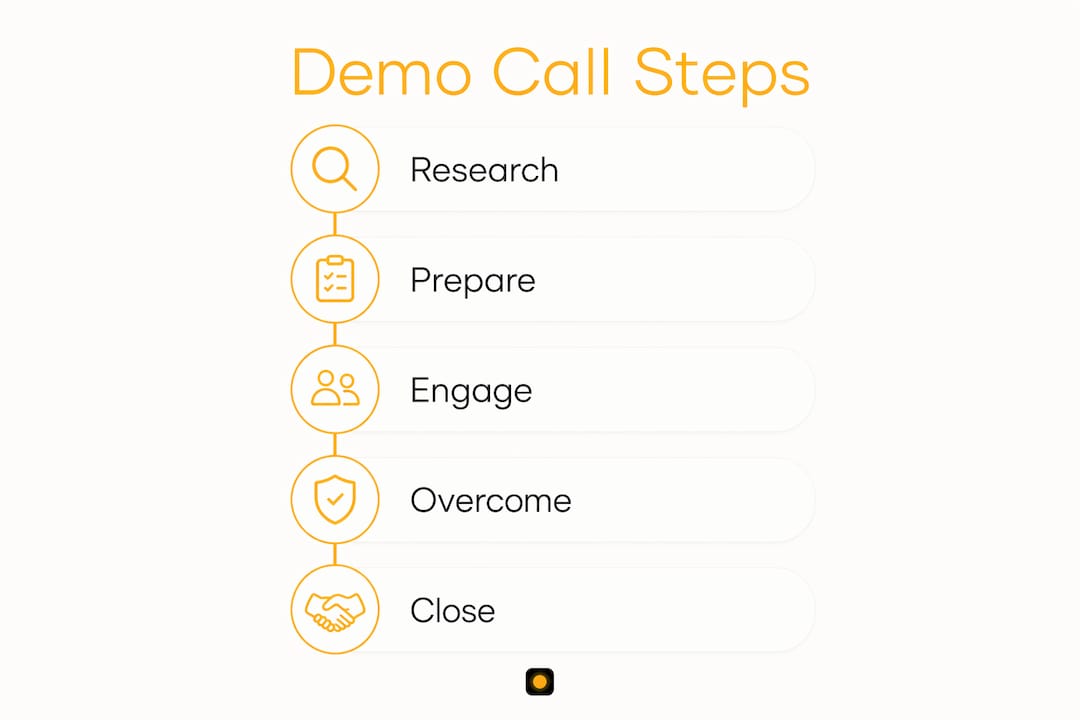
Start with prospect research best practices using LinkedIn, your CRM, and any notes from the discovery call. Map each attendee’s role to a likely pain point. A VP of Sales cares about pipeline velocity. A RevOps lead cares about data integrity. A founder cares about time to value. Knowing this before the call lets you route the demo in real time without losing the thread.
Confirm the attendee list 24 hours before the call. If the economic buyer is not on the invite, that is a signal worth addressing before you spend 30 minutes presenting. Demos without decision makers present rarely advance on their own.
Your demo environment matters more than most reps realize. Realistic demo data builds immediate credibility. Fake “Acme Corp” labels and placeholder numbers signal that you have not thought about the buyer’s world. Use industry-specific data, realistic deal sizes, and company names that match the prospect’s sector.
- Confirm attendees and their roles 24 hours before the call
- Build a demo environment with realistic, industry-relevant data
- Disable notifications, close unrelated tabs, and use full-screen mode
- Prepare two or three customer stories that mirror the prospect’s situation
- Set a written agenda and share it before the call
Pro Tip: Use your pre-call preparation checklist to lock in the agenda, confirm attendees, and stage your demo environment the evening before. Reps who prep the night before perform better than those who prep the morning of.
How to structure and execute the demo call for maximum conversion
The opening sets the tone for everything that follows. Start with a one-sentence agenda framed as a question: “Based on what you shared last week, I want to focus on X and Y. Does that still match what you need to see today?” That question does two things. It confirms your prep was accurate, and it hands the buyer partial control of the call from the first minute.
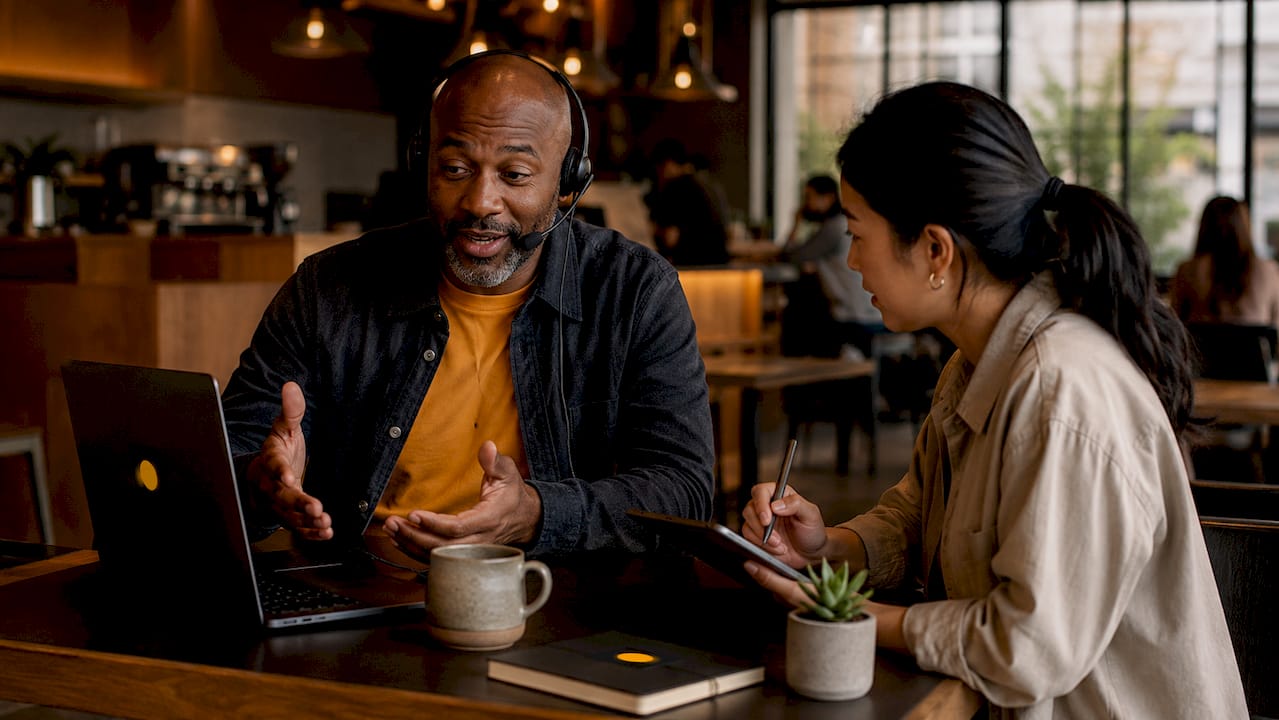
Buyer-driven demos convert at 55% compared to 30% for rep-controlled feature tours. That gap is not small. It means the single biggest lever in your demo is how much you let the buyer steer. The practical way to do this is to check in every 90 seconds to 2 minutes.
Check-ins every 90 seconds keep prospects engaged and turn the demo into a conversation rather than a lecture. A check-in does not have to be a formal question. “Does this match how your team works today?” or “Is this the part that matters most to you?” keeps the buyer active and surfaces objections early, when you can still address them.
Structure the live demo portion around three to five features that directly solve the problems the buyer named in discovery. Do not show everything. Showing everything is the fastest way to lose the room.
- Open with a one-sentence agenda and confirm it with the buyer
- Run a brief discovery recap to anchor the demo in their stated priorities
- Demonstrate three to five features tied directly to named buyer problems
- Check in every 90 seconds to 2 minutes to maintain conversational flow
- Use one customer story per major feature to show real-world impact
- Keep the live demo portion to 15–25 minutes within a 30–35 minute call
Pro Tip: Soft skills including storytelling, discovery, and pacing account for 73% of demo outcomes. Practice your customer stories out loud before the call. A story that takes 90 seconds to tell in practice often takes 4 minutes live.
How to handle challenges and common pitfalls during B2B demo calls
The most common demo failure is “training mode.” This is when a rep stops responding to the buyer and starts narrating features in sequence, as if reading from a manual. Buyers disengage within minutes. The fix is structural: stopping “training mode” and running demos as conversations that invite constant buyer input is the single biggest behavioral change that improves conversion.
Watch for disengagement signals: silence after a feature reveal, short answers to check-in questions, or a buyer who stops asking questions. When you see these, stop the demo and ask a direct question about their priorities. Do not push through to the next feature hoping engagement returns.
- Feature dumping: Show only the features that solve stated buyer problems. Cut everything else.
- Fake demo data: Replace placeholder names and numbers with realistic, sector-specific data before every call.
- Talking past objections: When a buyer raises a concern, stop and address it fully before moving on.
- Ignoring the talk-to-listen ratio: If you have spoken for more than two consecutive minutes, you have lost the conversation.
- Weak closing questions: Replace “Do you have any questions?” with “What didn’t I cover that you needed to see?” Then pause and wait.
That last point deserves emphasis. Asking for missing content at demo end and allowing silence surfaces real objections that would otherwise block closure. Most reps fill silence. The ones who wait get the honest answer.
For roadmap and competitor questions, answer with specificity and honesty. “That feature is on our roadmap for Q3” is more credible than a vague “we’re working on it.” Buyers remember how you handle hard questions more than they remember the features you showed.
How to close B2B demo calls and secure next steps
The close starts before the last five minutes. Throughout the call, you are building a shared understanding of what the buyer needs and what your product delivers. The closing summary should reflect what you heard, not what you showed.
Summarizing what was heard rather than what was shown improves clarity and paves the way for concrete next steps. A buyer-focused summary sounds like: “You mentioned that your team loses three hours a week on manual reporting. We showed you how X automates that. Does that solve the problem you came in with?” That question confirms value and creates a natural bridge to next steps.
- Summarize the buyer’s stated priorities and link each one to what you demonstrated
- Confirm that the demo addressed their core problem before discussing next steps
- Set explicit next steps with named owners and specific dates, not “I’ll follow up”
- Use the “Double Double” technique: ask who else should be in the next meeting and whether a senior stakeholder should join
- Send a personalized follow-up within 24 hours that reflects the buyer’s specific pain points
Including additional stakeholders or higher-ranking attendees in follow-up meetings significantly boosts deal momentum. The “Double Double” technique works because it expands internal advocacy before the formal evaluation begins. A champion who brings their VP into the next call is a champion who is already selling internally on your behalf.
Personalized follow-ups that reflect the buyer’s specific pain points outperform generic recordings. Send a short recap email that names the problems discussed, the features shown, and the agreed next steps. Attach or link content that speaks directly to their use case, not a generic product overview.
For pricing conversations that arise during the demo, address them structurally. Acknowledge the question, give a range if you can, and tie it to the value you just demonstrated. Avoid defensive answers. A rep who handles pricing with confidence signals that the product earns its price.
Key takeaways
The most effective B2B demo calls are buyer-driven, time-limited conversations built on discovery, realistic preparation, and explicit next steps that advance the deal.
| Point | Details |
|---|---|
| Buyer-driven demos convert higher | Demos where buyers steer routing convert at 55% vs. 30% for rep-controlled tours. |
| Keep demos under 30 minutes | Top-performing reps keep live demo portions to 15–25 minutes within a 30–35 minute call. |
| Soft skills outweigh features | Storytelling, discovery, and pacing drive 73% of demo effectiveness. |
| Prep the environment and the story | Use realistic data and prepare customer stories tied to the buyer’s specific pain points. |
| Close with what you heard, not what you showed | Buyer-focused summaries and explicit next steps with named owners drive deal progression. |
What most demo advice gets wrong
The conventional wisdom says to “know your product cold.” That is not wrong, but it is the wrong priority. I have watched reps who knew every feature fail on demo calls because they could not stop talking. The reps who close consistently are the ones who treat the demo as a listening exercise with a product in the background.
The hardest habit to break is the instinct to fill silence. When a buyer goes quiet after a feature reveal, the natural impulse is to explain more. That impulse kills deals. Silence usually means the buyer is processing something important. Wait for it. The answer that comes out of that pause is almost always the real objection, and real objections are the ones you can actually address.
The other mistake I see constantly is treating the demo as a standalone event. The best reps I have worked with think of the demo as the middle chapter of a longer story. The discovery call structure sets up the demo. The demo sets up the next meeting. Every decision in the demo, what to show, what to skip, how long to spend on each feature, should be made in service of that next meeting. When you think of it that way, the demo gets shorter, sharper, and more effective almost automatically.
The reps who struggle most are the ones who treat the demo as their moment to shine. The reps who close treat it as the buyer’s moment to decide. That shift in mindset is worth more than any technique in this article.
— Neil
Offbook coaches your demo calls in real time
Running a disciplined demo call is hard to do consistently, especially when you are also managing the conversation, tracking objections, and watching the clock.
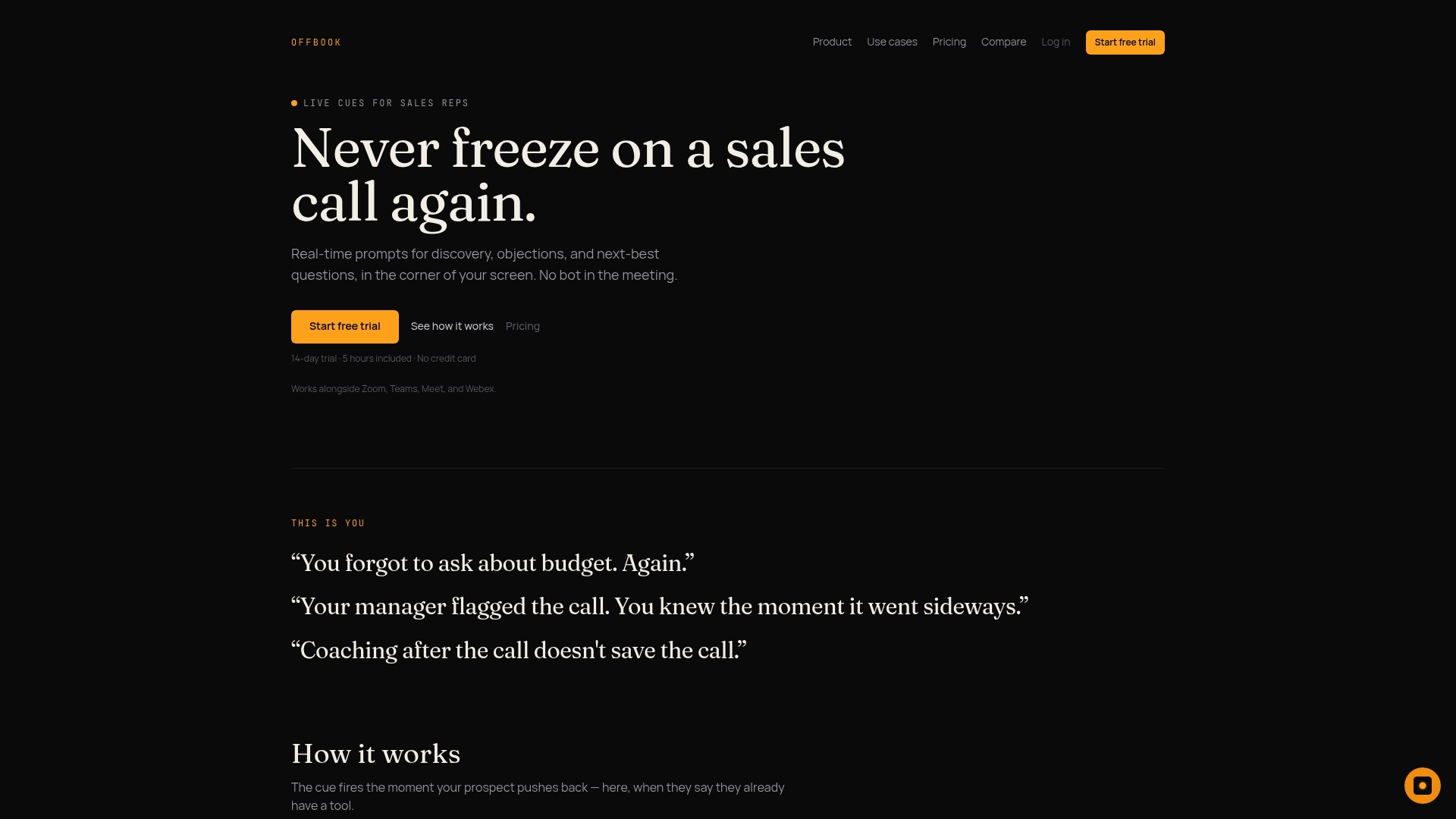
Offbook’s AI call coaching for sales surfaces live cues during your video calls without a bot ever joining the meeting. It prompts you on-screen with the right questions to ask, objections to handle, and qualification gaps to close, all structured around MEDDIC and MEDDPICC. Offbook also generates pre-call briefs so you walk into every demo already knowing the buyer’s context. For founders and early-stage SaaS teams running demos without a full sales playbook, Offbook provides the structure that turns good conversations into closed deals. The coaching happens in the moment, when it actually changes the outcome.
FAQ
How long should a B2B demo call be?
The live demo portion should run 15–25 minutes within a total call of 30–35 minutes. Top-performing sales engineers keep demos under 15 minutes, and demos longer than 45 minutes are significantly less effective at advancing deals.
How many features should I show in a B2B demo?
Show three to five features that directly address the buyer’s stated problems. Showing more features than that dilutes focus and reduces the chance that any single capability lands with impact.
What is the best way to handle objections during a demo call?
Replace “Do you have any questions?” with “What didn’t I cover that you needed to see?” and then pause. Asking for missing content and waiting through silence surfaces the real objections that would otherwise block the deal.
How do I keep prospects engaged during a demo?
Check in every 90 seconds to 2 minutes with a direct question tied to what you just showed. Frequent check-ins prevent the demo from becoming a lecture and keep the buyer actively involved in the conversation.
What should I send after a B2B demo call?
Send a personalized follow-up within 24 hours that names the buyer’s specific pain points, the features you demonstrated, and the agreed next steps with owners and dates. Generic recordings and product overviews perform significantly worse than targeted, buyer-specific content.