How to Build Credibility Early in Sales Calls
Discover how to build credibility early in sales calls. Learn vital strategies that unlock trust and win over prospects quickly.
Published: July 16, 2026
Author: OffBook Editorial Team

Credibility is the single factor that determines whether a prospect leans in or checks out within the first two minutes of a sales call. 61% of sales leaders rank “establishing credibility and trustworthiness” as the top skill needed today. That number tells you something critical: buyers are not waiting for your pitch to decide if you are worth their time. They decide fast, and the reps who know how to build credibility early in sales calls win the meeting before the agenda even starts. This guide covers the preparation, frameworks, and communication habits that make that happen.
What does it take to build credibility early in sales calls?
The foundation is preparation, not personality. Reps who walk into a call without context about the prospect’s business, role, or recent challenges start at a deficit. No amount of charisma closes that gap in 90 seconds.
Elite sellers treat the first 90–120 seconds as a dedicated opening phase to establish relevance, credibility, and direction. That framing matters because it shifts your mental model before the call begins. You are not warming up. You are executing.
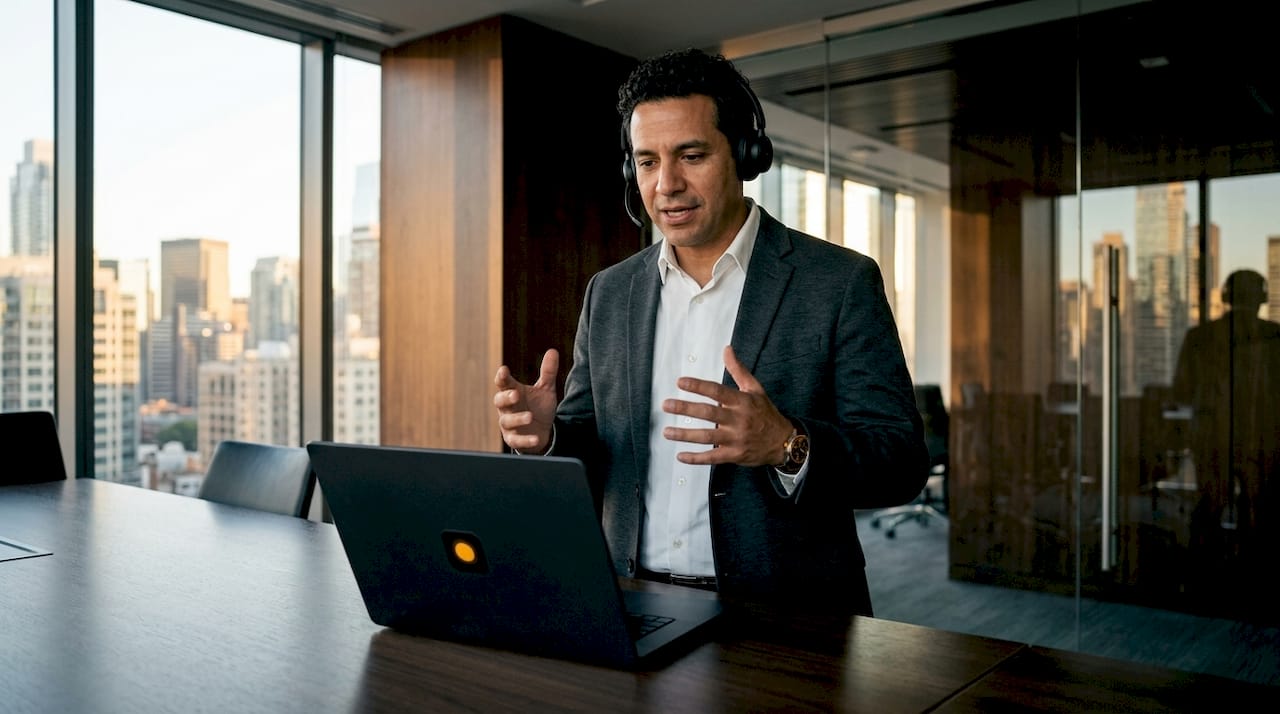
The mindset shift that matters most is moving from seller to trusted advisor. A seller tries to convince. A trusted advisor tries to understand. Transitioning from “convincer” to “trusted advisor” is the most durable credibility strategy in sales. Prospects feel the difference immediately.
Before the call, your preparation checklist should include:
- The prospect’s title, tenure, and likely priorities based on their role
- Any recent company news, funding rounds, or leadership changes
- One specific, observable fact about their business you can reference directly
- The industry context that shapes their day-to-day decisions
- Your own relevant client results in their vertical or company size
Pro Tip: Set a hard limit of 15 minutes for pre-call research. More time rarely improves your opening. Focus on finding one sharp, specific observation rather than building a complete profile.
Eliminating neediness is equally important. Reps who enter a call desperate to close telegraph that desperation through their tone, pacing, and questions. Prospects read it instantly. Go in with the mindset that you are evaluating fit as much as they are.
How do you craft a credibility statement in the first 2 minutes?
A credibility statement is a short, structured introduction that tells the prospect who you are, what you have done for companies like theirs, and why that matters to them. It is not a company overview. It is not a product pitch. It is a signal that you belong in the conversation.
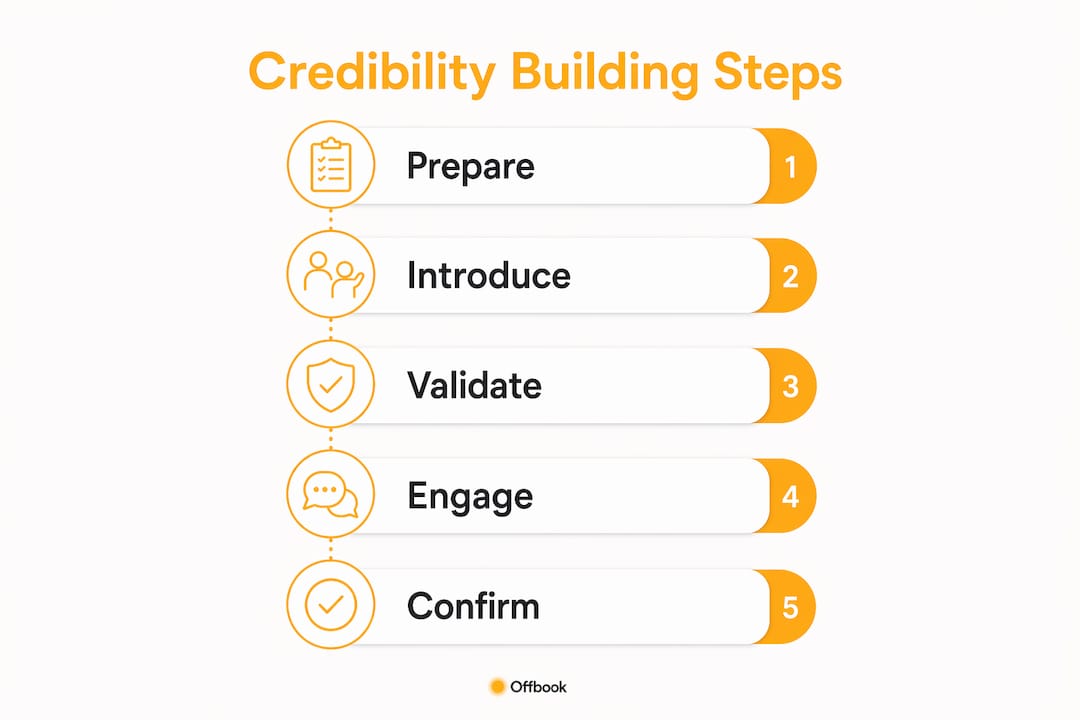
Limit your credibility statement to 30 seconds to 2 minutes for maximum executive attention. Executive interest drops sharply after that window. Going longer does not build more trust. It burns the goodwill you just created.
The structure that works follows four steps:
- Who you are. State your name, your company, and your role in one sentence. No filler.
- Relevant success. Name a specific result you delivered for a company in their industry or at their stage. Use numbers when you have them.
- Unique value. Explain what you do differently from the generic category. One sentence.
- Business impact. Connect that value to an outcome the prospect cares about, such as faster onboarding, lower churn, or shorter sales cycles.
A short, value-based story built around a relevant client success is one of the most effective openers available. The key word is “relevant.” A story about a Fortune 500 client means nothing to a Series A founder. Match the example to the room.
The most common mistakes are going generic and going long. “We help companies grow revenue” is not a credibility statement. It is noise. Specificity is what separates a statement that earns attention from one that loses it.
Pro Tip: Write your credibility statement out word for word before the call. Then cut it by 30%. Read it aloud. If it takes longer than 60 seconds, cut again. Brevity signals confidence.
True credibility climbs what practitioners call the proof ladder: from self-assertion to third-party validation to concrete, verifiable results. Self-assertion (“We are the best at X”) is the weakest rung. A named client result with a measurable outcome is the strongest. Aim for the top rung every time.
How does the Observation, Hypothesis, and Open Question framework build trust fast?
The Point of View framework, built on three components, replaces generic discovery questions with a structured approach that signals preparation and expertise from the first exchange. This method earns trust faster than baseline questions because it shows the prospect you already did the work.
The three components work as follows:
- Observation. A specific, verifiable fact about the prospect’s business. “I noticed your team doubled headcount in the last six months” is an observation. “I see you are growing” is not.
- Hypothesis. Your expert interpretation of what that observation likely means for their operations. “That kind of growth usually creates pressure on onboarding and ramp time” is a hypothesis. It shows pattern recognition.
- Open Question. An invitation for the prospect to confirm, correct, or expand. “Is that showing up for your team?” keeps the conversation open and puts them in control.
Just 3 focused minutes of pre-call research is enough to find one specific, observable fact to anchor your hypothesis. That is not a large investment. It is a discipline.
The table below shows the difference between a generic opener and a Point of View opener:
| Approach | Example | Effect on trust |
|---|---|---|
| Generic question | “Tell me about your biggest challenges.” | Signals no preparation |
| Point of View opener | “I noticed you expanded into two new markets this quarter. I’d expect that’s creating pressure on your sales process. Is that right?” | Signals expertise and preparation |
Detailed pre-call preparation focused on the prospect’s industry, recent changes, and leadership dynamics shortens discovery time significantly. When you arrive with a point of view, the prospect does not have to educate you from scratch. That alone changes the tone of the entire call.
For practical question templates that support this approach, the B2B discovery call questions list from Offbook is a strong starting point.
What communication habits protect credibility during early interactions?
Getting the opening right is only half the job. Reps lose credibility in the minutes that follow by falling into predictable traps.
Credibility declines when sellers fall into the “Jargon Trap” or guess at the buyer’s needs before they have enough information. Projecting assumptions signals that you are not really listening. It signals that you came in with an answer and are looking for a question to fit it.
The habits that protect trust during early interactions include:
- Ask clean, honest questions with no embedded assumptions
- Pause after the prospect finishes speaking before responding
- Avoid product references until you have confirmed a real pain point
- Set a clear agenda at the start and stick to it
- Signal that you are willing to end the call if there is no fit
That last point is where most reps hesitate. Willingness to say no and walk away increases trust by signaling independence and judgment. Neediness kills trust. Saying no lowers the prospect’s defensiveness because it removes the pressure of a hard sell.
Effective sales leaders show understanding of the buyer’s world, signal relevant experience, and set a clear agenda immediately. That combination reduces the cognitive effort a prospect has to spend figuring out why you are there.
“Observation builds trust faster than impressive performances or rehearsed pitches in early sales calls. The rep who listens carefully and reflects back what they heard earns more credibility than the one who delivers a polished monologue.”
Agenda setting is underused as a trust tool. Stating the purpose of the call, the time you will take, and what you hope to learn gives the prospect a sense of control. Control reduces anxiety. Reduced anxiety opens the conversation.
For a deeper look at how call structure affects trust, Offbook’s breakdown of discovery call structure covers the mechanics in detail.
How do you measure and improve your credibility-building approach?
Improvement requires measurement. Reps who rely on gut feel about how a call went miss the patterns that coaching surfaces.
The metrics most directly tied to early credibility are:
- Time to first pain discovery. If you are not reaching a real pain point until 20+ minutes in, your opening is not creating enough trust to unlock honest answers.
- Talk-to-listen ratio in the first 5 minutes. Reps who talk more than 60% of the opening phase are over-explaining. The prospect should be talking more than you.
- Call continuation rate. If prospects frequently end calls early or disengage, the opening is not landing.
- Follow-up conversion. Credibility in the opening predicts whether a prospect agrees to a next step.
Call recordings are the most direct feedback tool available. Reviewing your own first two minutes with fresh ears reveals habits you cannot catch in the moment. Listen specifically for jargon, assumption-laden questions, and pacing.
Soliciting direct feedback from prospects is underused. Asking “Was this conversation useful for you?” at the end of a call gives you signal that no internal review can replicate.
Pro Tip: Role-play your credibility statement and Point of View opener with a colleague once a week. Ask them to play a skeptical prospect. The discomfort of that exercise is exactly what prepares you for a real call.
Reps who want to understand where their discovery questions fall short can use Offbook’s guide on weak discovery questions to identify and fix the specific patterns that erode trust. For teams building streamlined sales workflows, consistent credibility-building habits are the foundation that makes everything else work.
Key Takeaways
Building credibility early in sales calls requires deliberate preparation, a structured opening, and communication habits that signal expertise without projecting assumptions.
| Point | Details |
|---|---|
| Preparation beats charisma | Three focused minutes of pre-call research produces one sharp observation that outperforms any rehearsed opener. |
| Credibility statements need structure | Cover who you are, a relevant client result, your unique value, and the business impact in under 2 minutes. |
| Point of View framework accelerates trust | Pair a specific observation with an expert hypothesis and an open question to signal preparation immediately. |
| Saying no builds trust | Willingness to walk away signals independence and lowers prospect defensiveness faster than any rapport tactic. |
| Measure time to pain discovery | If real pain points surface after 20 minutes, the opening is not creating enough trust to unlock honest answers. |
What I have learned about credibility that most articles get wrong
The conventional advice says to “be authentic” and “build rapport.” That advice is not wrong. It is just incomplete in a way that leaves reps unprepared.
Preparation is the actual source of confidence on a call. Reps who walk in knowing one sharp, specific thing about the prospect’s business do not need to perform confidence. They have it. The observation grounds them. The hypothesis gives them something to say. The open question takes the pressure off being right.
The mistake I see most often from newer reps is treating the first two minutes as a warm-up. They make small talk, ask how the prospect’s week is going, and then try to pivot into substance. By the time they get there, the prospect has already categorized them as a vendor. That categorization is very hard to reverse.
The reps who earn trust fastest are the ones who show up with a point of view and hold it lightly. They are not attached to being right. They are attached to understanding. That combination, confidence plus curiosity, is what a trusted advisor actually looks like in practice.
One more thing: stop worrying about memorizing your credibility statement perfectly. Write it, practice it, then let it go. The goal is internalization, not recitation. When you know the structure cold, you can adapt it in real time to what the prospect says in the first 30 seconds of the call. That flexibility is what separates a credible opener from a scripted one.
— Neil
Offbook coaches your credibility in real time
Knowing the frameworks is one thing. Executing them under pressure on a live call is another.
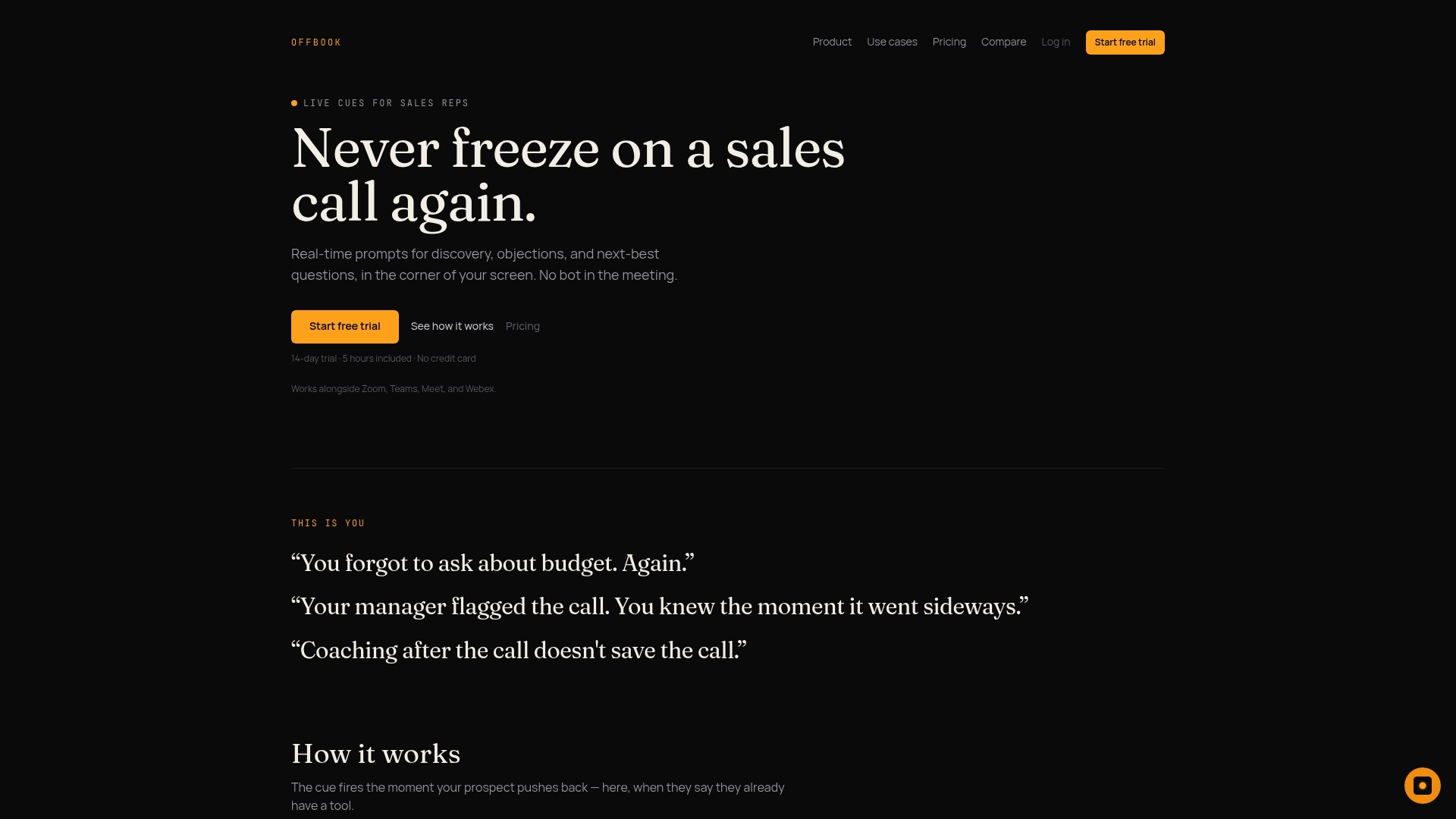
Offbook is real-time AI call coaching software built for B2B sales teams at the seed and Series A stage. It listens to your video calls and surfaces live prompts on your screen, covering the right questions to ask, qualification gaps to close, and objections to handle, all without a bot ever joining the meeting. Before the call, Offbook generates a prep brief on the company and person you are about to meet so you walk in with a point of view already formed. For reps who want to run more disciplined early calls and close more deals, AI call coaching for sales from Offbook is built exactly for that.
FAQ
What is a credibility statement in sales?
A credibility statement is a short, structured introduction that covers who you are, a relevant client result, your unique value, and the business impact for the prospect. It should run no longer than 2 minutes.
How quickly do buyers form an impression on a sales call?
Elite sellers treat the first 90–120 seconds as the critical window for establishing relevance and credibility. Executive interest declines sharply after the 2-minute mark.
What is the Point of View framework for discovery calls?
The Point of View framework combines a specific observation about the prospect’s business, an expert hypothesis about what it means, and an open question that invites the prospect to confirm or correct. It replaces generic discovery questions and builds trust faster.
Why does saying no increase trust in sales?
Willingness to walk away signals independence and good judgment. Prospects lower their defenses when they sense a rep is evaluating fit rather than chasing a close at any cost.
How do you measure credibility-building effectiveness on sales calls?
Track time to first pain discovery, your talk-to-listen ratio in the first 5 minutes, call continuation rates, and follow-up conversion. Reviewing call recordings of your opening two minutes reveals patterns that are invisible in the moment.