How AI Assists Sales Conversations for B2B Teams
Discover how AI assists sales conversations, boosting reps' efficiency and closing rates. Unlock the power of AI in B2B sales today!
Published: June 7, 2026
Author: OffBook Editorial Team

AI assistance in sales conversations is defined as the combination of automation, conversation intelligence, and personalized engagement tools that work together to help reps qualify faster, handle objections better, and close more deals. The industry term for the core capability is conversation intelligence, and it sits at the center of how AI improves sales communication today. In 2026, 87% of sales organizations use AI in some form, making it a baseline expectation rather than a competitive edge. The real question is no longer whether to use AI in sales strategies, but how to deploy it so it changes outcomes at the rep level, in the moment a deal is won or lost.
How AI assists sales conversations: tools and features that matter
The AI tools available to sales teams today fall into two distinct categories: assistive features and autonomous agents. Understanding the difference shapes how you build your AI in sales strategy.
Assistive AI features work alongside reps during and after calls. Conversation intelligence platforms like Salesforce’s record calls, transcribe them in real time, and analyze keywords to flag objection points, competitor mentions, and buying signals. Those flags then trigger CRM tasks automatically, so follow-up actions are created from what was actually said, not from what a rep remembered to type. The result is faster deal progression and more personalized outreach grounded in the specifics of each conversation.

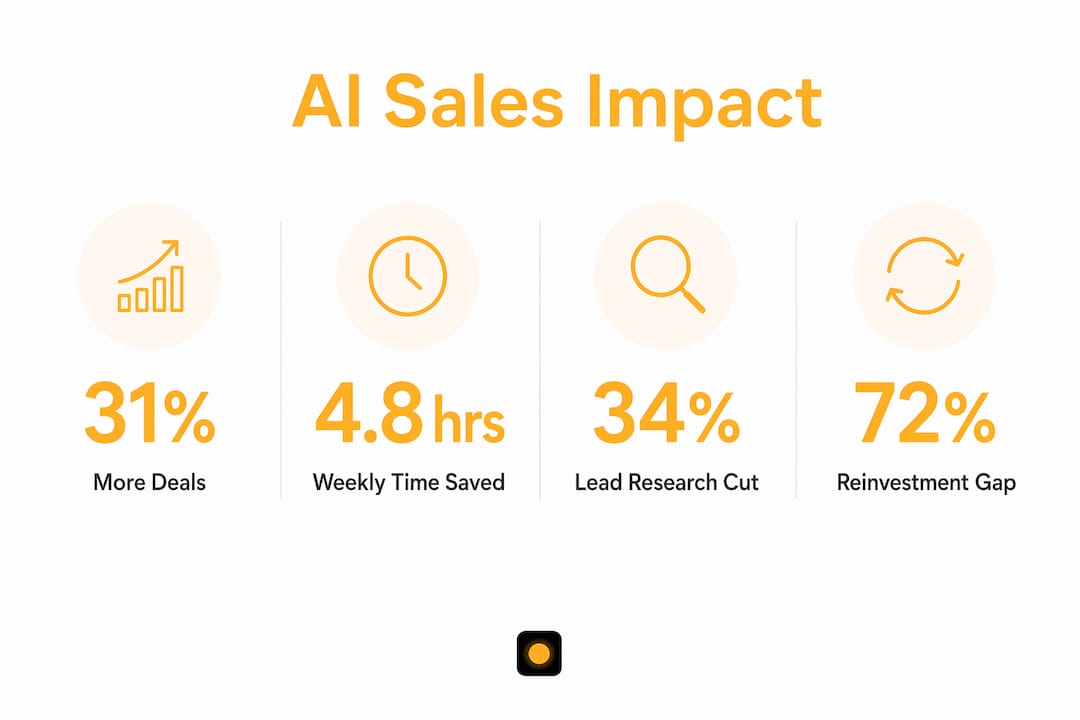
AI agents operate differently. They run autonomously across sales workflows, researching leads, personalizing outreach emails, scoring inbound leads, and scheduling meetings without waiting for a rep to initiate. According to 2026 State of Sales data, 54% of individual reps now use AI agents for at least one of these tasks, with reps reporting a 34% reduction in research time and a 36% reduction in email drafting time. That is hours returned to the calendar every week.
The most common applications across both categories include:
- Lead research and scoring based on firmographic and behavioral signals
- Automated email drafting personalized to prospect context
- Meeting scheduling triggered by prospect engagement
- Call transcription and summarization linked directly to CRM records
- Custom keyword tracking to surface objections and competitive risks in calls
- Follow-up reminders generated from AI call analysis
Pro Tip: Start with one high-volume, rule-based process like lead scoring or meeting scheduling before adding conversation intelligence. Layering tools too quickly reduces adoption and dilutes the impact of each.
How does AI improve sales rep productivity and deal closing rates?
The productivity case for AI in sales is now backed by hard numbers, not projections. AI tools save sellers nearly 4.8 hours per week on average, according to Gartner. That is roughly 20 hours per month per rep returned from administrative tasks to potential selling time.
The deal-level impact is equally significant. AI-augmented B2B sales teams close 31% more deals than teams relying on traditional CRM alone, with deal cycles running approximately 19 days shorter. For a team carrying a 90-day average sales cycle, that compression is the difference between fitting four deals into a quarter or five. New rep ramp time also shortens when AI coaching and call analysis are embedded in the workflow from day one.
“Sales organizations that reinvest AI time savings are 2.2x more likely to exceed customer growth goals and 3.1x more likely to exceed lead-to-opportunity conversion goals.” — Gartner, 2026
The catch is the reinvestment gap. 72% of sales organizations fail to redirect the time AI saves back into high-value selling activities. Reps absorb the saved hours into lower-priority tasks or simply decompress. The productivity gain exists on paper but never reaches the pipeline. This is the central operational challenge every sales manager needs to solve before rolling out AI tools.
Conversation intelligence also changes how reps show up on calls. When transcription and note-taking are handled automatically, reps shift their attention from typing to listening. Active listening during calls enables more precise follow-ups that reference exact phrases and concerns from the conversation. Prospects notice. The quality of post-call communication improves, and that quality directly influences whether a deal advances.
What operational factors determine AI success in sales conversations?
Deploying AI tools without redesigning the workflows around them produces modest gains at best. The operational factors that separate high-performing AI-augmented teams from average ones are specific and measurable.
-
Redesign workflows before rollout. Identify exactly where the 4.8 hours of weekly savings will be redirected. If reps save two hours on email drafting, those two hours need a defined home: more discovery calls, deeper account research, or live coaching sessions. Without a plan, the time disappears.
-
Hit the adoption threshold. Teams requiring 72%+ AI adoption see significant performance improvements. Below that threshold, the data pool is too thin for conversation AI to surface reliable patterns, and the CRM integration benefits break down. Partial adoption is not a stepping stone. It is a ceiling.
-
Redesign your KPIs. Measuring only hours saved creates what Gartner calls a productivity paradox. Manager KPI design must track next-step completion rates, conversion improvements at each pipeline stage, and talk-to-listen ratios, not just time reclaimed.
-
Integrate AI within CRM workflows, not alongside them. Top-performing teams embed AI tools directly inside their CRM so reps never leave the system to access insights. Disconnected tools that require separate logins or manual data transfer are abandoned within weeks.
Pro Tip: Use AI-flagged call insights in your weekly one-on-ones. When managers review specific moments from recorded calls rather than relying on rep self-reporting, coaching becomes precise and repeatable.
How to practically integrate AI into your sales conversations
Practical integration starts with the highest-volume, lowest-complexity processes and expands from there. The goal is to build rep confidence in AI outputs before asking them to act on AI-generated coaching in real time.
Here is how the integration approach compares across different use cases:
| Use case | AI capability | Primary benefit |
|---|---|---|
| Lead research | Autonomous AI agents | 34% reduction in research time |
| Email drafting | Generative AI with CRM context | 36% faster outreach creation |
| Call analysis | Conversation intelligence | Objection flagging and keyword tracking |
| Follow-up personalization | AI call summaries | References exact prospect language |
| Rep coaching | Manager-led AI call review | Faster ramp time and skill development |
Once the foundational tools are running, the next layer is using conversation intelligence to personalize follow-ups. When a rep references a specific concern the prospect raised in the call, the follow-up reads as attentive rather than templated. Custom keyword and phrase analysis flags exactly where those concerns appeared in the conversation, so reps know which moments to address and which to build on.
For managers, the most underused application is AI-driven coaching at scale. Rather than reviewing calls randomly, AI surfaces the calls where objection handling broke down or where a rep talked more than they listened. Coaching becomes targeted. Reps improve faster because feedback is tied to real moments rather than general impressions.
An AI-powered CRM integration also keeps pipeline hygiene intact without adding rep workload. When call analysis automatically generates CRM tasks, updates deal stages, and logs next steps, the pipeline reflects reality rather than what reps remembered to enter at the end of a busy Friday.
For teams working on handling B2B objections more consistently, AI-flagged call moments give managers the raw material to build objection playbooks grounded in actual prospect language rather than hypothetical scenarios.
Key takeaways
AI assists sales conversations most effectively when automation, conversation intelligence, and workflow redesign work together rather than in isolation.
| Point | Details |
|---|---|
| Conversation intelligence is the core capability | AI records, transcribes, and analyzes calls to flag objections and trigger CRM actions automatically. |
| 4.8 hours saved per week per rep | Gartner data shows this saving, but 72% of teams fail to reinvest it into selling activities. |
| 31% more deals closed | AI-augmented teams outperform CRM-only teams with deal cycles 19 days shorter on average. |
| Adoption threshold matters | Teams need 72%+ adoption for AI to deliver compounding close-rate improvements. |
| KPIs must track behavior change | Measuring only time saved creates a productivity paradox. Track conversion rates and next-step completions. |
Why most teams are getting AI in sales exactly wrong
I have watched sales teams roll out conversation intelligence platforms with genuine excitement, then measure success by how many call summaries were generated. That is the wrong metric, and it explains why so many AI deployments plateau after the first quarter.
The tools are not the problem. The problem is that AI surfaces insights and then the organization does nothing with them. A rep gets a transcript showing they talked 70% of the time on a discovery call. The manager never sees it. The rep never changes. The deal stalls. The AI gets blamed.
What actually works is treating AI outputs as coaching inputs, not self-service reports. When managers own the AI data and use it to run specific, evidence-based coaching sessions, rep behavior changes. That behavior change is what closes deals, not the transcript itself.
The teams I have seen get this right share one habit: they redesign the workflow before they deploy the tool. They decide in advance where the saved hours go, which KPIs change, and who is accountable for acting on AI-flagged insights. The technology is secondary to that decision. For founder-led B2B SaaS teams especially, where every rep carries enormous pipeline responsibility, that discipline is the difference between AI as a productivity stat and AI as a commercial advantage.
The deal advancement techniques that compound over time are the ones built on consistent rep behavior, and AI is the fastest way to build that consistency at scale. But only if someone is accountable for making it happen.
— Neil
See how Offbook coaches reps in real time
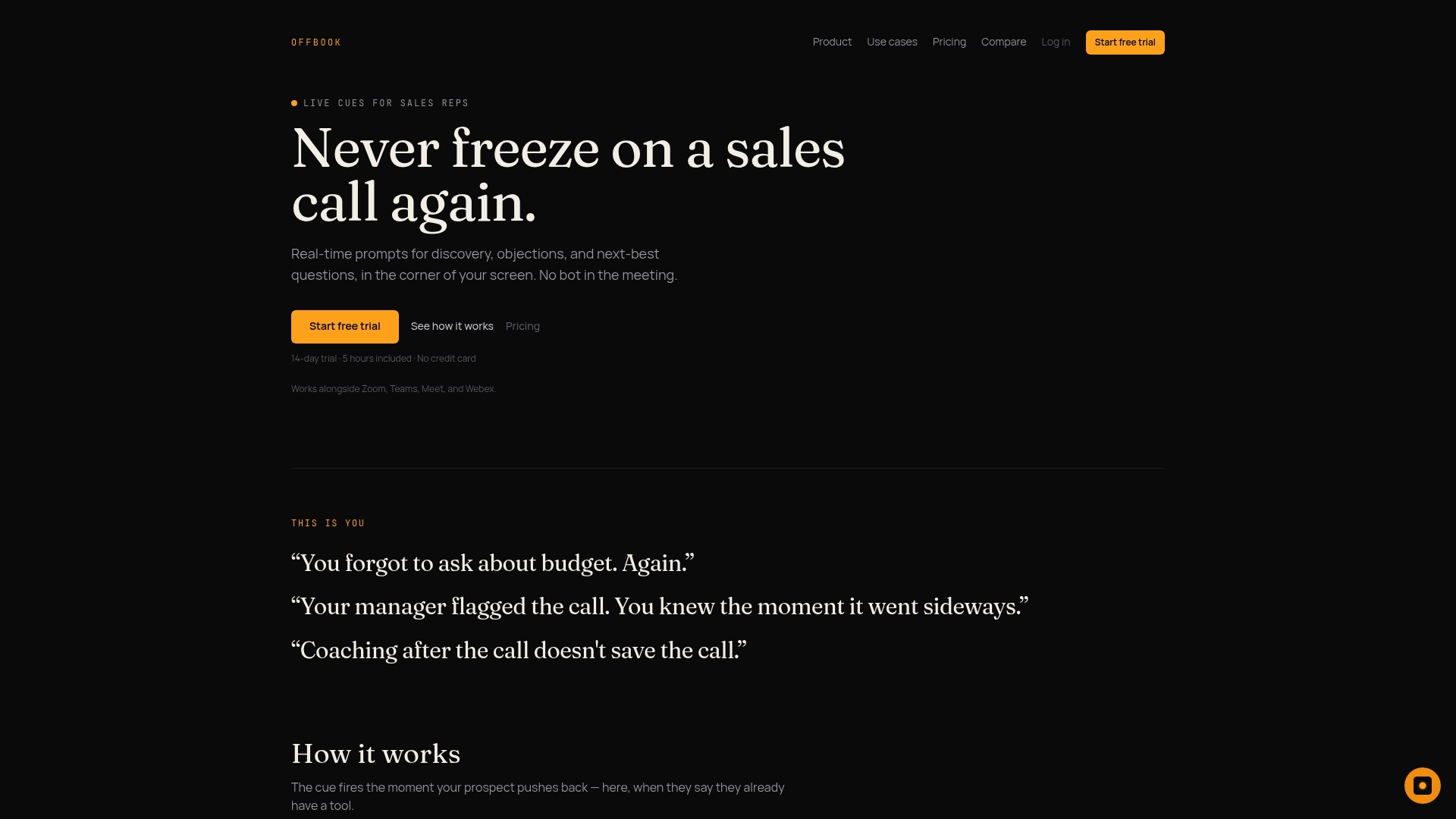
Offbook is built for exactly the gap this article describes: the moment between an AI insight and a rep behavior change. Unlike post-call recorders that surface data after the deal has already moved forward or stalled, Offbook’s AI call coaching works live during video calls, prompting reps on-screen with the right questions, objection responses, and qualification gaps based on MEDDIC and MEDDPICC frameworks. No bot joins the meeting. No prospect knows it is there. Reps walk in with pre-call briefs and leave with structured next steps. If you are running a seed or Series A B2B SaaS team and want AI that changes outcomes in the call rather than after it, Offbook is built for your stage.
FAQ
What is conversation intelligence in sales?
Conversation intelligence is AI technology that records, transcribes, and analyzes sales calls to surface objections, keyword patterns, and buying signals. Platforms like Salesforce conversation intelligence automatically link these insights to CRM tasks and follow-up actions.
How much time does AI save sales reps per week?
Gartner research shows AI tools save sales reps nearly 4.8 hours per week on average. Reps using AI agents specifically report a 34% reduction in research time and a 36% reduction in email drafting time.
Do AI tools actually improve deal close rates?
AI-augmented B2B sales teams close 31% more deals than teams using traditional CRM only, with deal cycles approximately 19 days shorter. The improvement requires 72% or higher team adoption to reach its full effect.
What is the biggest mistake teams make with AI in sales?
The most common failure is measuring only time saved rather than tracking whether that time is reinvested into selling activities. Gartner identifies this as a productivity paradox that limits commercial results even when AI adoption is high.
Where should a sales team start with AI integration?
Start with high-volume, rule-based processes like lead scoring, email drafting, and meeting scheduling before adding real-time conversation intelligence. Building rep confidence in AI outputs at the workflow level makes live coaching adoption significantly easier.