Founder Led SaaS: Six Call Opener Frameworks to Run With Live Coaching
Practical call opener frameworks for founder led B2B SaaS: six copyable openers, two A/B experiments across 50 calls, and live coaching prompts to run.
Published: September 7, 2026
Author: OffBook Editorial Team
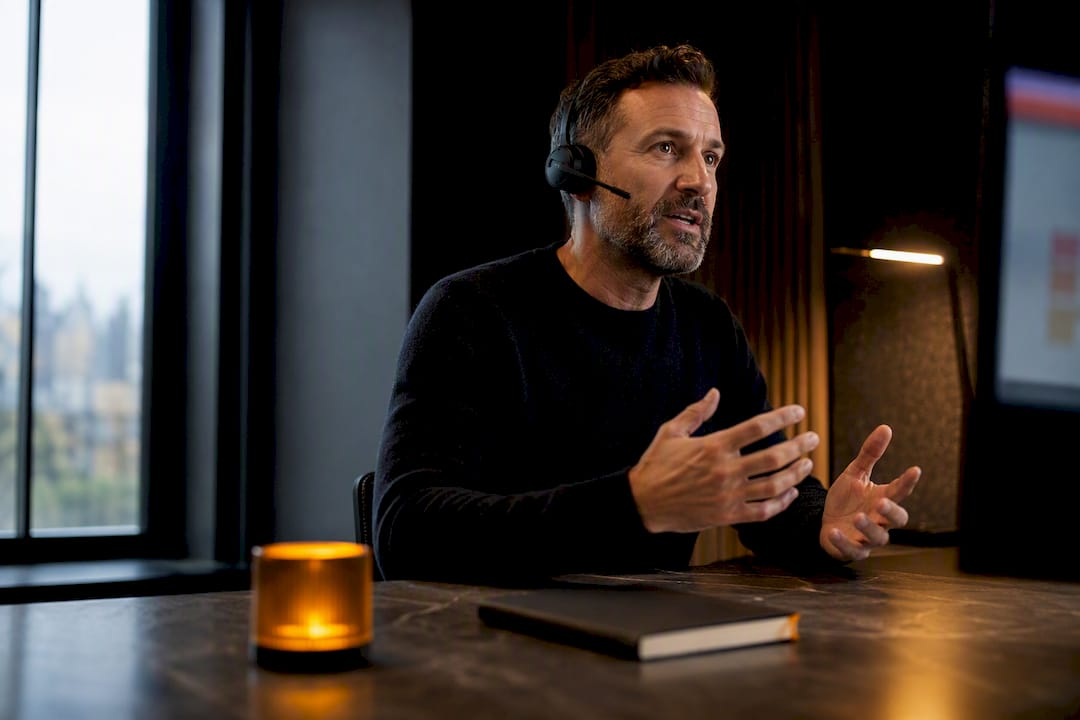
The best call opener for a live discovery or demo call is not a script. It’s a time-boxed agenda, an explicit request for permission to ask questions, and a one-sentence value anchor delivered inside the first 60 seconds. Layer that opener on top of SPICED, MEDDIC, or BANT depending on deal size, and coach it live with a tool like Offbook so reps adjust in real time instead of guessing after the call ends.
TL;DR:
- Use a time-boxed agenda, permission request, and value anchor within the first 60 seconds to lower buyer guard and guide the call effectively.
- Choose your call opener framework based on deal size: BANT for transactional, SPICED for mid-market, and MEDDIC for enterprise, to address specific qualification needs.
- Break the first minute into three micro-steps: state the agenda, deliver a value statement, and ask a situational question to maximize coaching and call flow.
- Conduct pre-call preparation, avoid reading scripts verbatim, and ensure the call ends with a booked next step to improve qualification and conversion rates.
- Implement live coaching software and run small experiments on opener variants to scale discipline and optimize qualified opportunity rates across the sales team.
Table of Contents
- What Are Call Opener Frameworks, and How Do They Fit a 30-Minute Discovery Call?
- SPICED, MEDDIC, or BANT: Which Opener Fits Your Deal?
- How Do You Structure the First 60 Seconds on a Coached Call?
- Six Opener Templates You Can Copy Into Your Next Call
- Pre-Call Checklist and the Openers Most Reps Get Wrong
- Two Opener Experiments Worth Running This Week
- Scale Your Opener Discipline Without Babysitting Every Call
- Sources
What Are Call Opener Frameworks, and How Do They Fit a 30-Minute Discovery Call?
A call opener framework is the structured first minute of a sales conversation: the agenda you state, the permission you ask for, and the sequence of questions that follows. It’s distinct from a cold-call script. This is what happens once a prospect has already agreed to show up on video, and the job is to earn the rest of the meeting.
Most effective discovery and demo calls run on a tight clock. A 30-minute discovery call framework built around an explicit opening agenda tends to hold buyer attention better than a loose, open-ended conversation, largely because both sides know where the call is headed. Here’s how that half hour typically breaks down:
- 0 to 3 minutes: Opener. Agenda, permission, value anchor, first question.
- 3 to 7 minutes: Context. Company size, role, current setup.
- 7 to 18 minutes: Problem and impact. Where it hurts, and what that costs in dollars or hours.
- 18 to 23 minutes: Decision mapping. Who signs off, what the timeline looks like.
- 23 to 30 minutes: Next steps. A named date, a named person, a calendar invite sent before you hang up.
The opener sets the tone for all four blocks that follow. Asking permission before you start firing off questions is not a courtesy. It’s a mechanical fix that lowers a buyer’s guard. Framing the opener as permission to ask turns a checklist into something closer to a conversation, and buyers tend to give longer, more honest answers once they’ve agreed to the exchange rather than been ambushed by it.
SPICED, MEDDIC, or BANT: Which Opener Fits Your Deal?
Pick the framework based on deal size and stakeholder count, not personal preference. Each one asks a different opening question because each one is solving a different qualification problem.
SPICED centers the call on situation, pain, impact, critical event, and decision. It’s built for urgency, and it’s the strongest fit for most mid-market B2B SaaS deals because it forces a number out of the buyer early rather than letting the pain stay abstract.
MEDDIC (metrics, economic buyer, decision criteria, decision process, identify pain, champion) works because enterprise deals have too many stakeholders for a simple pain conversation to carry the whole qualification. The opener under MEDDIC often includes a question about who else needs to be in the room.
BANT (budget, authority, need, timeline) is the fastest of the three, and that speed is exactly why it fits transactional, low-ACV deals where a 15-minute call needs to end with a clean yes or no.
A rough sizing guide that tracks with how SPICED, MEDDIC, and BANT map to deal type:
- For transactional deals with lower average contract value, a BANT approach with a brief opener focusing on budget fit is common.
- Mid-market SaaS deals often use SPICED, emphasizing impact over features in the opener.
- Enterprise deals with high average contract value and multiple stakeholders typically include MEDDIC elements in the opener to map the buying committee.
The trade-off with all three is the same: ask too many qualifying questions back to back and the call starts to feel like an interrogation. Space out the hard questions with genuine follow-ups, and let the buyer talk longer than you do.
How Do You Structure the First 60 Seconds on a Coached Call?
Break the opener into three micro-steps and you remove almost all the guesswork.
0:00 to 0:20. State the agenda and ask permission. “I’ve got three things I want to cover in the next 30 minutes: your current setup, where it’s breaking down, and whether this is worth a deeper look. Sound good if I ask a few questions to get there faster?”
0:20 to 0:35. Drop a one-line value anchor tied to the buyer’s likely situation, not your product’s feature list.
0:35 to 0:60. Ask your first situational question and go quiet.
This is exactly where live coaching earns its place. A real-time coaching tool listens to the call and surfaces on-screen prompts without joining the meeting as a participant, so a rep gets a nudge on the right follow-up question, an early flag on an objection forming, or a reminder to name the economic buyer before the call moves past minute five. Sales methodologies like MEDDIC and MEDDPICC structure those prompts, which matters because coaching that happens during the call changes the outcome of that call. Feedback delivered after the fact only changes the next one.
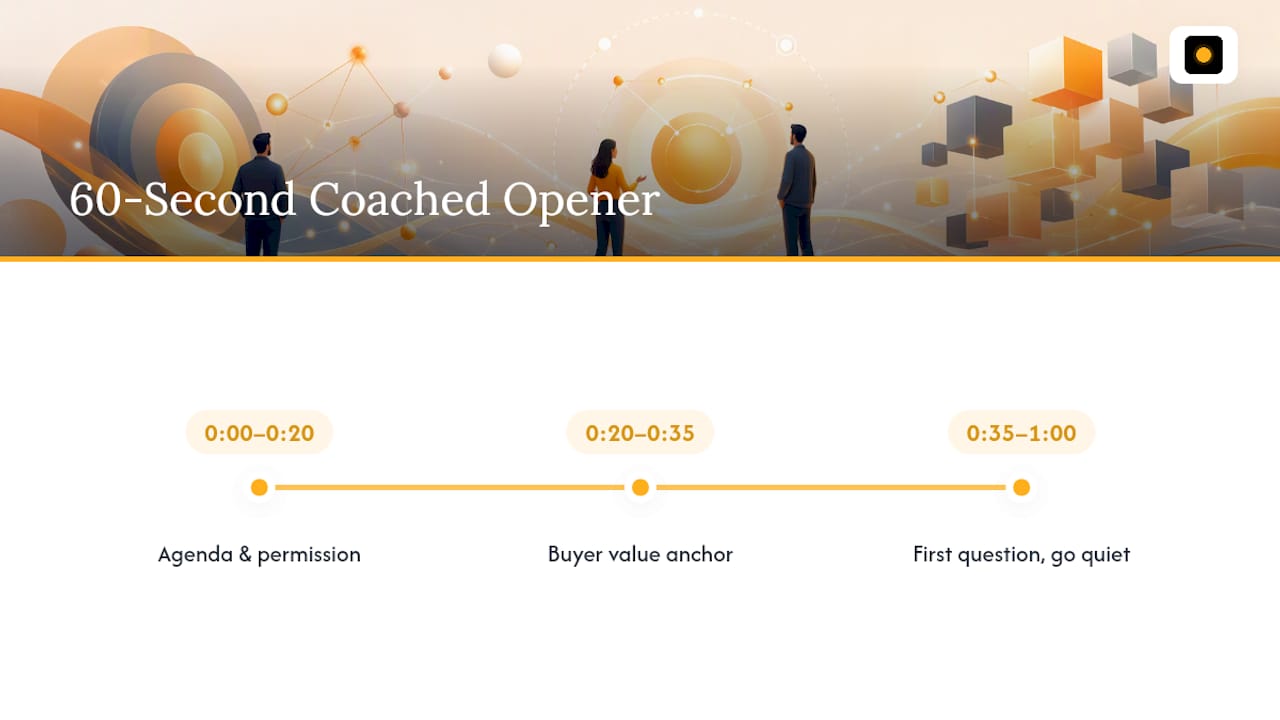
Pro Tip: Keep a visible clock on your screen during the opener. Reps who can see the minute count rarely blow past the 3-minute mark, and buyers notice when a call actually respects the time it promised.
Any live-listening tool should also be transparent about consent and recording, and that disclosure belongs in the first 20 seconds alongside the agenda, not buried in a follow-up email.
Six Opener Templates You Can Copy Into Your Next Call
Adapt these to your product, but keep the framework pairing and the next-question intact.
- Founder-led intro (SPICED, any ACV). “I’m one of the founders, so you’re getting the most direct read on whether we’re a fit. Mind if I ask what pushed this to the top of your list this quarter?” Next question: what’s the cost of doing nothing for another six months?
- VP of Sales intro (MEDDIC, $100k+ ACV). “Before we get into the product, I want to map out who else touches this decision so I’m not wasting anyone’s time later.” Next question: who owns the budget line this would come out of?
- Technical champion intro (SPICED, $10k to $100k ACV). “I know you’ll want to see this work under the hood, so let’s spend a few minutes on your current stack first.” Next question: what breaks first when volume spikes?
- Short qualification opener (BANT, 15-minute call, under $10k ACV). “I’ve only got you for 15, so let’s move fast. Budget and timeline first, then I’ll show you exactly the piece that matters.” Next question: is there a budget already approved, or are we building the case?
- “Demo now” pivot opener (any framework). When a buyer asks to skip straight to product, the strongest move is a two-question reframe: “Happy to jump in. Two quick things first so I show you the right screen.” That reframe protects qualification without losing the buyer’s momentum.
- Multi-stakeholder mapping opener (MEDDIC, enterprise). “Since a few teams will end up using this, walk me through who’s in the room today and who isn’t.” Next question: what does success look like for each of them separately?
For calls under 20 minutes, cut the context block and go straight from opener to problem. For calls past 45 minutes, add a mid-call agenda check: “We’re at the halfway mark, still good to cover next steps at the end?”
Pre-Call Checklist and the Openers Most Reps Get Wrong
Run this before every call: pull up the buyer’s company and recent news, confirm your calendar has open slots ready to offer, keep the agenda doc visible on screen, set a clock, and have your note template open before the call starts. This kind of pre-call preparation is what separates a smooth opener from one that stalls out looking for a name or a title.
During the call, the checklist is short: open with permission, state the agenda out loud, land the value anchor, ask a situational question, and close by booking a named next step before you hang up. Sequencing situation into problem into impact into decision is what most consistently converts a discovery call into a committed second meeting, and skipping the impact question is the single most common way that sequence breaks down.
Three mistakes show up constantly:
- Reading a script word for word. Practice the phrasing until it sounds like you, not a transcript.
- Asking about budget before impact. Lead with cost of inaction, not dollar signs.
- Ending the call without a calendar invite sent. Book it live, on the call, before either of you logs off.
Top performers actually deviate from their stated agenda 40 to 60 percent of the time based on where the buyer’s answers lead. Treat the agenda as a guide, never a script to defend.
Two Opener Experiments Worth Running This Week
Run an A/B test on two opener variants across 50 calls and track next-step booking rate. Then split your team into a coached group and an uncoached group for a week and measure the change in qualified-opportunity rate. Small teams rarely run either test, which is exactly why the ones that do usually find their fix faster. For more on structuring these conversations, see how discovery questions work to close more deals.
— Neil
Scale Your Opener Discipline Without Babysitting Every Call
Real-time coaching software can turn the opener framework you just read into something your whole team actually runs the same way, call after call, without you sitting in on every one. It listens live and drops on-screen prompts tuned to MEDDIC and MEDDPICC, so a rep gets a nudge to ask for the economic buyer or quantify impact at the exact second it matters, not in a debrief three days later.
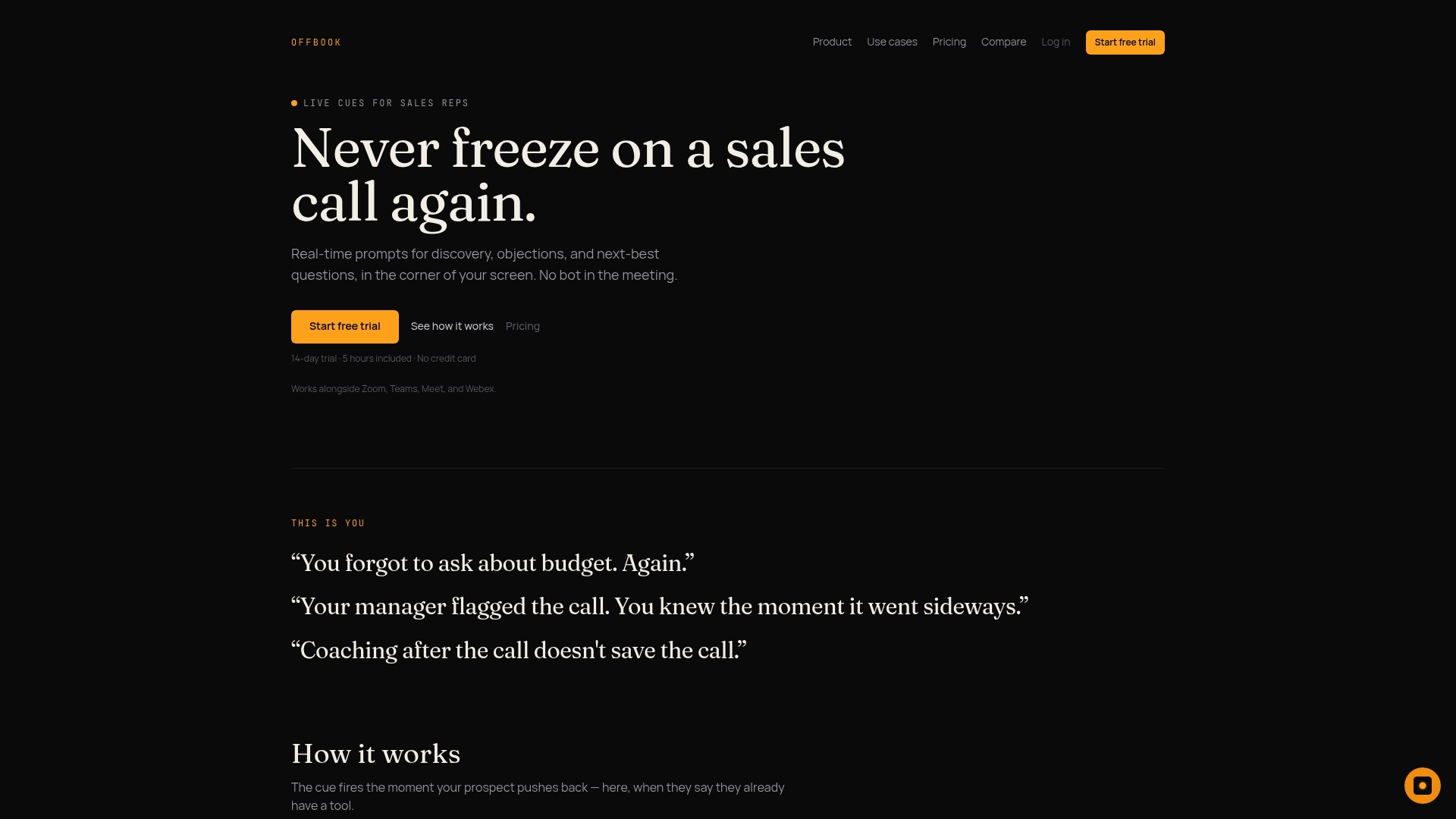
Pre-call briefs help reps walk in already knowing who they’re talking to, and instant post-call debriefs turn the next steps you booked into a follow-up draft before the buyer’s even closed their laptop. That combination is what closes the gap between a good framework on paper and one your team executes under pressure. If you’re a founder still running most of the sales calls yourself, the founder-tailored coaching page is the fastest way to see it against your own pipeline. Teams with a dedicated sales org should start on the sales coaching landing page instead. Either way, the next step is the same: run a trial call and see what the opener actually sounds like from the buyer’s side.
Sources
- Discovery Call Framework: Questions, Scripts & the 30-Minute Structure
- Discovery Call: The 30-Minute Structure + Questions (2026)
- Discovery Call Agenda: Structure That Uncovers Pain — QUOTA Training