What Is Procurement in B2B Sales: A Rep's Guide
Discover what procurement in B2B sales means and how understanding it can transform your sales strategy. Learn more now!
Published: May 27, 2026
Author: OffBook Editorial Team

What Is Procurement in B2B Sales: A Rep’s Guide
Most sales reps treat procurement as a final hurdle, a box to check before the deal closes. That framing costs deals. Understanding what is procurement in B2B sales means recognizing it as a strategic, organization-wide function that shapes every stage of the buying process. Procurement affects 40 to 80% of organizational costs, which means the people managing it have serious authority and serious stakes. This guide breaks down how procurement actually works, why it matters to your pipeline, and what you can do differently on your next call.
Table of Contents
Key Takeaways
| Point | Details |
|---|---|
| Procurement is strategic, not transactional | It covers the full buying lifecycle, from needs identification through supplier management and payment. |
| Multiple stakeholders control every deal | The average B2B purchase involves 6 to 11 decision-makers, each with different priorities. |
| Compliance gaps stall deals silently | GDPR and other requirements discovered late in the process are among the most common reasons deals freeze. |
| AI is reshaping procurement workflows | Companies using AI-driven procurement see up to 5x ROI gains and 60% productivity improvements. |
| Sales reps who guide buyers win more | Educating buyers through internal procurement steps reduces stalls and builds lasting trust. |
What is procurement in B2B sales, defined
Procurement is the end-to-end process an organization uses to acquire the goods and services it needs to operate. That includes identifying what is needed, finding and evaluating suppliers, negotiating terms, issuing purchase orders, receiving deliveries, processing payments, and managing ongoing supplier relationships. It is not the same as purchasing, even though the two terms get used interchangeably all the time.
Purchasing is one step inside procurement. It covers the transactional act of placing and receiving an order. Sourcing, another related term, focuses specifically on identifying and qualifying suppliers. Procurement wraps all of it into a governed, repeatable process tied to organizational strategy.
Here is a quick breakdown of how the three terms relate:
| Term | Scope | Primary focus |
|---|---|---|
| Purchasing | Narrow, transactional | Placing orders and processing payments |
| Sourcing | Mid-range, supplier-focused | Finding and vetting vendors |
| Procurement | Broad, strategic | Full lifecycle from need to supplier management |
The procurement lifecycle covers eight key steps: needs identification, supplier research, negotiation, requisition, purchase orders, receiving, invoice matching, and record-keeping. For a sales rep, each of those steps represents either an opportunity to add value or a point where your deal can stall without warning.
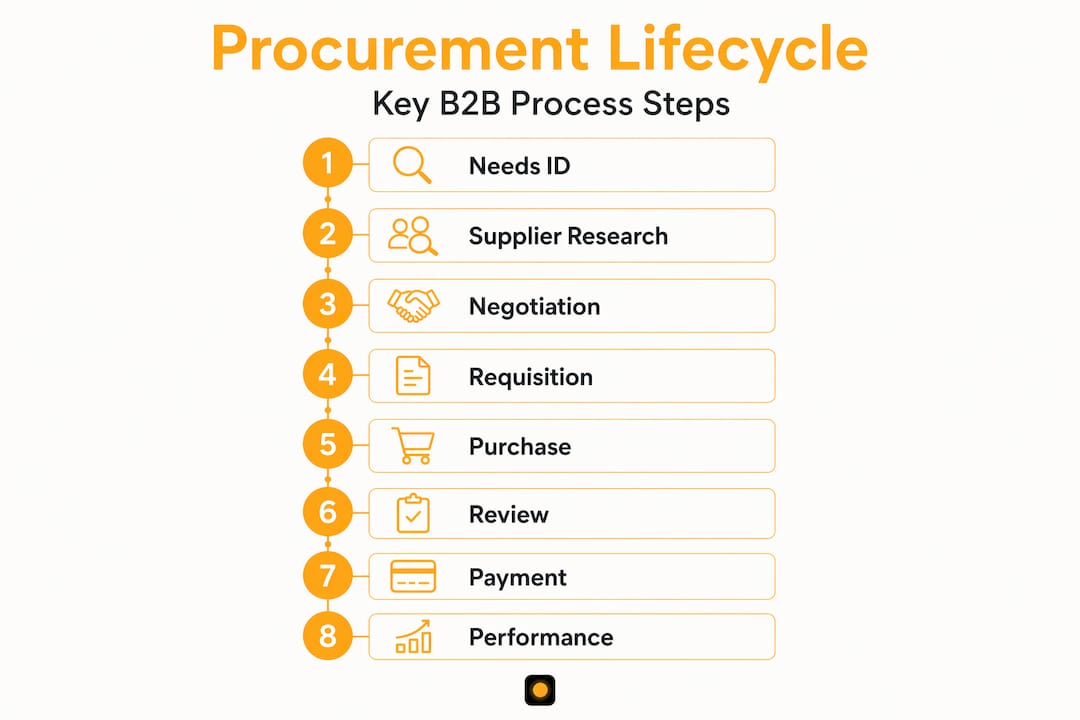
Modern B2B purchasing has moved well beyond transaction management. It is now a strategic driver of value creation inside organizations, which means procurement teams are being measured on outcomes, not just cost savings. That shift changes how they evaluate vendors and what they need from you.
The B2B procurement process and its stakeholders
Understanding the stages of a typical B2B procurement cycle helps you anticipate where your deal is at any given moment and what the buyer needs from you to move forward. Here is how it generally unfolds:
-
Need recognition. A department identifies a gap, a problem, or an opportunity that requires an external solution. This is often where your sales motion begins, but procurement has not yet been formally engaged.
-
Specification and scoping. The buying team defines what the solution needs to do, what constraints apply, and what success looks like. This is your best window to shape requirements.
-
Supplier research and RFP. Procurement identifies potential vendors and may issue a request for proposal. If you are not already in the conversation, getting in at this stage is difficult.
-
Evaluation and shortlisting. Vendors are scored against criteria that procurement and stakeholders define together. Price matters, but so do security posture, compliance, implementation risk, and support quality.
-
Negotiation and approval. Terms are negotiated, legal reviews the contract, and finance signs off on budget. This stage alone can take weeks.
-
Purchase order and onboarding. The formal order is issued and implementation begins. The deal is closed, but the relationship is just starting.
-
Review and supplier management. Procurement tracks performance against the contract and uses that data in future renewal decisions.
The complexity here is not just the number of steps. It is the number of people involved. The average B2B buying decision involves 6 to 11 stakeholders, each researching independently and prioritizing differently. A VP of Engineering cares about integration and uptime. A CFO cares about total cost of ownership. A procurement manager cares about compliance and vendor risk. If your pitch only speaks to one of them, you are invisible to the rest.
Procurement stalls often occur because of asynchronous stakeholder reviews, disconnected communication channels, and documentation chaos. A deal that felt close can go quiet for three weeks because one approver is traveling and another is waiting on a security questionnaire that nobody told your champion to prepare.

Pro Tip: Map the procurement org chart before your next discovery call. Ask your champion directly: “Who else needs to approve this, and what does each of them need to feel confident?” The answers will tell you more about deal risk than any qualification framework alone.
Why procurement knowledge changes how you sell
Procurement is not just a gatekeeper you negotiate past. It is a function with real authority over whether your deal closes, on what terms, and how quickly. Sales reps who understand this stop treating procurement as an obstacle and start treating it as a buying partner.
Here is what changes when you approach it that way:
-
You qualify more accurately. Knowing the procurement lifecycle helps you identify where a deal actually is versus where your champion thinks it is. A verbal yes from a VP means nothing if procurement has not been engaged.
-
You prevent compliance surprises. Compliance requirements like GDPR and WCAG 2.1 cause last-minute deal delays when they surface too late. Asking about compliance requirements in discovery, not in legal review, keeps deals moving.
-
You build trust with the right people. Treating suppliers as partners rather than interchangeable vendors leads to better outcomes for everyone. Procurement teams remember which vendors made their job easier.
-
You shorten cycles. Buyers often navigate complex approval workflows without formal training. When you proactively provide the documentation, security assessments, and compliance evidence they need, you remove the friction that creates delays.
-
You protect margin. When procurement understands your value clearly, price negotiations shift from “how low can you go” to “what does this deliver.” That only happens if you have done the work to connect your solution to their strategic outcomes.
Buyer loyalty is a shared enterprise effort, not something one department owns. That means your relationship with procurement directly affects renewal rates, expansion revenue, and referrals. The rep who helped procurement look good during implementation gets the call when the next budget cycle opens.
Pro Tip: Build a procurement readiness checklist for your most common deal types. Include security questionnaire templates, compliance documentation, and a standard list of questions procurement will ask. Sharing it early signals competence and saves your buyer hours of internal work.
Technology trends reshaping procurement
The procurement function is changing fast, and the changes directly affect how you sell. AI and automation are moving from pilot programs to core infrastructure inside buying organizations.
| Technology | What it does | Impact on sales |
|---|---|---|
| AI-driven sourcing tools | Automate vendor discovery and scoring | Your company may be evaluated before you ever speak to anyone |
| Procurement automation platforms | Digitize approvals, POs, and invoice matching | Faster cycles but less human touchpoint visibility |
| Digital collaboration portals | Centralize vendor communication and documentation | Buyers expect organized, responsive vendors |
| Predictive spend analytics | Forecast budget needs and flag anomalies | Procurement enters conversations with data you may not have |
Companies adopting AI-driven procurement see up to 5x ROI and a 60% boost in procurement productivity. That productivity gain means procurement teams are processing more deals faster, which sounds like good news until you realize it also means less patience for vendors who are slow, disorganized, or hard to evaluate.
AI and digital tools also give sales teams real-time visibility into procurement activities, signaling deal momentum or risk before your champion tells you anything. If your organization uses a digital sales room or proposal tool, you can see when procurement has reviewed your security documentation, who opened the contract, and where engagement dropped off. That data is more reliable than a status update from your champion.
B2B buyers now expect self-service procurement features like quick-order forms, reorder dashboards, and personalized pricing. Procurement-driven buyers prioritize efficiency above everything else. If your sales process creates friction instead of removing it, you are working against their instincts.
Practical strategies for aligning with procurement
Knowing how procurement works is only useful if it changes your behavior. Here are the practices that actually move deals forward when procurement is involved:
-
Map the decision-making structure early. Before your second call, know who owns procurement in the target organization, what their process looks like, and what approvals are required. Ask your champion to walk you through it.
-
Tailor your proposals to procurement language. Procurement teams respond to total cost of ownership, risk mitigation, vendor reliability scores, and compliance credentials. Lead with those, not just feature lists.
-
Front-load your documentation. Prepare your security questionnaire responses, compliance certifications, and reference materials before procurement asks for them. Handing over a complete vendor package in week two instead of week six changes the deal timeline.
-
Support your champion inside their organization. Buyers often lack formal procurement training and struggle with internal approval complexity. Give them talking points, ROI calculations, and executive summaries they can use to build internal consensus without you in the room.
-
Stay visible without being annoying. Use deal engagement data to time your follow-ups. A check-in the day after procurement reviews your contract is relevant. A check-in three days before they have even opened it is noise.
-
Align your platform with how procurement actually buys. If your buyer uses PO-based purchasing, make sure your quoting and invoicing process supports it cleanly. Friction at the order stage kills deals that were otherwise won.
My take: procurement is where deals actually live or die
I’ve watched sales reps lose deals they had every right to win because they treated procurement as an afterthought. The champion was enthusiastic, the demo went well, the budget was there. Then it went quiet. Six weeks later, the deal died in a legal review nobody saw coming.
What I’ve learned is that procurement is not the end of the sales process. It is the part where your deal gets tested against reality. Every assumption your champion made about internal support, budget availability, and compliance readiness gets stress-tested by procurement. If you have not prepared for that test, you are gambling.
The reps I’ve seen consistently close complex deals do one thing differently. They treat procurement as a buying partner from the first call. They ask about internal processes early. They provide documentation proactively. They build relationships with procurement contacts, not just champions. And they use every tool available to stay informed about where the deal actually stands.
The gap between what sales assumes and what procurement requires is where most deals stall. Closing that gap is not a soft skill. It is a discipline. And it is one of the clearest competitive advantages available to any sales professional willing to do the work.
— Neil
How Offbook helps you sell through procurement
Navigating procurement complexity requires preparation, precision, and the ability to ask the right questions in real time. Offbook is built for exactly that. It listens to your sales calls and surfaces live coaching cues on-screen, prompting you with the qualification questions and objection responses that matter most when procurement-related concerns come up mid-conversation.
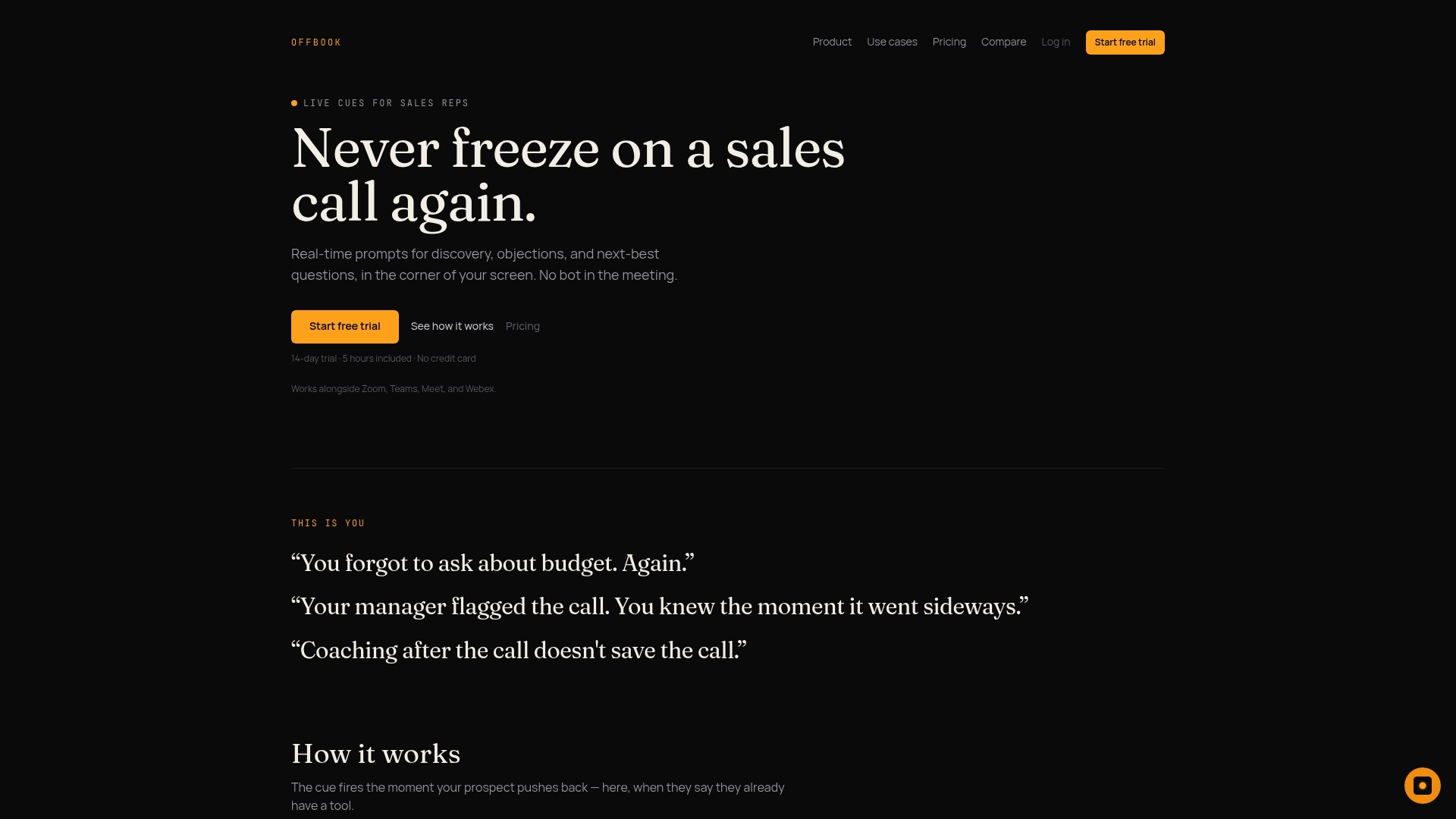
Before the call, Offbook generates detailed briefs on the companies and people you are meeting so you walk in knowing their likely procurement structure and priorities. During the call, it keeps you on track with frameworks like MEDDIC and MEDDPICC, so you never leave a conversation without understanding who controls the budget, who owns the process, and what compliance requirements are in play. If you are in B2B sales and want to stop losing deals in procurement, Offbook is where to start.
FAQ
What is procurement in B2B sales?
Procurement in B2B sales refers to the structured process a buying organization uses to evaluate, select, and purchase goods or services. It covers everything from identifying a need to managing the supplier relationship after the deal closes, and it directly shapes how, when, and why a vendor gets selected.
How does procurement affect B2B sales cycles?
Procurement adds stages, stakeholders, and compliance requirements that extend deal timelines. Deals that appear close can stall for weeks when procurement reviews trigger security assessments, legal reviews, or budget reapprovals that were not anticipated earlier in the process.
How many stakeholders are typically involved in B2B procurement?
The average B2B buying decision involves 6 to 11 stakeholders, each with different priorities and evaluation criteria. Sales reps who only engage one or two of them often lose deals to vendors who mapped the full buying committee.
What is the difference between procurement and purchasing?
Purchasing is a single transactional step within procurement. Procurement is the broader, strategic process that includes needs identification, supplier evaluation, negotiation, compliance review, and ongoing vendor management.
How can sales reps work more effectively with procurement teams?
The most effective approach is to engage procurement early, provide compliance documentation proactively, and support your champion with the internal materials they need to build consensus. Treating procurement as a partner rather than a gatekeeper shortens cycles and improves win rates.