Discovery Call Structure Explained for B2B Sales Reps
Unlock the secrets of effective sales with our guide on discovery call structure explained. Transform your calls into winning strategies!
Published: June 10, 2026
Author: OffBook Editorial Team

A discovery call is a structured diagnostic conversation designed to assess buyer fit, uncover genuine pain, and map the decision-making process before any solution is presented. Getting the discovery call structure explained correctly matters more than any other step in your pipeline because the call determines whether a deal is worth pursuing at all. Frameworks like MEDDIC, CHAMP, and SPIN Selling give reps a repeatable architecture for these conversations. Top-performing B2B reps maintain a 30:70 talk-to-listen ratio, spending 70% of the call listening. That single discipline separates reps who close from reps who pitch.
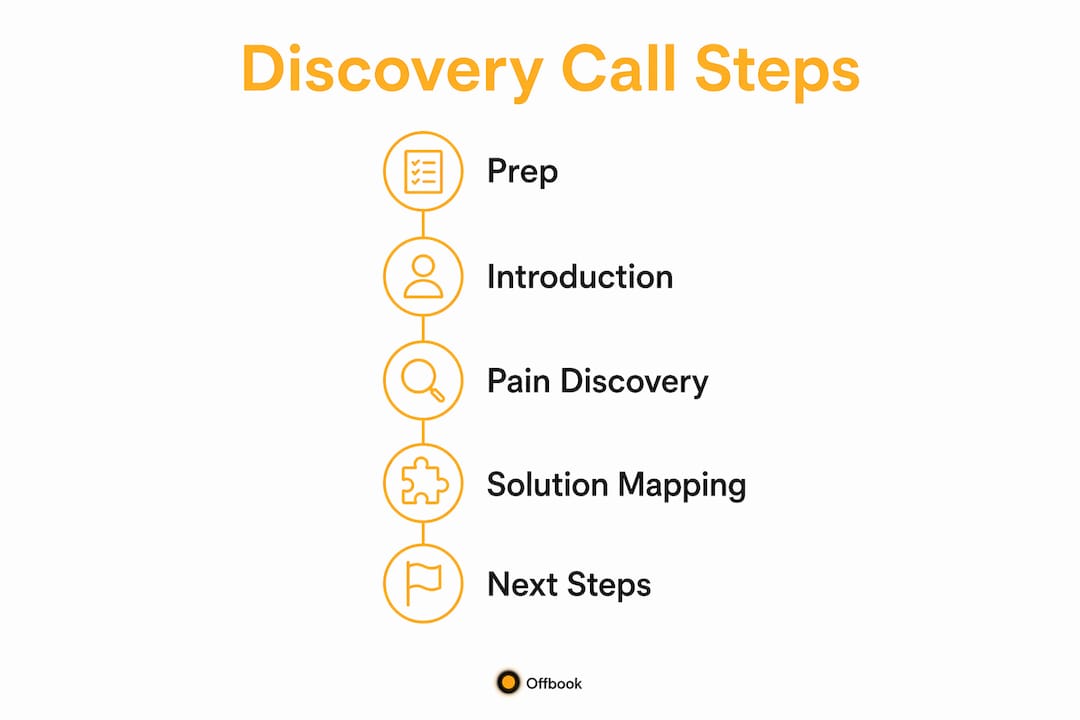
How to structure a discovery call: components and timing
Structured discovery call agendas convert first conversations into clear paths forward and improve pipeline predictability. The agenda has six distinct phases, and each one has a job to do.
The six-phase agenda
-
Pre-call preparation (before the call). Research the company, the contact’s role, recent news, and any known competitors. Tools like LinkedIn Sales Navigator and your CRM give you the context to ask informed questions instead of generic ones. Offbook generates pre-call briefs automatically so you walk in knowing the company’s tech stack, funding stage, and likely pain points.
-
Opening: agenda and rapport (0–5 minutes). State the agenda out loud. “I’d like to spend the first few minutes understanding your situation, then we can figure out together whether there’s a fit.” This signals structure and mutual respect immediately.
-
Prospect background and goals (5–12 minutes). Ask about current state, strategic priorities, and what success looks like in 12 months. Keep questions open-ended. “What does your current process look like?” beats “Do you use a CRM?”
-
Pain discovery and implication questioning (12–25 minutes). This is the core of the call. Surface the problem, then dig into consequences. SPIN Selling’s implication questions (“What happens to revenue if this problem continues for another quarter?”) move buyers from passive awareness to active urgency. Top performers spend more than 50% of their question time on implication and need-payoff questions. That ratio is not accidental. It reflects where buyer commitment actually forms.
-
Qualification (woven throughout, explicit at 25–30 minutes). Budget, authority, need, and timeline questions belong in the conversation, not at the end as an interrogation. CHAMP flips the traditional BANT order by leading with challenges rather than budget, which feels more natural to buyers.
-
Next steps (30–35 minutes). Close with a specific, scheduled action. Not “I’ll send you something.” A date, a time, and a named attendee list.
| Phase | Time allocation | Primary goal |
|---|---|---|
| Pre-call prep | Before the call | Research and brief creation |
| Opening and agenda | 0–5 minutes | Set expectations and build rapport |
| Background and goals | 5–12 minutes | Understand current state and priorities |
| Pain and implication | 12–25 minutes | Uncover real pain and consequences |
| Qualification | 25–30 minutes | Confirm budget, authority, and timeline |
| Next steps | 30–35 minutes | Lock a specific follow-up commitment |
Pro Tip: Send a one-paragraph agenda to the prospect 24 hours before the call. Reps who do this report fewer no-shows and more focused conversations because the prospect arrives prepared.

Why a structured call increases deal velocity
Discovery calls are diagnostic conversations, not sales pitches. Mixing demos or product walkthroughs into a discovery call often kills deals because it shifts the dynamic from listening to presenting before you have earned the right to present.
The psychology behind structure is straightforward. When a rep follows a framework like MEDDIC or CHAMP, qualification becomes systematic rather than instinctive. Using structured qualification frameworks like CHAMP or MEDDIC can increase deal closing rates by 20 to 30%. That improvement comes from two sources: better targeting of genuinely qualified prospects, and deeper understanding of the buying process before the proposal stage.
Implication and need-payoff questions do the heaviest lifting in this regard. When a buyer says out loud, “If we don’t fix this by Q3, we lose the contract,” they have convinced themselves. No pitch required. The rep’s job is to ask the question that produces that statement, not to manufacture urgency artificially.
“Top-performing reps do not win by pitching harder. They win by asking more powerful implication and need-payoff questions that get buyers to verbalize their needs.” — Discovery Call Framework That Actually Closes Deals
Multi-stakeholder deals benefit from structure in a different way. When three or four people are on a call, an unstructured conversation defaults to whoever talks loudest. A structured agenda gives the rep control to direct specific questions to specific roles, which surfaces information that a single-threaded conversation would never reveal. Multi-threading and stakeholder engagement during discovery calls are critical for uncovering hidden needs and preventing single-thread dependency risks. A champion who loves your product but cannot get budget approved is a dead end without multi-threading.
Key behaviors that structured calls reinforce:
- Listening before positioning, so solution fit is based on real data
- Asking implication questions that create urgency without pressure tactics
- Mapping decision-making units before the proposal stage
- Confirming mutual qualification so both sides agree the fit is real
- Documenting pain and goals for use in follow-up communications
How to tailor your structure for complex B2B deals
Single-call discovery works for transactional deals. For enterprise B2B, it rarely does. Complex deals typically require 2 to 3 discovery sessions to fully map decision-making units. Treating a complex deal like a simple one is one of the most common reasons enterprise pipelines stall.
The practical implication is that your first discovery call in a complex deal has a narrower goal: understand the champion’s pain and get access to the broader buying committee. The second session maps economic buyers, technical evaluators, and procurement requirements. The third confirms consensus and surfaces any remaining objections before the proposal.
Pro Tip: At the end of your first discovery call with a complex account, ask directly: “Who else in your organization would be affected by this decision?” Write down every name. Then ask for introductions before the next session.
Successful discovery calls require proactive stakeholder engagement, directing technical and business impact questions to individual participants rather than addressing only the primary contact. In a group call, this means preparing role-specific questions in advance. A CFO cares about payback period and risk. A VP of Engineering cares about integration complexity and maintenance burden. A CRO cares about pipeline impact and rep adoption. Asking the same question to all three wastes everyone’s time and signals that you have not done your homework.
Qualifying budget and authority in a multi-stakeholder environment requires tact. Asking “Who controls the budget?” directly can feel confrontational. A better approach: “How does your organization typically evaluate investments of this size?” That question surfaces the process, the people, and the timeline without putting anyone on the spot. For a deeper look at enterprise buying dynamics, understanding how decisions actually get made inside large organizations changes how you run every discovery session.
Common mistakes that derail discovery calls
Most failed discovery calls share the same handful of errors. Recognizing them is the first step to eliminating them from your practice.
-
Ending without a specific next step. Letting the buyer control the next step loosely with responses like “let me think about it” kills momentum. Successful reps ask for a specific next step with a date and time before the call ends. “Can we put 30 minutes on the calendar for Thursday at 2 PM to walk through this with your VP?” is a close. “I’ll follow up next week” is not.
-
Pitching too early. Presenting a solution before you have confirmed pain, budget, and authority is the most common discovery call mistake. It signals to the buyer that you were not really listening.
-
Skipping implication questions. Surface-level pain questions (“What challenges are you facing?”) produce surface-level answers. Implication questions (“What does that cost you per quarter?”) produce the data that makes proposals compelling. Reps who skip this step write proposals that miss the mark. Reviewing weak discovery questions and how to replace them is one of the fastest ways to improve close rates.
-
Ignoring decision-mapping. Skipping the decision-mapping phase leaves the rep with no clear path to close, making the call a discovery in name only. You need to know who approves, who influences, and who can veto before you invest in a proposal.
-
Treating the call as one-sided. Effective discovery calls require mutual qualification. Both the rep and the buyer should be deciding whether to continue. When reps treat every prospect as a guaranteed fit, they waste time on deals that were never real.
Pro Tip: Build a personal discovery call checklist and review it before every call. Include: pre-call research done, agenda sent, implication questions prepared, decision-mapping questions ready, and next step planned. Five minutes of preparation prevents all five mistakes above.
Key takeaways
A structured discovery call built around listening, implication questioning, and explicit next steps is the single most reliable way to improve B2B deal velocity and qualification accuracy.
| Point | Details |
|---|---|
| Listen more than you talk | Top performers maintain a 30:70 talk-to-listen ratio to surface real buyer needs. |
| Use implication questions | SPIN-style implication and need-payoff questions move buyers from awareness to urgency. |
| Map decisions before proposing | Identify budget holders and decision-makers during discovery, not after the proposal. |
| Plan for multiple sessions | Complex enterprise deals require 2 to 3 discovery sessions to fully qualify the opportunity. |
| Always close with a specific next step | Lock a date, time, and attendee list before ending the call to maintain deal momentum. |
What I’ve learned from watching reps ignore their own structure
Most reps know the framework. They have read the SPIN Selling playbook, they can recite MEDDIC from memory, and they have a discovery call checklist sitting in their CRM. Then the call starts, the prospect asks one unexpected question, and the structure evaporates. The rep pivots to a product demo 12 minutes in, spends the rest of the call presenting, and wonders why the follow-up goes cold.
The problem is not knowledge. It is execution under pressure. A live conversation with a skeptical VP of Sales does not feel like a training exercise. The instinct to pitch when a prospect shows interest is almost biological. Fighting it requires more than a checklist you reviewed the night before.
What I have found actually works is treating the structure as a diagnostic protocol, not a script. A doctor does not abandon the patient intake process because the patient seems engaged. The intake is how they avoid misdiagnosis. Discovery is the same. The structure protects you from your own enthusiasm.
The other thing most articles on this topic understate is the quality of follow-up. A brilliant discovery call followed by a generic “great speaking with you” email loses half its value within 48 hours. The follow-up should mirror the exact pain language the prospect used, reference the specific next step you agreed on, and include a one-sentence summary of why the fit is real. That email is the bridge between the call and the proposal. Write it like it matters, because it does.
Frameworks like CHAMP and MEDDIC are not constraints. They are the accumulated judgment of thousands of sales cycles compressed into a repeatable process. Use them as a starting point, adapt them to your buyer’s language, and refine them every quarter based on what your closed-won deals have in common.
— Neil
How Offbook helps you run better discovery calls
Knowing the structure is one thing. Executing it live, under pressure, with a skeptical economic buyer on the call is another. Offbook is AI call coaching that surfaces real-time prompts during your video calls without a bot joining the meeting. It listens to the conversation and shows you on-screen cues when you are missing an implication question, skipping a qualification gap, or heading toward a close without a confirmed next step.
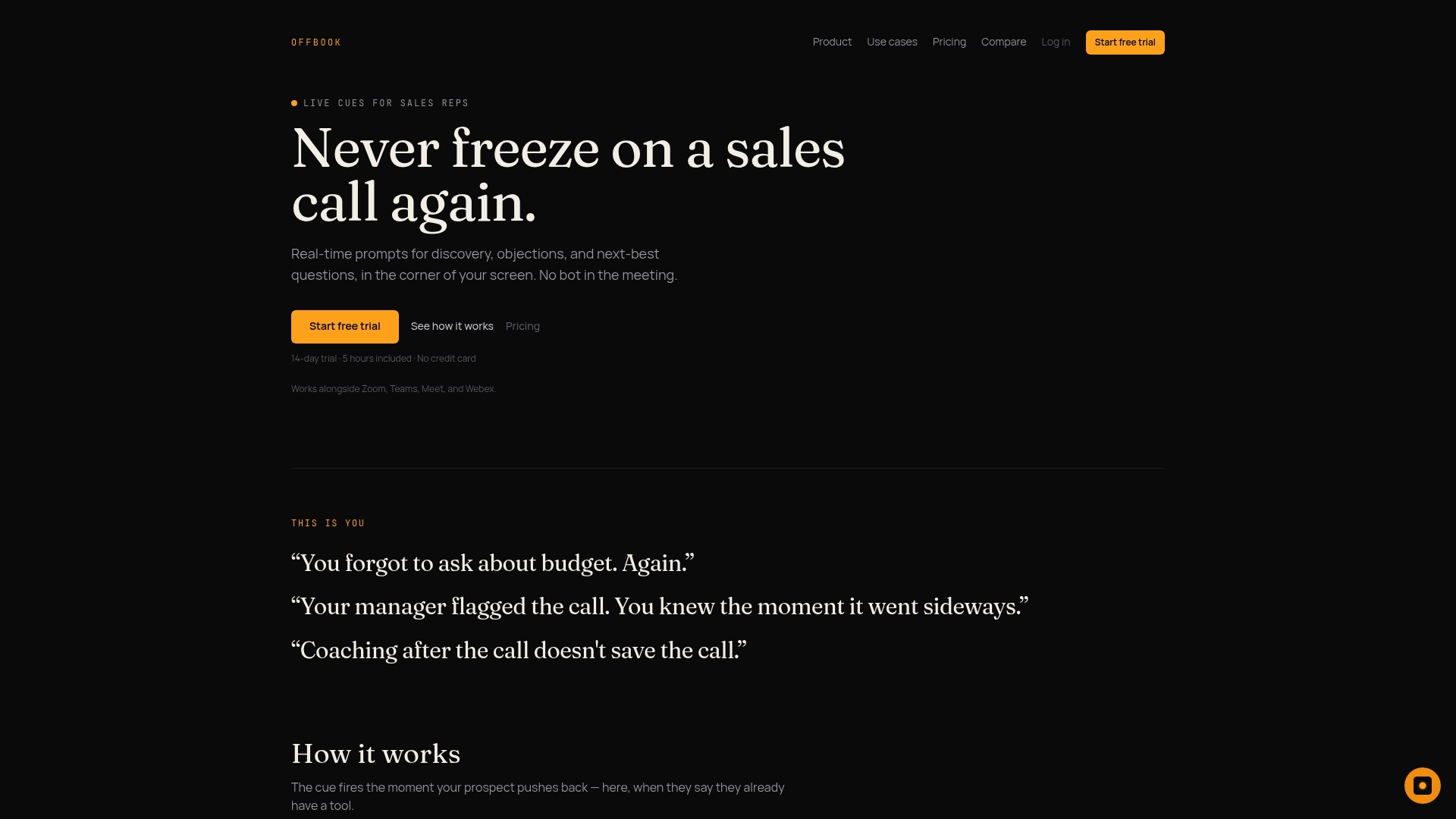
Offbook structures its coaching around MEDDIC and MEDDPICC, so every discovery call follows a proven qualification framework automatically. It also generates pre-call briefs so you walk into every conversation already knowing the company’s situation. For B2B SaaS teams at the seed and Series A stage, that combination of preparation and live coaching is the fastest way to turn a good discovery call guide into consistent execution.
FAQ
What is a discovery call in B2B sales?
A discovery call is a structured initial sales conversation focused on qualifying a prospect, uncovering their pain points, and mapping their decision-making process. It is a diagnostic exercise, not a product pitch.
How long should a discovery call be?
Most B2B discovery calls run 30 to 45 minutes. Complex enterprise deals often require multiple sessions across different stakeholders rather than a single longer call.
What questions should I ask on a discovery call?
Start with open-ended background questions, then move to pain discovery, and prioritize implication questions like “What does this problem cost you per quarter?” Qualification questions covering budget, authority, and timeline should be woven in naturally rather than saved for the end.
What is the best discovery call framework for B2B?
MEDDIC, CHAMP, and SPIN Selling are the three most widely used frameworks. MEDDIC works best for complex enterprise deals with multiple stakeholders. CHAMP suits mid-market deals where challenges should be surfaced before budget. SPIN Selling provides the best question sequencing for moving buyers toward commitment.
How do I handle a discovery call with multiple stakeholders?
Prepare role-specific questions for each participant before the call. Direct technical questions to engineers, financial impact questions to economic buyers, and adoption questions to end users. Proactive stakeholder engagement keeps everyone engaged and surfaces information that single-threaded conversations miss.