Deal Advancement Techniques for B2B Sales Teams
Discover powerful deal advancement techniques for B2B sales that boost win rates and streamline your sales pipeline. Optimize your approach today!
Published: May 30, 2026
Author: OffBook Editorial Team

Stalled deals are a silent quota killer. Most B2B sales reps know what it feels like to have a pipeline that looks healthy on paper but barely moves week over week. Deal advancement, which sales methodology experts more formally call opportunity progression management, is the discipline of moving deals through each stage with deliberate actions, verified qualification, and coordinated buyer engagement. Done well, it shortens cycles, sharpens forecasts, and lifts win rates without requiring you to pitch harder or discount faster. This article lays out the frameworks and deal advancement techniques B2B teams actually use to make that happen.
Table of Contents
- Key takeaways
- Deal advancement techniques B2B teams need to master
- Step-by-step execution of proven advancement methods
- Monitoring deal health and diagnosing stalls
- What you can expect when you apply these techniques
- My take on what actually moves deals forward
- How Offbook helps you advance deals in real time
- FAQ
Key takeaways
| Point | Details |
|---|---|
| Qualify early with MEDDPICC | Advancing without verified qualification leads to bloated pipelines and unreliable forecasts. |
| Signal-driven timing wins | Engaging within 30 days of a business evolution signal lets you shape requirements before competitors appear. |
| MAPs increase win rates by 38% | Mutual Action Plans with named owners on both sides reduce deal stalls and compress sales cycles. |
| Paper Process starts mid-cycle | Treating legal and procurement steps as parallel workflows prevents costly post-verbal-yes delays. |
| AI coaching closes qualification gaps | Real-time prompting during calls surfaces missing MEDDPICC criteria before deals slip through the cracks. |
Deal advancement techniques B2B teams need to master
Before you can execute well, you need the right foundation. Most deal stalls are not caused by bad selling in the moment. They are caused by poor preparation weeks earlier. Three areas matter most.
Signal-driven targeting
Timing is everything in B2B pipeline development. Teams that engage within 30 days of a business evolution signal, such as a funding round, leadership change, or expansion announcement, get to shape buyer requirements and budget allocations before any competitor shows up. Late arrivals face a full RFP and compete almost entirely on price. Signal-driven enterprise account teams generate 4x more qualified opportunities, convert at 71% versus 20%, and close deals 128 days faster on average.
MEDDPICC qualification
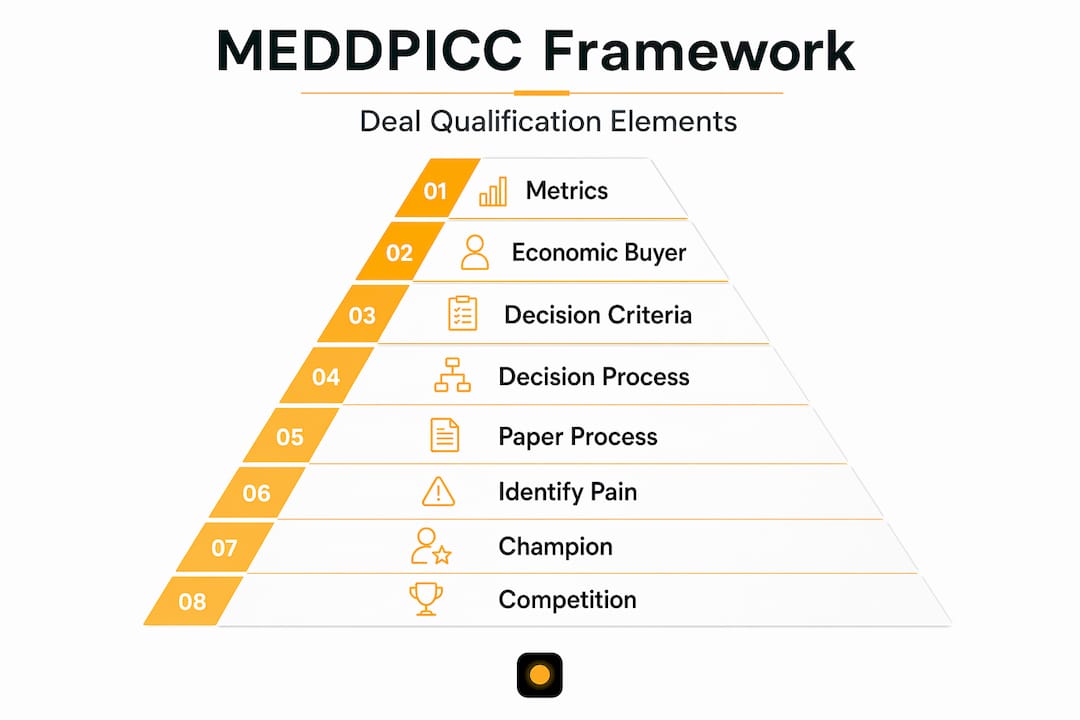
MEDDPICC stands for Metrics, Economic Buyer, Decision Criteria, Decision Process, Paper Process, Identify Pain, Champion, and Competition. Each letter represents a qualification component you need verified evidence for before advancing a deal to the next stage. Understanding the customer’s buying journey helps you map MEDDPICC criteria to the right moments in that process rather than forcing qualification at the wrong time. The framework is not a checklist you complete once. It is a living assessment updated after every meaningful buyer interaction.
Strategic opportunity planning
The Blue Sheet, developed by Miller Heiman and now part of Korn Ferry’s methodology, is a structured tool that forces reps to map competitive positioning, key players, and win results in real time. Sellers using Blue Sheet opportunity plans see a 22% improvement in win rates, 16% higher quota attainment, and 10% revenue uplift. Its strongest advantage comes from dynamic updating after each buyer interaction, keeping deal intelligence current rather than stale.
| Prerequisite | What it gives you |
|---|---|
| Signal-driven targeting | Higher-quality pipeline and faster time to first meeting |
| MEDDPICC qualification | Evidence-based stage advancement and accurate forecasting |
| Blue Sheet planning | Competitive clarity and structured account intelligence |
| Mutual Action Plan | Shared accountability and milestone visibility with buyers |
Step-by-step execution of proven advancement methods
With the foundation in place, here is how to put it into daily practice. These steps are sequenced to reflect how deals actually move, not how CRM stages are labeled.
-
Map all MEDDPICC gaps before your next call. Before any customer meeting, review what qualification evidence you have and what is missing. If you do not know who the Economic Buyer is, your next call has one objective: find out. Advancing without qualification leads to unreliable forecasts, and 59% of deals already skip discovery entirely.
-
Engage the Economic Buyer directly. Champions are invaluable, but a deal without Economic Buyer access is fragile. Get a direct touchpoint early. Even a 15-minute discovery call with the budget holder changes your deal trajectory significantly.
-
Quantify the cost of inaction. 40 to 60% of B2B deals end with no decision, not a loss to a competitor. The status quo is your real competition. Use the Metrics component of MEDDPICC to attach a dollar figure to the problem your buyer is ignoring, making inaction feel expensive.
-
Co-create a Mutual Action Plan with your champion. A MAP is a jointly owned, dated timeline that lists every step to contract signature, with named owners on both the buyer and seller sides. Do not build it alone and send it over. Create it live with your champion in a shared doc so they have skin in the game from the start. MAPs increase win rates by approximately 38% and shorten sales cycles by 25%.
-
Start the Paper Process in parallel, not at the end. Legal review, security assessments, and procurement approval do not start after you get a verbal yes. They can add 4 to 12 weeks of delay if you treat them as a post-sale formality. Identify the procurement and legal contacts early. Add their steps to the MAP so nothing surprises you in the final mile.
-
Prepare your BATNA before any negotiation. Using Harvard’s negotiation framework, know your Best Alternative to a Negotiated Agreement before pricing conversations start. Reps who enter negotiations without walk-away logic routinely erode deal value to close, which hurts revenue and sets a bad precedent for the customer relationship.
-
Refresh the MAP weekly. A MAP that is not updated loses credibility with buyers fast. Treat it as the single source of truth for deal health. If your champion stops engaging with it, that is a red flag worth investigating immediately.
Pro Tip: When building your MAP, add procurement, legal, and IT review steps to the buyer’s side of the timeline even before those teams are formally involved. Surfacing these early creates urgency and signals to your champion that you understand their internal process, which builds trust faster than any sales pitch.
Monitoring deal health and diagnosing stalls
Even well-run deals go sideways. The difference between top performers and average reps is not that they never have stalled deals. It is that they spot the signals earlier and respond faster.
Watch for these red flags:
- MAP not updated in over a week. This almost always means buyer engagement has dropped. Either your champion has lost internal support or competing priorities have pushed your deal down.
- No Economic Buyer contact after three calls. If you are consistently told “I’ll loop them in later,” your champion may not have the access or credibility you assumed.
- MEDDPICC gaps that have not moved in two pipeline reviews. Gaps that persist across reviews indicate the deal is not advancing. It is sitting in the pipeline looking active while going nowhere.
- Late-stage procurement steps appearing out of nowhere. This is a Paper Process failure. Security reviews, data processing agreements, and vendor approval processes that emerge after a verbal yes signal that Paper Process was never tracked in the MAP.
- Competitive re-engagement by the buyer. If your champion suddenly wants to revisit evaluation criteria, a competitor has likely re-engaged and reframed the conversation.
AI-powered deal intelligence addresses a structural weakness here: it automates MEDDPICC scoring by analyzing engagement data rather than relying on subjective rep inputs. That shift moves pipeline reviews from a rep defending their forecast to a manager and rep jointly solving for qualification gaps. It changes the whole dynamic of how coaching happens.
Pro Tip: Run pipeline reviews by asking reps to prove MEDDPICC criteria with specific evidence, not by asking “how does this deal feel?” Evidence-based reviews surface real risks. Gut-feel reviews just reinforce confirmation bias.

For re-engaging a stalled deal, go back to the Identify Pain component. If the buyer has lost urgency, you need to reconnect the problem to a business outcome that has a deadline. An executive business review, a new competitive threat they are facing, or an upcoming board meeting can all create fresh momentum when framed correctly.
What you can expect when you apply these techniques
The results from disciplined opportunity progression are not theoretical. They show up in measurable ways across the pipeline.
| Metric | Before structured advancement | After structured advancement |
|---|---|---|
| Win rate | 20 to 25% | 35 to 45% |
| Sales cycle length | 90 to 120 days | 65 to 90 days |
| Forecast accuracy | 55 to 65% | 80 to 90% |
| Deal size | Baseline | 2x to 7x larger with signal-driven targeting |
| No-decision rate | 40 to 60% | Below 25% with active Metrics-based urgency creation |
Mutual Action Plans produce some of the clearest improvements. Beyond win rate and cycle length, they generate better buyer relationships because the process feels collaborative rather than transactional. When procurement teams already have context from a well-run MAP, approval timelines shrink. When champions have co-created the milestone list, they advocate more actively inside their organization. These effects compound over a full year of disciplined B2B pipeline management.
My take on what actually moves deals forward
I’ve seen sales teams spend enormous energy on call volume, demo polish, and proposal design while completely ignoring the two things that actually determine whether a deal closes: Economic Buyer access and Paper Process discipline. Every team I’ve watched struggle with late-stage deal losses traces the root cause back to one of those two gaps.
The Paper Process in particular is chronically underestimated. In my experience, it is not a post-sale formality. It is a parallel procurement workstream that can take longer than the entire sales cycle if you engage it too late. Proactively mapping legal and procurement steps mid-cycle, rather than after a commercial agreement, is one of the highest-leverage moves a rep can make in a complex B2B deal.
The other pattern I’ve noticed is that top performers treat their MAP as a coaching tool, not a tracking tool. They use it to have honest conversations with champions about internal blockers, not just to report progress upward. That mindset shift, from deal tracker to buyer coach, separates reps who consistently attain quota from those who are perpetually “about to close” something big.
Frameworks like MEDDPICC and the Blue Sheet only work when reps use them with genuine curiosity about the buyer’s situation. Applied mechanically, they become checkbox theater. Applied with real intent, they surface the information that actually changes how a deal progresses.
— Neil
How Offbook helps you advance deals in real time
Running MEDDPICC, managing MAPs, and handling Paper Process complexity requires discipline on every single call. The problem is that reps cannot review their qualification gaps, listen actively, and think about the next question all at the same time.
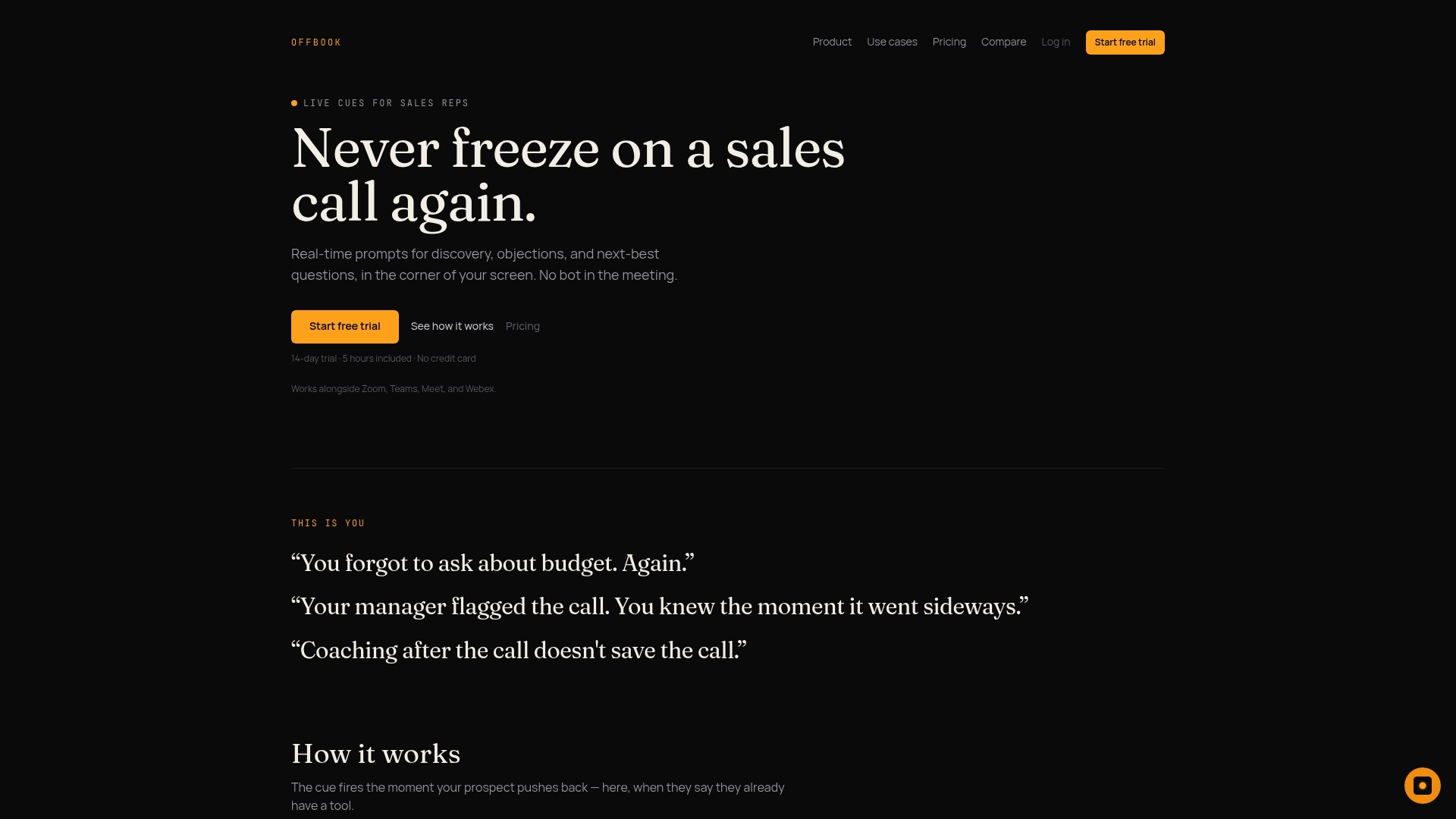
Offbook solves that by coaching reps live during video calls, surfacing MEDDPICC gaps, suggested questions, and objection responses on-screen as the conversation happens. No bot joins the meeting. No recording gets reviewed after the fact. The coaching happens in the moment, when it changes the outcome. Offbook also generates pre-call briefs so reps walk into every discovery call already knowing who they are meeting and what signals that account has shown. For B2B sales teams using Offbook, that combination of real-time coaching and structured preparation translates directly into more disciplined calls, better qualification, and faster deal progression. See how it works and whether it fits your team’s sales process.
FAQ
What is MEDDPICC and why does it matter for deal advancement?
MEDDPICC is a B2B qualification framework covering Metrics, Economic Buyer, Decision Criteria, Decision Process, Paper Process, Identify Pain, Champion, and Competition. It gives reps a structured way to verify deal health at every stage and avoid advancing opportunities that are not truly qualified.
How does a Mutual Action Plan reduce sales cycle length?
A MAP creates a jointly owned milestone timeline with named owners on both sides, which reduces cycle length by 25% by keeping both teams accountable to specific deadlines and surfacing blockers before they become stalls.
When should the Paper Process start in a B2B deal?
Paper Process should begin mid-cycle, not after a verbal yes. Legal, procurement, and security reviews can add 4 to 12 weeks of delay if treated as post-sale tasks, so mapping those steps in the MAP early prevents last-minute surprises.
What causes most B2B deals to stall?
The most common causes are lack of Economic Buyer engagement, missing MEDDPICC qualification evidence, MAPs that are built by the rep alone and never updated, and Paper Process steps that surface unexpectedly after a commercial agreement.
How do signal-driven targeting approaches improve pipeline quality?
Teams that act on business evolution signals within 30 days generate 4x more qualified opportunities and convert at 71% compared to 20% for traditional outreach, because they engage before buyer requirements are fully defined.